The Ultimate Guide to OpenAI's SearchGPT Shopping
-min.png)
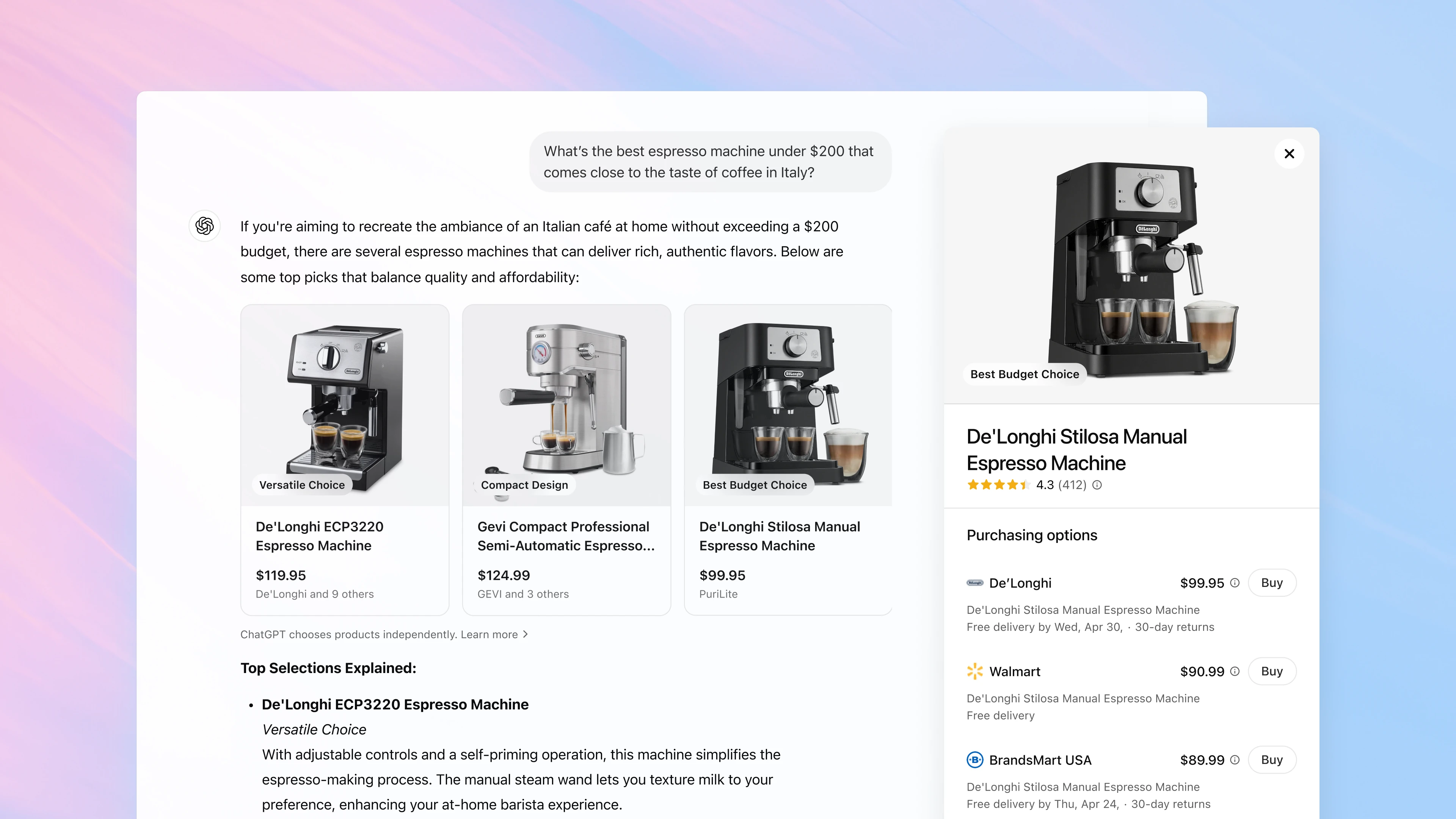
Introduction to OpenAI’s SearchGPT Shopping Feature
OpenAI has once again pushed the boundaries with its groundbreaking SearchGPT Shopping Feature. This innovative tool represents a paradigm shift in how consumers discover and interact with products online, and consequently, how e-commerce businesses must approach their AI traffic strategies.
As someone who’s been in the SEO trenches for over a decade, I can confidently say that SearchGPT’s shopping capabilities aren’t just another incremental update to search technology—they’re potentially revolutionary. The convergence of advanced AI, natural language processing, and visual recognition within a shopping context creates an entirely new playing field for online retailers.
SearchGPT’s shopping feature essentially reimagines product discovery by leveraging OpenAI’s “smarter” language models to understand user intent with unprecedented accuracy. Unlike traditional search engines that primarily match keywords to indexed content, SearchGPT comprehends the nuanced meaning behind shopping queries, recognizes product attributes from both text and images, and delivers highly personalized results that align with the user’s specific needs and preferences.
What makes this particularly significant for the e-commerce ecosystem is that it represents a fundamental shift in the search paradigm. For years, SEO professionals have optimized content primarily for Google’s algorithms, focusing on technical elements, keyword density, backlink profiles, and other established ranking factors. SearchGPT introduces a more sophisticated approach that prioritizes genuine relevance and user experience over traditional optimization tactics.
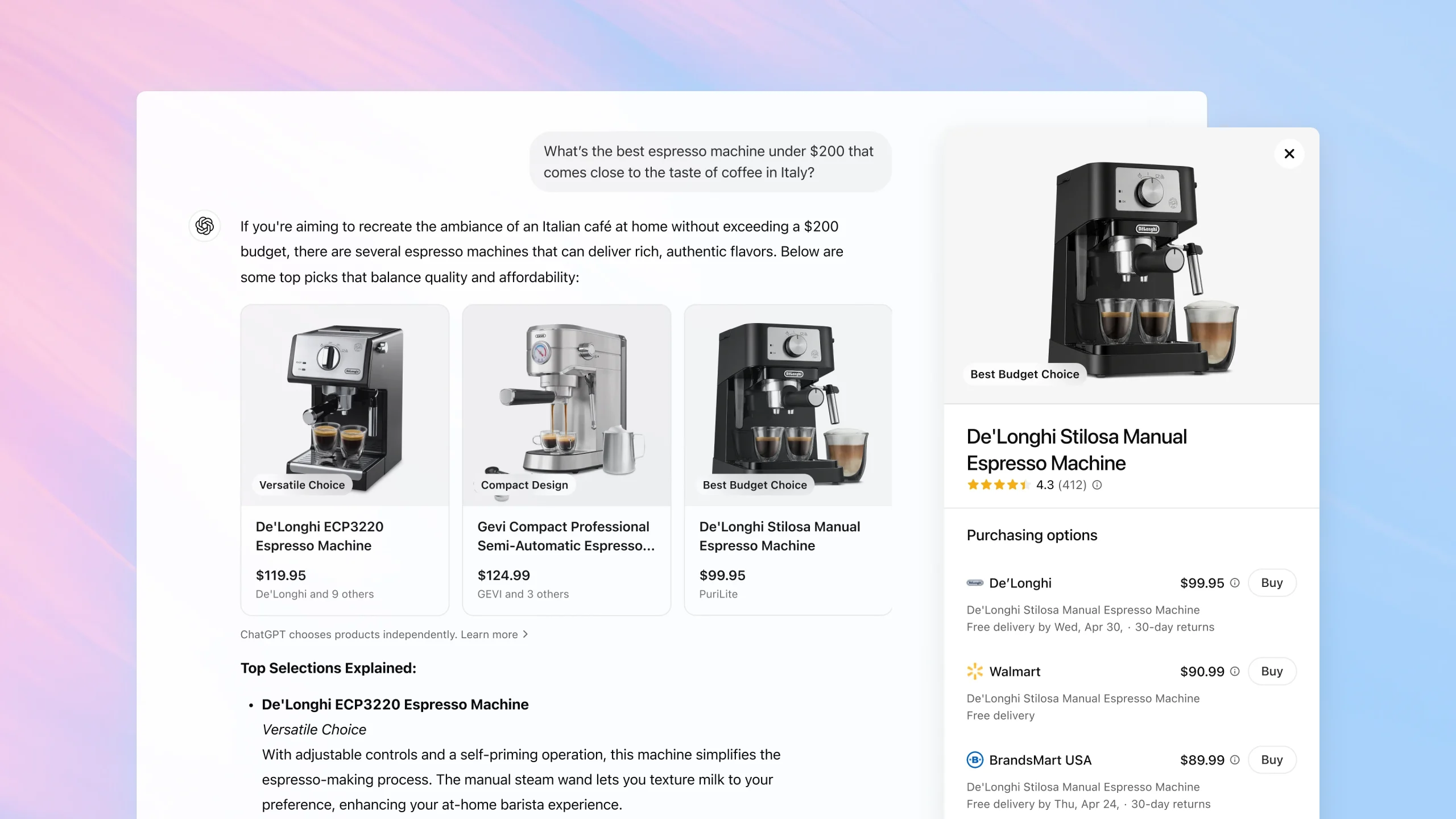
Announcement here.
The Evolution of Search in E-commerce
To fully appreciate the significance of SearchGPT’s shopping feature, we need to understand the evolution of search in the e-commerce context. The journey from basic keyword matching to today’s AI-powered semantic search represents decades of technological advancement.
In the early days of online shopping, search was rudimentary at best. E-commerce platforms relied on exact keyword matching, which meant that users needed to know precisely what they were looking for and how to phrase it. Miss a plural form or use a synonym, and relevant products might never appear in search results.
As search technology progressed, we saw the introduction of features like autocomplete, related searches, and basic filtering options. These improvements helped guide users toward their desired products, but still fell short of truly understanding shopping intent.
The next significant leap came with the rise of semantic search, which attempted to understand the meaning behind queries rather than just matching keywords. This approach considered context, user history, and relationships between concepts to deliver more relevant results.
Now, with SearchGPT’s shopping feature, we’re witnessing the next evolution: conversational, intent-driven search powered by advanced AI. This technology doesn’t just understand what users are searching for; it comprehends why they’re searching and what problem they’re trying to solve.
Why SearchGPT Matters for E-commerce?
For e-commerce businesses and SEO professionals, SearchGPT represents both an extraordinary opportunity and a significant challenge. The opportunity lies in reaching highly qualified potential customers with unprecedented precision. The challenge? Traditional SEO tactics alone won’t be sufficient to excel in this new environment.
SearchGPT’s approach to shopping searches prioritizes:
- Genuine user value over keyword optimization
- Conversational content over traditional product descriptions
- Comprehensive product information over superficial feature lists
- Authentic user experiences over manufactured reviews
- Visual accuracy and quality alongside textual content
This shift demands a more holistic approach to e-commerce SEO, one that places the actual shopping experience at the center of all optimization efforts.
Moreover, SearchGPT’s capabilities extend beyond traditional text-based search. Its multimodal nature means it can process and understand images alongside text, allowing users to search with pictures or screenshots and receive relevant product recommendations. This visual component adds another layer of complexity to SEO strategies, requiring businesses to optimize not just their text content but also their visual assets.
In the sections that follow, we’ll dive deep into how SearchGPT’s shopping feature actually works, explore its technical underpinnings, and provide comprehensive guidance on how e-commerce businesses can adapt their SEO strategies to thrive in this new paradigm. Whether you’re a seasoned SEO professional or an e-commerce business owner looking to stay ahead of the curve, this guide will equip you with the knowledge and tactics needed to succeed in the age of AI-powered shopping search.
How the SearchGPT Shopping Feature Works and Its Technical Implementation
The Core Technology Behind SearchGPT Shopping
At its heart, SearchGPT’s shopping feature is built upon OpenAI’s powerful large language models (LLMs), specifically advanced iterations of the GPT (Generative Pre-trained Transformer) architecture. These models have been trained on vast amounts of internet text, including product descriptions, reviews, shopping guides, and countless other e-commerce related content.
What sets SearchGPT apart from traditional search engines is its deep understanding of natural language and context. When a user enters a shopping query, SearchGPT doesn’t simply match keywords to indexed pages—it comprehends the query’s intent, identifies product attributes, recognizes brand names, understands price considerations, and interprets subjective elements like style preferences or use cases.
The technical implementation involves several sophisticated components working in concert:
1. Natural Language Understanding (NLU)
SearchGPT employs advanced NLU capabilities to parse shopping queries in a way that mimics human comprehension. This means it can understand:
- Complex product specifications: “I need a waterproof camera that works at depths of 30 feet with at least 20MP resolution”
- Subjective qualities: “Looking for a cozy but professional sweater for office work”
- Comparative queries: “What’s better for gaming, the NVIDIA RTX 4080 or AMD Radeon RX 7900 XTX?”
- Problem-solution queries: “Best blender for making smooth nut butters without overheating”
This level of understanding allows SearchGPT to deliver highly relevant product suggestions even for nuanced or complex shopping needs.
2. Multimodal Processing
Unlike traditional search engines, SearchGPT can process both text and images simultaneously. This multimodal capability enables several powerful shopping features:
- Visual search: Users can upload images of products they’re interested in finding
- Style matching: The system can identify visual attributes like color schemes, patterns, or design elements
- Product recognition: SearchGPT can identify specific products from images, even when partially visible
- Defect or feature identification: The system can potentially recognize product conditions or special features visible in images
The technical implementation of this multimodal functionality likely involves a combination of computer vision models, including convolutional neural networks (CNNs) and vision transformers (ViTs), working alongside the language models.
3. Knowledge Graph Integration
To deliver accurate product information, SearchGPT likely maintains a comprehensive knowledge graph of products, brands, categories, and their relationships. This structured data repository enables the system to:
- Connect related products (e.g., accessories that work with a specific device)
- Understand product hierarchies and categories
- Track pricing information and availability
- Maintain brand relationships and product lines
- Identify compatible components or replacement parts
This knowledge graph is constantly updated through web crawling, direct integrations with retailers, and possibly through partnerships with product information management systems.
4. User Context Understanding
What truly sets SearchGPT’s shopping feature apart is its ability to incorporate user context into search results. The system can:
- Remember previous queries in a session to refine understanding
- Incorporate location data for regional availability
- Consider seasonal factors (e.g., weather-appropriate clothing)
- Adjust results based on implied budget constraints
- Factor in compatibility with previously mentioned products
This contextual awareness creates a more personalized and helpful shopping experience than traditional search engines can provide.
The Query Processing Pipeline
When a user submits a shopping query to SearchGPT, it triggers a sophisticated processing pipeline:
- Query Analysis: The system parses the natural language query to identify product types, attributes, constraints, and preferences.
- Intent Classification: SearchGPT determines whether the query is exploratory (browsing), specific (looking for a particular product), comparative (evaluating options), or informational (seeking product knowledge).
- Product Matching: Based on the analyzed intent and attributes, the system matches potential products from its knowledge base.
- Ranking and Filtering: Matched products are ranked according to relevance, popularity, review sentiment, price competitiveness, and other factors.
- Result Generation: SearchGPT generates a natural language response that addresses the query, often highlighting key product features, explaining why certain products match the user’s needs, and providing comparative insights.
- Visual Component Integration: For relevant queries, the system includes product images, comparison charts, or other visual elements to enhance the shopping experience.
- Follow-up Suggestion Generation: The system anticipates potential follow-up questions or refinements based on the initial query and search results.
This entire process happens in milliseconds, creating a seamless experience for the user.
Data Sources and Product Information
SearchGPT’s shopping feature relies on diverse data sources to build its comprehensive product understanding:
Structured Product Data
- Retailer feeds: Direct product data from e-commerce platforms
- Manufacturer specifications: Technical details provided by product makers
- Standardized product databases: Industry-specific cataloging systems
- Price comparison services: Real-time pricing information
Unstructured Content
- Product reviews: Consumer opinions and experiences
- Expert evaluations: Professional product assessments
- Usage guides: How products are typically used
- Forum discussions: Common issues, workarounds, and community sentiment
- Social media mentions: Trending products and public perception
Visual Content
- Product images: Official and user-generated photographs
- Demonstration videos: Product functionality showcases
- Unboxing content: Initial impressions and packaging information
- Comparison imagery: Side-by-side visual product comparisons
The system continuously ingests and processes this information, building a rich understanding of the product landscape that goes far beyond basic specifications.
The Role of Machine Learning in Result Quality
SearchGPT’s shopping feature undoubtedly employs various machine learning models to continuously improve result quality:
Relevance Models
These models assess how well a product matches a user’s query, considering:
- Semantic similarity between query terms and product descriptions
- Historical performance of similar products for comparable queries
- User engagement patterns with previous similar results
Quality Assessment Models
These evaluate the overall quality and reliability of product suggestions:
- Sentiment analysis of reviews and mentions
- Detection of potential fake reviews or manipulated ratings
- Assessment of product longevity and reliability based on user reports
- Identification of common issues or complaints
Personalization Models
These tailor results to individual user preferences:
- Learning from explicit user feedback on results
- Analyzing implicit signals like query refinements or result interactions
- Building user preference profiles over time
- Balancing personalization with general relevance
The continuous learning aspect of these models means that SearchGPT’s shopping capabilities will likely improve over time, adapting to changing product landscapes and evolving user expectations.
Integration with the E-commerce Ecosystem
For SearchGPT’s shopping feature to function effectively within the broader e-commerce ecosystem, it must maintain connections with various external systems:
Retailer Partnerships
OpenAI likely establishes relationships with major retailers and marketplaces to ensure:
- Access to accurate, up-to-date product information
- Real-time inventory and pricing data
- Direct purchase pathways for users
- Commission structures for referrals or sales
Payment Processing
To enable seamless transactions, SearchGPT may integrate with:
- Secure payment gateways
- Digital wallet services
- Buy-now-pay-later providers
- Fraud prevention systems
Fulfillment Tracking
For a complete shopping experience, the system might connect with:
- Order management systems
- Shipping and logistics providers
- Delivery tracking services
- Return processing platforms
These integrations create a comprehensive shopping ecosystem that extends beyond simple product discovery to encompass the entire purchase journey.
This technical understanding of how SearchGPT’s shopping feature works provides the foundation for developing effective SEO strategies that align with its capabilities and priorities. In the next section, we’ll explore exactly how e-commerce sites can optimize their content and structure to maximize visibility within this innovative search paradigm.
How E-commerce Sites Can Optimize for SearchGPT Visibility
Now that we understand the technical underpinnings of SearchGPT’s shopping feature, let’s explore the practical strategies e-commerce businesses can implement to maximize their visibility and performance within this AI-powered search ecosystem.
Rethinking E-commerce SEO for AI-Driven Search
Traditional SEO has primarily focused on optimizing for keyword-based algorithms, but SearchGPT requires a more sophisticated approach. The fundamental shift here is moving from “optimizing for algorithms” to “optimizing for understanding.” Your goal is to help SearchGPT comprehend your products as thoroughly as possible.
The New Pillars of E-commerce SEO for SearchGPT
- Comprehensive Product Information: Providing complete, accurate, and detailed product data
- Natural Language Product Narratives: Creating conversational, context-rich descriptions
- Structured Data Implementation: Organizing product information in machine-readable formats
- Visual Optimization: Ensuring product imagery is informative and recognition-friendly
- User Experience Signals: Demonstrating genuine customer satisfaction and engagement
- Authentic Authority: Establishing subject matter expertise in your product categories
Let’s explore each of these pillars in detail.
Comprehensive Product Information Strategy
SearchGPT thrives on deep product understanding, which means comprehensive information is essential for visibility. Here’s how to develop a robust product information strategy:
Complete Specification Coverage
Ensure your product listings include every relevant specification, even those that might seem minor. For example, a coffee maker listing should include:
- Brewing capacity (in specific measurements)
- Dimensions (height, width, depth)
- Weight (empty and filled)
- Materials (specific types of plastic, metal, glass)
- Power requirements (voltage, wattage)
- Water reservoir capacity
- Filter type compatibility
- Brewing time
- Temperature range
- Programmable features
- Warranty details
- Country of manufacture
- Certifications (UL, Energy Star, etc.)
- Package contents
The goal is to leave no question unanswered about what the product is and what it can do.
Contextual Applications and Use Cases
Beyond specifications, describe how and when the product is used. For our coffee maker example:
- Ideal household size (“Perfect for households of 2-4 coffee drinkers”)
- Specific use scenarios (“Designed for morning rush brewing with programmable 24-hour start”)
- Environment suitability (“Compact design fits under standard 18-inch cabinets”)
- User profiles (“Intuitive interface suitable for tech-averse users”)
- Lifestyle integration (“Quick-clean features for busy professionals”)
These contextual details help SearchGPT match products to specific user needs and situations.
Comparative Information
Include information that places your product in the broader market context:
- Product line positioning (“Our mid-range model balancing features and affordability”)
- Competitive differentiators (“Unlike similar models, includes built-in water filtration”)
- Previous model comparisons (“30% faster brewing than our previous generation”)
- Category benchmarks (“Heats to optimal brewing temperature of 200°F, exceeding industry average”)
This comparative context helps SearchGPT understand where your product fits within user decision journeys.
Problem-Solution Mapping
Explicitly connect product features to the problems they solve:
- Problem: “Bitter coffee from inconsistent water temperature” Solution: “PrecisionHeat technology maintains optimal 198-202°F brewing temperature”
- Problem: “Forgetting to turn off the coffee maker” Solution: “Auto-shutoff feature powers down after 2 hours of inactivity”
- Problem: “Difficult morning routine timing” Solution: “Programmable 24-hour start lets you set brewing time in advance”
This problem-solution mapping helps SearchGPT match your products to queries that express problems rather than specific product searches.
Implementation Checklist for Comprehensive Product Information
- ✓ Audit current product listings for information gaps
- ✓ Develop category-specific templates that ensure consistent information coverage
- ✓ Create a specification hierarchy that prioritizes the most important attributes
- ✓ Document common use cases and problems for each product category
- ✓ Establish a regular update cycle to keep information current
- ✓ Implement a quality control process to verify information accuracy
Natural Language Product Narratives
SearchGPT processes natural language with remarkable sophistication, which means your product content should leverage conversational, narrative formats alongside traditional structured data.
Conversational Product Descriptions
Transform technical product descriptions into natural, flowing narratives that mimic how people actually talk about products:
Traditional Description: “This 12-cup programmable coffee maker features a 24-hour timer, auto-shutoff, and pause-and-serve function. It has a removable water reservoir and uses standard basket filters.”
Conversational Narrative: “Start your morning right with this 12-cup coffee maker that practically runs itself. Set it up the night before using the 24-hour timer, and wake up to freshly brewed coffee. Running late? The pause-and-serve feature lets you grab a quick cup while the rest continues brewing. The removable water reservoir makes refilling a breeze without awkward trips to the sink. And when you rush out the door wondering ‘Did I turn off the coffee maker?’, rest easy—it shuts itself off automatically after two hours.”
The conversational approach provides the same information but in a format that better matches how users might ask about or discuss the product.
Scenario-Based Content
Create content that places products in realistic usage scenarios:
“For busy parents juggling morning routines, this coffee maker’s programmable timer is a genuine lifesaver. Set it up before bedtime, and by the time you’re shepherding kids through breakfast, your coffee is hot and ready. The large 12-cup capacity means there’s plenty for both parents, even on those mornings when you need an extra cup (or two). And the thermal carafe keeps the second pot warm without the burnt taste that comes from sitting on a hot plate—perfect for weekend mornings when family members wake up at different times.”
These scenarios help SearchGPT understand the real-world applications of your products.
Question-Answer Format Integration
Incorporate common questions and their answers directly into product descriptions:
“How long does the coffee stay hot? The double-walled thermal carafe keeps coffee at drinking temperature for up to 4 hours without additional heating, preserving the fresh-brewed flavor without bitterness.
Is it difficult to clean? Not at all—the removable parts (filter basket, water reservoir, and carafe) can all be cleaned in the dishwasher, while the heating element can be wiped clean with a damp cloth.
Will it fit under my cabinets? At just 14 inches tall, this coffee maker is designed to fit comfortably under standard kitchen cabinets, which typically provide 18 inches of clearance.”
This Q&A format directly addresses the kinds of queries users might pose to SearchGPT.
First-Person Experience Narratives
Include authentic first-person perspectives that describe the experience of using the product:
“When we tested this coffee maker in our office kitchen, the first thing we noticed was how quickly it brewed a full pot—just under 7 minutes for all 12 cups. The brewing temperature was consistently hot without scalding, resulting in a smooth flavor without the bitterness that comes from overheating. Our team particularly appreciated the intuitive controls—no instruction manual needed, which is rare for programmable appliances.”
These experience narratives provide subjective insights that specifications alone cannot convey.
Implementation Checklist for Natural Language Product Narratives
- ✓ Develop voice and tone guidelines specific to your product categories
- ✓ Create templates for scenario-based content relevant to your target customers
- ✓ Compile FAQs for each product category based on customer service interactions
- ✓ Establish protocols for authentic testing and experience documentation
- ✓ Implement a content refresh schedule to keep narratives current and relevant
- ✓ Train copywriters in conversational writing techniques for e-commerce
Structured Data Implementation
While natural language content is crucial, structured data remains essential for helping SearchGPT accurately interpret and categorize your products.
Schema.org Product Markup
Implement comprehensive Schema.org product markup to provide clear, machine-readable product information:
{
  "@context": "https://schema.org/",
  "@type": "Product",
  "name": "PrecisionBrew 12-Cup Programmable Coffee Maker",
  "image": "https://example.com/coffee-maker-image.jpg",
  "description": "Programmable coffee maker with 24-hour timer, auto-shutoff, and thermal carafe.",
  "brand": {
    "@type": "Brand",
    "name": "HomeBarista"
  },
  "offers": {
    "@type": "Offer",
    "url": "https://example.com/coffee-maker",
    "priceCurrency": "USD",
    "price": "89.99",
    "availability": "https://schema.org/InStock",
    "seller": {
      "@type": "Organization",
      "name": "Kitchen Essentials"
    }
  },
  "aggregateRating": {
    "@type": "AggregateRating",
    "ratingValue": "4.8",
    "reviewCount": "427"
  }
}
Beyond this basic implementation, expand your Schema.org markup to include:
- Product variants (colors, sizes, models)
- Detailed specifications using PropertyValue elements
- Award information if applicable
- Warranty details
- Manufacturer information
- Country of origin
- Material composition
- Weight and dimensions
- Compatible accessories
Enhanced E-commerce Data Layer
Implement a robust data layer that tracks user interactions with products:
window.dataLayer = window.dataLayer || [];
window.dataLayer.push({
  'event': 'productView',
  'ecommerce': {
    'detail': {
      'products': [{
        'name': 'PrecisionBrew 12-Cup Programmable Coffee Maker',
        'id': 'CM-12P-5000',
        'price': '89.99',
        'brand': 'HomeBarista',
        'category': 'Kitchen Appliances/Coffee Makers/Drip Coffee Makers',
        'variant': 'Stainless Steel',
        'dimension1': 'Programmable',
        'dimension2': '12-Cup Capacity',
        'dimension3': 'Thermal Carafe',
        'metric1': 427,  // review count
        'metric2': 4.8   // rating value
      }]
    }
  }
});
This detailed data layer helps track how users interact with your products, potentially providing signals that could influence SearchGPT’s understanding of product popularity and relevance.
Product Graph Relationships
Develop explicit relationship mapping between products in your catalog:
These relationship indicators help SearchGPT understand product ecosystems and recommend complementary items.
Technical Specification Tables
Implement structured, consistent specification tables across product pages:
| Specification | Value |
| --- | --- |
| Capacity | 12 cups (60 oz / 1.8L) |
| Dimensions | 14" H × 9" W × 11" D (35.6 × 22.9 × 27.9 cm) |
| Weight | 7.5 lbs (3.4 kg) |
Consistent specification tables make it easier for SearchGPT to extract and compare product attributes.
Implementation Checklist for Structured Data
- ✓ Audit current structured data implementation for completeness
- ✓ Develop category-specific Schema.org templates
- ✓ Create a product relationship mapping strategy
- ✓ Standardize specification tables across product categories
- ✓ Implement testing procedures to validate structured data
- ✓ Establish monitoring for structured data errors or omissions
Visual Optimization for SearchGPT
SearchGPT’s multimodal capabilities mean that visual content is no longer just for human visitors—it’s now a critical component of how AI understands your products.
High-Quality, Informative Product Photography
Invest in product photography that clearly communicates product features and attributes:
- Multiple angles (front, back, side, top, bottom)
- Scale references to indicate size
- In-use imagery showing the product being used
- Detail shots of important features
- Consistent lighting and background for accurate color representation
- Comparison imagery showing different models or variants side-by-side
Ensure all images have appropriate alt text that describes not just what the image shows but what information it conveys:
[PrecisionBrew coffee maker in use, showing the pause-and-serve feature with coffee flowing into a cup mid-brew cycle](coffee-maker-brewing.jpg)
Visual Feature Highlighting
Create images that explicitly highlight and label key product features:
[PrecisionBrew coffee maker with labeled features including programmable timer, removable water reservoir, and thermal carafe](coffee-maker-features.jpg)
These annotated images help SearchGPT understand specific product features and their locations on the product.
Visual Comparison Content
Develop visual content that compares your product with alternatives:
[Side-by-side comparison of PrecisionBrew models showing differences in capacity, features, and price points](coffee-maker-comparison.jpg)
Comparison imagery helps SearchGPT provide more informed recommendations when users are evaluating options.
Product Demonstration Videos
Create and properly markup product demonstration videos:
{
  "@context": "https://schema.org",
  "@type": "VideoObject",
  "name": "How to Use the PrecisionBrew Coffee Maker",
  "description": "Step-by-step guide to programming, brewing, and cleaning the PrecisionBrew 12-Cup Coffee Maker",
  "thumbnailUrl": "https://example.com/video-thumbnail.jpg",
  "uploadDate": "2023-05-15T08:00:00+08:00",
  "duration": "PT4M35S",
  "contentUrl": "https://example.com/coffee-maker-tutorial.mp4",
  "embedUrl": "https://example.com/embed/coffee-maker-tutorial",
  "interactionStatistic": {
    "@type": "InteractionCounter",
    "interactionType": "https://schema.org/WatchAction",
    "userInteractionCount": 12483
  }
}
Demonstration videos provide dynamic information about product functionality that static images cannot convey.
360-Degree Product Views
Implement 360-degree product viewers with appropriate markup:
These interactive views provide comprehensive visual information about product appearance from all angles.
Implementation Checklist for Visual Optimization
- ✓ Develop a product photography style guide ensuring consistent quality
- ✓ Create templates for feature highlight imagery across product categories
- ✓ Establish standards for comparison visuals within product lines
- ✓ Implement a video production workflow for key products
- ✓ Ensure all visual assets have appropriate descriptive text
- ✓ Regularly audit visual content for quality and completeness
User Experience Signals
SearchGPT likely considers how users interact with products as a signal of quality and relevance. Optimizing these signals can improve your products’ visibility.
Authentic Review Collection
Implement a robust review collection system that encourages detailed, helpful reviews:
{
  "@context": "https://schema.org/",
  "@type": "Review",
  "itemReviewed": {
    "@type": "Product",
    "name": "PrecisionBrew 12-Cup Programmable Coffee Maker",
    "image": "https://example.com/coffee-maker-image.jpg",
    "description": "Programmable coffee maker with 24-hour timer, auto-shutoff, and thermal carafe."
  },
  "reviewRating": {
    "@type": "Rating",
    "ratingValue": "5",
    "bestRating": "5"
  },
  "name": "Perfect for busy mornings",
  "author": {
    "@type": "Person",
    "name": "Sarah J."
  },
  "datePublished": "2023-04-12",
  "reviewBody": "After three months of daily use, I'm impressed with how this coffee maker has simplified my mornings. The programmable feature works flawlessly—I set it at night and wake up to fresh coffee. The thermal carafe keeps coffee hot for hours without developing that burnt taste. Cleaning is straightforward, though the water reservoir could be designed better for easier filling. Overall, it's been a reliable addition to my kitchen.",
  "publisher": {
    "@type": "Organization",
    "name": "Kitchen Essentials"
  }
}
Encourage reviewers to discuss:
- How long they’ve owned the product
- Specific use cases and scenarios
- Comparisons to previous products they’ve owned
- Both positive aspects and limitations
- Unexpected benefits or issues
User Question and Answer Systems
Implement and actively maintain product Q&A sections:
### Can I program it to brew at different times on different days?


I need it to brew earlier on weekdays than on weekends.


The PrecisionBrew allows only one programmable time setting that remains the same until changed manually. You would need to adjust the time setting on Friday and Sunday nights to change between weekend and weekday schedules.


        Michael T., Product Specialist


        24 people found this helpful
Q&A content directly addresses specific user concerns and provides SearchGPT with precise information about product capabilities and limitations.
Usage Guides and Documentation
Create comprehensive usage documentation that demonstrates product value:
## How to Program Your PrecisionBrew Coffee Maker


### Set the current time


Press and hold the CLOCK button while pressing HOUR and MINUTE buttons until the current time is displayed.


    [Hand pressing clock button on coffee maker](set-clock.jpg)
Detailed guides help SearchGPT understand how products are used and what user needs they address.
User-Generated Content Integration
Incorporate user-generated content that shows products in real-world use:
### Customer Photos


[PrecisionBrew coffee maker in Sarah's modern kitchen with matching appliances](user-kitchen-setup.jpg)
User-generated content provides authentic context that can help SearchGPT understand how products fit into real people’s lives.
Implementation Checklist for User Experience Signals
- ✓ Develop a review solicitation strategy that encourages detailed feedback
- ✓ Implement a Q&A system with staff monitoring for timely responses
- ✓ Create comprehensive usage documentation for all products
- ✓ Establish protocols for collecting and featuring user-generated content
- ✓ Monitor and respond to user feedback across all channels
- ✓ Regularly analyze user content for product improvement insights
Authentic Authority Establishment
SearchGPT likely evaluates the expertise and authority of e-commerce sites when determining product recommendations. Building authentic authority in your product categories is essential.
Expert Content Creation
Develop in-depth content that demonstrates subject matter expertise:
## The Complete Guide to Drip Coffee Brewing


    [Portrait of James Wilson](coffee-expert.jpg)


By James Wilson, Certified Q Grader with 15 years of experience in specialty coffee. Former head roaster at Artisan Coffee Works and consultant to coffee equipment manufacturers.


### Recommended Equipment
Expert content should provide genuine value beyond simple product promotion, establishing your site as a trusted resource.
Comparative Analysis Content
Create detailed, fair comparisons between products in your category:
## Drip Coffee Makers: Programmable vs. Manual Models


| Feature | Programmable Models | Manual Models |
| --- | --- | --- |
| Morning Convenience | High - Set and forget the night before | Low - Requires morning setup |


### Who Should Choose Programmable Models?


Programmable coffee makers like the PrecisionBrew 12-Cup are ideal for busy households with consistent morning routines. They offer convenience at the cost of slightly higher prices and more complex interfaces.


### Who Should Choose Manual Models?


Manual coffee makers like the BrewSimple 10-Cup excel for coffee enthusiasts who prefer control over each brewing variable and don't mind the extra morning steps. They typically offer simpler operation and fewer potential failure points.
Fair, balanced comparisons demonstrate expertise and build trust with both users and AI systems like SearchGPT.
Technical Resource Development
Create technical resources that address complex aspects of your product category:
## Understanding Coffee Maker Water Temperature and Its Impact on Extraction


### The Science of Optimal Extraction Temperature


Coffee extraction is fundamentally a chemical process governed by temperature. The Specialty Coffee Association recommends brewing temperatures between 195°F and 205°F (90.6°C to 96.1°C) because this range optimizes the extraction of desirable compounds while minimizing bitter elements.


### How We Test Brewing Temperature


Our laboratory testing uses calibrated thermocouples placed at multiple points in the brewing process: water reservoir, heating element output, shower head, and within the coffee bed itself. We measure temperature stability throughout the brewing cycle and across multiple brewing sessions.


### Temperature Performance in Current Models
Technical resources demonstrate deep subject matter expertise that can help establish your site as an authoritative source for SearchGPT.
Industry Participation Documentation
Highlight your company’s involvement in industry standards, research, or advancement:
## Our Commitment to Coffee Innovation


    [Specialty Coffee Association Member Badge](sca-member-badge.jpg)

As active members of the Specialty Coffee Association since 2010, our product development team participates in annual conferences and contributes to brewing equipment standards committees.


### Research Partnerships


Our ongoing collaboration with the Coffee Science Foundation has contributed to research on optimal home brewing parameters, resulting in our PrecisionTemp brewing technology.


### Sustainability Leadership


Our manufacturing facilities achieved carbon-neutral status in 2022, and we've pioneered recyclable packaging solutions for small appliances.
Industry participation documentation establishes broader credibility that may influence how SearchGPT evaluates your product information.
Implementation Checklist for Authority Establishment
- ✓ Identify subject matter experts for key product categories
- ✓ Develop an editorial calendar for expert content creation
- ✓ Create templates for fair, comprehensive product comparisons
- ✓ Document and highlight industry certifications and partnerships
- ✓ Establish a technical resource development process
- ✓ Regularly update authority content to maintain relevance
By implementing these comprehensive optimization strategies across product information, natural language content, structured data, visual assets, user experience signals, and authority establishment, e-commerce businesses can position themselves for maximum visibility in SearchGPT’s shopping feature. The next section will focus specifically on crafting product descriptions that perform exceptionally well in this new AI-powered search paradigm.
Best Practices for Product Descriptions That Perform Well in SearchGPT
Product descriptions form the cornerstone of e-commerce content, and with SearchGPT’s advanced natural language processing capabilities, how you craft these descriptions takes on new significance. This section provides detailed guidance on creating product descriptions specifically optimized for SearchGPT’s shopping feature.
The Anatomy of a SearchGPT-Optimized Product Description
Before diving into specific techniques, let’s examine the structure of a product description designed to perform well with SearchGPT:
- Conversational Opening: A natural language introduction that establishes the product’s purpose and primary value proposition
- Feature-Benefit Narratives: Descriptions of features paired with their real-world benefits
- Contextual Use Scenarios: Narratives describing when and how the product is used
- Comparative Elements: Subtle positioning against alternatives or previous versions
- Technical Specifications: Comprehensive details presented in both narrative and structured formats
- Problem-Solution Pairings: Explicit connections between user problems and product solutions
- Sensory Language: Descriptions of how the product looks, feels, sounds, etc.
- Social Proof Integration: References to user experiences and outcomes
- Limitation Acknowledgment: Honest discussion of any product limitations or ideal use cases
Let’s explore each of these elements in detail.
Conversational Opening Techniques
The opening of your product description sets the tone and establishes the primary value proposition. For SearchGPT, conversational openings that mirror natural human speech patterns perform best.
Direct Address Opening
Speak directly to the customer as if you’re having a conversation:
Traditional Opening: “The PrecisionBrew 12-Cup Programmable Coffee Maker offers advanced brewing technology with customizable settings.”
Conversational Opening: “Imagine waking up to the rich aroma of freshly brewed coffee without having to stumble to the kitchen half-asleep. That’s exactly what the PrecisionBrew does for you—it handles the morning brewing while you get those precious extra minutes of rest.”
The conversational opening immediately establishes both the product’s purpose and its primary benefit in human terms.
Problem Statement Opening
Begin with a common problem that the product solves:
“We’ve all experienced the disappointment of lukewarm coffee that’s been sitting on a hot plate too long. The PrecisionBrew’s thermal carafe changes that story, keeping your coffee hot for hours without that burnt, bitter taste that comes from continued heating.”
This approach immediately positions the product as a solution to a relatable problem.
Day-in-the-Life Opening
Start with a typical scenario where the product adds value:
“It’s 6:30 AM on a weekday. Your alarm just went off, the kids need to get ready for school, you have an early meeting, and everyone needs breakfast. The last thing you need is to measure coffee and water while half-asleep. The PrecisionBrew’s programmable timer means your coffee is already brewing while you’re getting the day started.”
This narrative immediately places the product in a real-world context that SearchGPT can match to similar user scenarios.
Question-Based Opening
Begin with a question that prompts the user to consider their needs:
“What if your coffee maker could learn your preferences and deliver a perfect cup every time? The PrecisionBrew doesn’t just brew coffee—it creates a customized experience with adjustable brew strength, temperature control, and programmable settings that remember how you like your coffee.”
Questions engage the reader and help SearchGPT understand the product’s value proposition in relation to user needs.
Feature-Benefit Narrative Techniques
Rather than simply listing features, craft narratives that connect each feature to its real-world benefit.
The “Which Means” Connection
Explicitly connect features to their practical implications:
“The PrecisionBrew uses PerfectTemp technology to maintain water at precisely 200°F throughout the brewing cycle, which means you get optimal extraction of coffee flavors without the bitterness that comes from too-hot water or the weakness that results from too-cool brewing.”
This structure helps SearchGPT understand not just what the feature is, but why it matters to users.
Day-Part Benefit Mapping
Connect features to benefits at specific times of day:
“In the morning rush, the pause-and-serve feature lets you grab that crucial first cup while the rest of the pot continues brewing—no more waiting for the full cycle to complete when you’re running late. Later in the day, the thermal carafe keeps your coffee hot for afternoon refills without requiring the machine to stay on, saving energy while preserving flavor.”
This approach helps SearchGPT match products to time-specific user needs.
Persona-Based Benefit Descriptions
Frame benefits in terms of different user types:
“For the precision coffee enthusiast, the PrecisionBrew’s temperature control system maintains the SCA-recommended 195-205°F range throughout brewing, ensuring proper extraction chemistry. For busy parents, the programmable timer and large 12-cup capacity mean everyone gets their morning coffee without anyone having to play barista before they’re fully awake.”
This technique helps SearchGPT match products to different user profiles and needs.
Comparative Benefit Framing
Position benefits in relation to alternative approaches:
“Unlike basic coffee makers that simply heat water and let it drip, the PrecisionBrew’s shower head design evenly saturates all grounds for complete extraction. And unlike single-serve pod machines, you’re not limited to pre-packaged coffee options—use any ground coffee you prefer, from grocery store basics to specialty roaster offerings.”
This comparative framing helps SearchGPT understand the product’s advantages in relation to alternatives.
Contextual Use Scenario Development
Creating rich descriptions of when and how the product is used helps SearchGPT match it to specific user situations and queries.
Routine Integration Scenarios
Describe how the product fits into daily routines:
“Set up tomorrow’s coffee after dinner—just add water and grounds, program your brewing time, and forget about it until you wake up to the aroma of fresh coffee. On weekends, use the manual brew button instead for a fresh pot whenever your family finally rolls out of bed. For dinner parties, the thermal carafe keeps coffee hot through dessert without the need to make a fresh pot when guests are ready for an after-dinner cup.”
These routine scenarios help SearchGPT understand the product’s versatility across different use cases.
Seasonal Use Descriptions
Highlight how the product might be used differently across seasons:
“During winter mornings, program the PrecisionBrew to have hot coffee ready as you wake up to face the cold day. In summer, use the ice brew setting to create concentrated coffee that can be poured over ice for refreshing afternoon pick-me-ups without dilution.”
Seasonal contexts help SearchGPT match products to time-specific queries.
Special Occasion Scenarios
Describe how the product performs during special events:
“When hosting holiday breakfasts, the 12-cup capacity means you can serve a houseful of guests without brewing multiple pots. For brunch gatherings, the thermal carafe keeps coffee at the perfect temperature throughout a leisurely meal, letting everyone refill at their own pace without the coffee ever tasting burnt or reheated.”
Special occasion scenarios highlight versatility and capacity benefits that might be particularly relevant to certain queries.
Problem-Solution Scenarios
Frame scenarios around specific problems the product solves:
“When you’re rushing to get everyone out the door for school and work, the last thing you need is to wait for coffee to brew. With the PrecisionBrew already programmed the night before, you can focus on making lunches and finding missing homework while your coffee takes care of itself.”
These scenarios help SearchGPT connect products to problem-based queries.
Comparative Elements Integration
Subtle comparative elements help position your product within its category and against alternatives.
Historical Comparison
Compare to previous generations or earlier technology:
“Unlike older coffee makers that blast grounds with inconsistent water temperature, the PrecisionBrew maintains optimal brewing temperature throughout the cycle. We’ve also improved on previous designs by widening the shower head for more even saturation of grounds, resulting in more balanced extraction.”
Historical comparisons help SearchGPT understand improvements and innovations.
Category Positioning
Position the product within its broader category:
“As a mid-range programmable coffee maker, the PrecisionBrew offers the perfect balance between affordability and features. You get the premium brewing temperature control and programmable features typically found in high-end models, without the complexity and price of commercial-grade equipment.”
Category positioning helps SearchGPT recommend products that match users’ price and feature expectations.
Indirect Competitor Comparison
Subtly compare to competitor products without naming them:
“While some coffee makers sacrifice brewing quality for programmability, the PrecisionBrew excels at both. And unlike systems that lock you into proprietary coffee pods or filters, the PrecisionBrew works with standard basket filters available anywhere.”
These indirect comparisons help SearchGPT understand key differentiators without negative competitive language.
Use Case Suitability Comparison
Compare suitability for different use cases:
“For daily family use, the PrecisionBrew’s 12-cup capacity and durability make it more practical than specialty single-cup brewers. For coffee enthusiasts who appreciate convenience but won’t sacrifice flavor, it offers better temperature control than budget models while being more user-friendly than complex manual brewing methods.”
Use case comparisons help SearchGPT match products to specific user needs and situations.
Technical Specification Narratives
Transform dry technical specifications into engaging narratives that explain their real-world impact.
Specification Storytelling
Frame specifications within mini-stories:
“The PrecisionBrew’s 1100-watt heating element isn’t just a number on a spec sheet—it’s the reason you don’t wait endlessly for your coffee. This powerful heater brings water to the optimal brewing temperature of 200°F quickly, then maintains that precise temperature throughout brewing for consistent extraction. The result? A full 12-cup pot in under 8 minutes, compared to the 12+ minutes typical of lower-wattage machines.”
This narrative approach helps SearchGPT understand the practical implications of technical specifications.
Specification Contextualization
Place specifications in practical contexts:
“At 14 inches tall, the PrecisionBrew is designed to fit comfortably under standard kitchen cabinets, which typically provide 18 inches of clearance. The 9-inch width means it won’t dominate your counter space, while the 7.5-pound weight provides stability during brewing and carafe removal.”
Contextualizing dimensions and other specifications helps SearchGPT understand practical considerations beyond the numbers themselves.
Technical Benefit Chains
Create chains that connect technical specifications to end benefits:
“The PrecisionBrew’s shower head distributes water through 12 precision-drilled holes arranged in a spiral pattern. This design ensures even saturation of all coffee grounds, which leads to balanced extraction, which in turn produces a smoother, more flavorful cup without bitter or weak spots.”
These benefit chains help SearchGPT understand the causal relationships between specifications and user experiences.
Specification Comparisons
Place specifications in comparative contexts:
“While many coffee makers operate at brewing temperatures between 185°F and 195°F, the PrecisionBrew maintains the Specialty Coffee Association’s recommended range of 195-205°F. This higher temperature range extracts more of the complex flavor compounds that give coffee its depth and character.”
Comparative specification narratives help SearchGPT understand quality and performance differences between products.
Problem-Solution Pairing Techniques
Explicitly connecting user problems to product solutions helps SearchGPT match your products to problem-based queries.
Direct Problem-Solution Statements
Clearly state problems and their corresponding solutions:
“Problem: Coffee that tastes bitter after sitting on a warming plate for an hour. Solution: The PrecisionBrew’s thermal carafe keeps coffee hot for up to 4 hours without additional heating, preserving the fresh-brewed flavor without developing bitterness.”
These explicit pairings help SearchGPT make direct connections between user problems and your product’s solutions.
”If You’ve Ever…” Constructions
Frame problems as relatable experiences:
“If you’ve ever rushed out the door wondering whether you remembered to turn off the coffee maker, you’ll appreciate the PrecisionBrew’s automatic shutoff feature. After two hours of inactivity, it powers down completely, giving you peace of mind and saving energy.”
This framing helps SearchGPT connect products to common pain points and experiences.
Frustration-Resolution Narratives
Describe the emotional journey from frustration to resolution:
“The frustration of pouring a cup of coffee only to find it’s lukewarm is all too familiar. The PrecisionBrew’s thermal carafe eliminates this disappointment, using double-walled stainless steel to keep your coffee at the perfect drinking temperature—hot, but not scalding—for hours after brewing.”
These emotional narratives help SearchGPT understand the qualitative improvements products bring to user experiences.
”No More…” Constructions
Frame solutions in terms of eliminated problems:
“No more bitter, over-extracted coffee from inconsistent brewing temperatures. No more waiting for a full pot when you just need a quick cup. No more wasting energy with a warming plate that stays on all day. The PrecisionBrew addresses these common coffee maker frustrations with precision temperature control, pause-and-serve functionality, and automatic shutoff.”
This framing helps SearchGPT understand the pain points your product eliminates.
Sensory Language Integration
Rich sensory descriptions help create a more complete understanding of the product experience.
Multi-Sensory Product Descriptions
Include multiple sensory dimensions:
“The PrecisionBrew greets you each morning with the rich, inviting aroma of freshly brewed coffee. Its brushed stainless steel exterior feels cool and substantial to the touch, while the soft-grip handle provides comfortable pouring. The brewing process itself is remarkably quiet, with just a gentle gurgling that won’t disturb sleeping family members.”
Multi-sensory descriptions help SearchGPT understand the complete product experience.
Taste and Aroma Narratives
For food-related products, provide rich flavor descriptions:
“The PrecisionBrew’s precise temperature control extracts the full flavor profile from your coffee—from bright, fruity top notes to rich, chocolatey undertones—without pulling out the bitter compounds that come from excessive heat. The result is a clean, balanced cup that reveals the true character of your chosen beans.”
These descriptions help SearchGPT match products to specific flavor preferences and expectations.
Tactile Experience Descriptions
Describe how the product feels to use:
“The PrecisionBrew’s control panel features slightly raised buttons that provide satisfying tactile feedback with each press. The carafe handle is ergonomically designed to balance comfortably in your hand, with a thumb rest that guides your grip for smooth, controlled pouring.”
Tactile descriptions help SearchGPT understand usability and quality aspects of the product.
Visual Detail Narratives
Provide rich visual descriptions beyond basic appearance:
“The PrecisionBrew’s blue LED display provides clear visibility in any lighting condition, from bright morning sunlight to a darkened kitchen at night. The water level indicator features large measurement markings that are easy to read, with a blue floating indicator that contrasts against the clear reservoir for precise filling.”
Visual narratives help SearchGPT understand design elements that contribute to usability and user experience.
Social Proof Integration
Incorporating elements of social proof into product descriptions helps establish credibility and real-world performance.
Aggregated User Experience References
Reference collective user experiences:
“PrecisionBrew users consistently mention how the thermal carafe keeps coffee hot for their entire morning—many report still enjoying hot coffee 3-4 hours after brewing without any loss of flavor quality.”
These aggregated references help SearchGPT understand common user experiences without relying on specific reviews.
Expert Opinion Integration
Incorporate relevant expert perspectives:
“Coffee specialists praise the PrecisionBrew’s temperature stability, which maintains the Specialty Coffee Association’s recommended brewing range of 195-205°F throughout the brewing cycle—a technical achievement typically found only in commercial equipment.”
Expert perspectives help SearchGPT understand the product’s standing among knowledgeable users.
Implicit Usage Statistics
Reference usage patterns without specific numbers:
“The PrecisionBrew has become the morning essential in thousands of households where quality coffee and convenience are equally important. Many users report that it’s the longest-lasting coffee maker they’ve owned, with machines still performing perfectly after years of daily use.”
These implicit statistics help SearchGPT understand popularity and reliability without making specific claims.
Award and Recognition References
Mention relevant accolades:
“The PrecisionBrew’s innovative thermal carafe design earned it the Kitchen Innovation Award for its ability to maintain coffee temperature without continued heating—a feature that both preserves flavor and reduces energy consumption.”
Award references help SearchGPT understand external validation of product quality or innovation.
Limitation Acknowledgment Strategies
Honest discussion of product limitations or ideal use cases builds trust and helps SearchGPT match products to appropriate users.
Ideal User Identification
Clearly state who the product is best suited for:
“The PrecisionBrew is ideal for households with multiple coffee drinkers or individuals who enjoy several cups throughout the morning. Single coffee drinkers who prefer just one cup at a time might find a single-serve brewer more convenient, though the PrecisionBrew does excel at maintaining quality for later cups.”
This honest targeting helps SearchGPT make appropriate recommendations based on user needs.
Transparent Capability Boundaries
Acknowledge what the product doesn’t do:
“While the PrecisionBrew excels at brewing consistently excellent drip coffee, it doesn’t include espresso functionality. For those seeking both drip coffee and espresso from a single machine, a combo unit would be more appropriate, though typically with compromises in drip coffee quality.”
These boundaries help SearchGPT understand product limitations and avoid mismatched recommendations.
Balanced Limitation-Benefit Pairings
Present limitations alongside compensating benefits:
“The PrecisionBrew’s thermal carafe doesn’t have a transparent window to view coffee levels like glass carafes do—a trade-off that allows for superior heat retention. However, the carafe’s weight provides a good sense of remaining coffee, and the brewing capacity indicator on the water reservoir helps you prepare the right amount initially.”
This balanced approach helps SearchGPT understand design trade-offs and their practical implications.
Maintenance Requirement Honesty
Be transparent about care requirements:
“Like all quality coffee makers, the PrecisionBrew performs best with regular maintenance. The removable parts require occasional deep cleaning beyond daily rinsing, and descaling is recommended every 3 months in hard water areas. This routine care is simple but necessary to maintain optimal brewing temperature and flavor extraction.”
Maintenance transparency helps SearchGPT understand the total ownership experience.
Putting It All Together: A Complete SearchGPT-Optimized Product Description
Let’s see how these elements combine into a complete product description optimized for SearchGPT:
PrecisionBrew 12-Cup Programmable Coffee Maker with Thermal Carafe
Wake up to coffee that’s ready when you are. The morning rush is hectic enough without having to measure, pour, and wait for coffee to brew. The PrecisionBrew handles all that for you—program it the night before, and wake up to the inviting aroma of freshly brewed coffee ready to pour into your favorite mug.
Perfect Temperature, Perfect Extraction
The difference between good coffee and great coffee often comes down to brewing temperature. While basic coffee makers fluctuate between too cool and too hot, the PrecisionBrew maintains the ideal brewing temperature of 195-205°F throughout the entire brewing cycle. This precision means your coffee grounds extract properly—releasing the rich flavors and aromas without the bitterness that comes from overheating.
The shower head design evenly distributes water over all the grounds, ensuring no coffee is wasted and every cup tastes balanced. If you’ve ever had coffee that tastes great at the beginning of the pot but becomes increasingly bitter toward the end, the PrecisionBrew’s even extraction solves this common problem.
Thermal Carafe: Hot Coffee Without the Burnt Taste
We’ve all experienced the disappointment of returning for a second cup only to find it’s been cooking on a hot plate for too long. The PrecisionBrew’s double-walled stainless steel thermal carafe eliminates this problem entirely, keeping your coffee hot for up to 4 hours without additional heating. This means your second—or third—cup tastes just as fresh as the first, without that unmistakable burnt flavor that comes from continued heating.
The carafe’s design includes a thumb-rest pour handle that feels balanced in your hand, allowing for smooth, controlled pouring without drips. While you can’t see the coffee level through the stainless steel (a trade-off for superior heat retention), the carafe’s weight gives you a good sense of how much coffee remains.
Morning Flexibility When You Need It Most
Some mornings you need coffee immediately—even before the full pot has finished brewing. The PrecisionBrew’s pause-and-serve feature lets you remove the carafe mid-brew to pour that essential first cup, then return it to continue the brewing cycle without spills or interruptions.
For households where everyone wakes at different times, the thermal carafe keeps coffee hot and fresh-tasting for late risers without requiring anyone to make a fresh pot. On weekdays, program it for your wake-up time; on weekends, use the manual brew button when you’re ready to start your more leisurely day.
Practical Design for Real Kitchens
At 14 inches tall, 9 inches wide, and 11 inches deep, the PrecisionBrew is designed to fit comfortably under standard kitchen cabinets while not dominating limited counter space. The brushed stainless steel exterior resists fingerprints and wipes clean easily, maintaining its premium appearance with minimal effort.
The control panel features an intuitive layout with a blue backlit display that’s easy to read in any lighting condition. The slightly raised buttons provide satisfying tactile feedback, so you know your programming inputs have registered even when setting the timer in a darkened kitchen.
Technical Excellence in Every Cup
The PrecisionBrew’s 1100-watt heating element brings water to optimal brewing temperature quickly, producing a full 12-cup pot in under 8 minutes. This powerful heating system, combined with the precision temperature control, ensures consistent brewing performance cup after cup, pot after pot.
The removable water reservoir makes filling easy without awkward maneuvering under cabinets, while the large opening accommodates filling from pitchers or faucets without spills. Clear measurement markings with a blue floating indicator ensure precise water amounts every time.
Thoughtful Features for Daily Use
- Auto-shutoff safety: The brewing system automatically powers down after 30 minutes of inactivity, providing peace of mind when you rush out the door
- Programmable timer: Set your brewing time up to 24 hours in advance
- Adjustable brew strength: Choose between regular and bold settings to match your taste preferences
- Permanent gold-tone filter compatible: Use the included permanent filter or paper filters according to your preference
- Clean alert system: Reminds you when descaling is recommended based on your usage and water hardness
Ideal For
The PrecisionBrew is perfect for households with multiple coffee drinkers or individuals who enjoy several cups throughout the morning. It’s especially well-suited for busy professionals who benefit from the programmable features and families with varied schedules who appreciate the thermal carafe’s ability to keep coffee hot without deterioration in flavor.
While the PrecisionBrew excels at brewing consistently excellent drip coffee, it doesn’t include espresso functionality. Single coffee drinkers who prefer just one cup at a time might find a single-serve brewer more convenient, though many solo drinkers still prefer the PrecisionBrew for its superior coffee quality and the ability to have multiple cups ready without rebrewing.
What PrecisionBrew Users Love
PrecisionBrew users consistently praise how the thermal carafe keeps coffee hot throughout their morning without developing bitterness. Many report that it’s the longest-lasting coffee maker they’ve owned, with machines still performing perfectly after years of daily use.
Coffee enthusiasts appreciate the brewing temperature precision that extracts the full flavor profile from their chosen beans—from bright, fruity top notes to rich, chocolatey undertones—without the bitter compounds that come from excessive heat.
Like all quality coffee makers, the PrecisionBrew performs best with regular maintenance. The removable parts require occasional deep cleaning beyond daily rinsing, and descaling is recommended every 3 months in hard water areas. This routine care is simple but necessary to maintain optimal brewing temperature and flavor extraction.
This comprehensive product description incorporates all the elements we’ve discussed, creating a rich, detailed, and helpful resource that provides SearchGPT with the information it needs to match the product to relevant user queries and needs. The conversational tone, real-world scenarios, and honest discussion of limitations create a trustworthy presentation that benefits both human shoppers and AI systems.
In the next section, we’ll explore the technical implementation details and considerations for optimizing your e-commerce site for SearchGPT visibility.
Technical Implementation Details and Considerations
While compelling content is essential for SearchGPT optimization, the technical foundation of your e-commerce site plays an equally crucial role in ensuring visibility and performance. This section explores the technical implementations that will help SearchGPT understand, index, and appropriately rank your products.
Structured Data Implementation for E-commerce
Structured data provides explicit signals about your products and content that help SearchGPT interpret information accurately. For e-commerce sites, implementing comprehensive structured data is no longer optional—it’s essential.
Product Schema Markup
The foundation of e-commerce structured data is the Product schema. Here’s a comprehensive implementation example:
{
  "@context": "https://schema.org/",
  "@type": "Product",
  "name": "PrecisionBrew 12-Cup Programmable Coffee Maker",
  "image": [
    "https://example.com/photos/coffee-maker-front.jpg",
    "https://example.com/photos/coffee-maker-side.jpg",
    "https://example.com/photos/coffee-maker-top.jpg"
  ],
  "description": "Programmable coffee maker with precision temperature control and thermal carafe that keeps coffee hot for hours without continued heating.",
  "sku": "CM-12P-5000",
  "mpn": "PB12TC2023",
  "brand": {
    "@type": "Brand",
    "name": "HomeBarista"
  },
  "manufacturer": {
    "@type": "Organization",
    "name": "HomeBarista Kitchen Appliances"
  },
  "countryOfOrigin": {
    "@type": "Country",
    "name": "China"
  },
  "countryOfAssembly": {
    "@type": "Country",
    "name": "China"
  },
  "countryOfLastProcessing": {
    "@type": "Country",
    "name": "China"
  },
  "material": "Stainless Steel, BPA-free Plastic",
  "color": "Brushed Stainless Steel",
  "height": {
    "@type": "QuantitativeValue",
    "value": "14",
    "unitCode": "IN"
  },
  "width": {
    "@type": "QuantitativeValue",
    "value": "9",
    "unitCode": "IN"
  },
  "depth": {
    "@type": "QuantitativeValue",
    "value": "11",
    "unitCode": "IN"
  },
  "weight": {
    "@type": "QuantitativeValue",
    "value": "7.5",
    "unitCode": "LB"
  },
  "additionalProperty": [
    {
      "@type": "PropertyValue",
      "name": "Capacity",
      "value": "12 cups (60 oz / 1.8L)"
    },
    {
      "@type": "PropertyValue",
      "name": "Wattage",
      "value": "1100 watts"
    },
    {
      "@type": "PropertyValue",
      "name": "Brewing Temperature",
      "value": "195-205°F (90.6-96.1°C)"
    },
    {
      "@type": "PropertyValue",
      "name": "Brewing Time",
      "value": "Less than 8 minutes for full pot"
    },
    {
      "@type": "PropertyValue",
      "name": "Carafe Type",
      "value": "Double-walled stainless steel thermal"
    },
    {
      "@type": "PropertyValue",
      "name": "Heat Retention Time",
      "value": "Up to 4 hours"
    },
    {
      "@type": "PropertyValue",
      "name": "Filter Type",
      "value": "Includes permanent gold-tone filter; compatible with #4 paper filters"
    },
    {
      "@type": "PropertyValue",
      "name": "Programmable Timer",
      "value": "24-hour"
    },
    {
      "@type": "PropertyValue",
      "name": "Auto Shutoff",
      "value": "30 minutes"
    },
    {
      "@type": "PropertyValue",
      "name": "Warranty",
      "value": "3-year limited"
    }
  ],
  "offers": {
    "@type": "Offer",
    "url": "https://example.com/coffee-maker",
    "priceCurrency": "USD",
    "price": "89.99",
    "priceValidUntil": "2023-12-31",
    "itemCondition": "https://schema.org/NewCondition",
    "availability": "https://schema.org/InStock",
    "shippingDetails": {
      "@type": "OfferShippingDetails",
      "shippingRate": {
        "@type": "MonetaryAmount",
        "value": "0",
        "currency": "USD"
      },
      "shippingDestination": {
        "@type": "DefinedRegion",
        "addressCountry": "US"
      },
      "deliveryTime": {
        "@type": "ShippingDeliveryTime",
        "handlingTime": {
          "@type": "QuantitativeValue",
          "minValue": "0",
          "maxValue": "1",
          "unitCode": "DAY"
        },
        "transitTime": {
          "@type": "QuantitativeValue",
          "minValue": "1",
          "maxValue": "5",
          "unitCode": "DAY"
        }
      }
    },
    "hasMerchantReturnPolicy": {
      "@type": "MerchantReturnPolicy",
      "returnPolicyCategory": "https://schema.org/MerchantReturnFiniteReturnWindow",
      "merchantReturnDays": 30,
      "returnMethod": "https://schema.org/ReturnByMail",
      "returnFees": "https://schema.org/FreeReturn"
    }
  },
  "review": [
    {
      "@type": "Review",
      "reviewRating": {
        "@type": "Rating",
        "ratingValue": "5",
        "bestRating": "5"
      },
      "author": {
        "@type": "Person",
        "name": "Sarah J."
      },
      "datePublished": "2023-04-12",
      "reviewBody": "After three months of daily use, I'm impressed with how this coffee maker has simplified my mornings. The programmable feature works flawlessly—I set it at night and wake up to fresh coffee. The thermal carafe keeps coffee hot for hours without developing that burnt taste."
    },
    {
      "@type": "Review",
      "reviewRating": {
        "@type": "Rating",
        "ratingValue": "4",
        "bestRating": "5"
      },
      "author": {
        "@type": "Person",
        "name": "Michael T."
      },
      "datePublished": "2023-03-15",
      "reviewBody": "Great coffee maker with excellent temperature control. The thermal carafe works as advertised, keeping coffee hot without continued heating. My only complaint is that the water reservoir could be designed better for easier filling."
    }
  ],
  "aggregateRating": {
    "@type": "AggregateRating",
    "ratingValue": "4.7",
    "reviewCount": "428"
  },
  "awards": "Kitchen Innovation Award 2023 for Energy Efficiency",
  "isAccessoryOrSparePartFor": {
    "@type": "Product",
    "name": "HomeBarista Coffee Grinder",
    "url": "https://example.com/coffee-grinder"
  },
  "hasMerchantReturnPolicy": {
    "@type": "MerchantReturnPolicy",
    "returnPolicyCategory": "https://schema.org/MerchantReturnFiniteReturnWindow",
    "merchantReturnDays": 30,
    "returnMethod": "https://schema.org/ReturnByMail",
    "returnFees": "https://schema.org/FreeReturn"
  }
}
This comprehensive implementation provides SearchGPT with detailed, structured information about your product, helping it understand everything from basic specifications to shipping policies.
Product Variant Handling
For products with multiple variants (colors, sizes, etc.), implement proper variant markup:
{
  "@context": "https://schema.org/",
  "@type": "Product",
  "name": "PrecisionBrew 12-Cup Programmable Coffee Maker",
  "image": "https://example.com/photos/coffee-maker-front.jpg",
  "description": "Programmable coffee maker with precision temperature control and thermal carafe.",
  "brand": {
    "@type": "Brand",
    "name": "HomeBarista"
  },
  "offers": {
    "@type": "AggregateOffer",
    "offerCount": "3",
    "lowPrice": "89.99",
    "highPrice": "109.99",
    "priceCurrency": "USD",
    "offers": [
      {
        "@type": "Offer",
        "name": "Stainless Steel",
        "price": "89.99",
        "priceCurrency": "USD",
        "itemCondition": "https://schema.org/NewCondition",
        "availability": "https://schema.org/InStock",
        "url": "https://example.com/coffee-maker?variant=stainless"
      },
      {
        "@type": "Offer",
        "name": "Matte Black",
        "price": "99.99",
        "priceCurrency": "USD",
        "itemCondition": "https://schema.org/NewCondition",
        "availability": "https://schema.org/InStock",
        "url": "https://example.com/coffee-maker?variant=black"
      },
      {
        "@type": "Offer",
        "name": "Copper Accent",
        "price": "109.99",
        "priceCurrency": "USD",
        "itemCondition": "https://schema.org/NewCondition",
        "availability": "https://schema.org/InStock",
        "url": "https://example.com/coffee-maker?variant=copper"
      }
    ]
  }
}
This structured approach to variants helps SearchGPT understand the range of options available for a product.
FAQ Schema Implementation
For product pages with frequently asked questions, implement FAQ schema:
{
  "@context": "https://schema.org",
  "@type": "FAQPage",
  "mainEntity": [
    {
      "@type": "Question",
      "name": "How long does the PrecisionBrew keep coffee hot?",
      "acceptedAnswer": {
        "@type": "Answer",
        "text": "The double-walled thermal carafe keeps coffee at drinking temperature for up to 4 hours without additional heating, preserving the fresh-brewed flavor without developing bitterness."
      }
    },
    {
      "@type": "Question",
      "name": "Is the PrecisionBrew difficult to clean?",
      "acceptedAnswer": {
        "@type": "Answer",
        "text": "No, the PrecisionBrew is designed for easy maintenance. The removable parts (filter basket, water reservoir, and carafe) can all be cleaned in the dishwasher, while the heating element can be wiped clean with a damp cloth. Regular descaling is recommended every 3 months in hard water areas."
      }
    },
    {
      "@type": "Question",
      "name": "Will the PrecisionBrew fit under standard kitchen cabinets?",
      "acceptedAnswer": {
        "@type": "Answer",
        "text": "Yes, at 14 inches tall, the PrecisionBrew is designed to fit comfortably under standard kitchen cabinets, which typically provide 18 inches of clearance."
      }
    }
  ]
}
FAQ schema helps SearchGPT understand common questions and their answers about your product, potentially allowing it to surface this information directly to users.
HowTo Schema for Product Usage
For products with usage instructions, implement HowTo schema:
{
  "@context": "https://schema.org",
  "@type": "HowTo",
  "name": "How to Program Your PrecisionBrew Coffee Maker",
  "description": "Step-by-step instructions for setting the programmable timer on your PrecisionBrew coffee maker.",
  "totalTime": "PT2M",
  "tool": [
    {
      "@type": "HowToTool",
      "name": "PrecisionBrew 12-Cup Programmable Coffee Maker"
    }
  ],
  "step": [
    {
      "@type": "HowToStep",
      "name": "Set the current time",
      "text": "Press and hold the CLOCK button while pressing HOUR and MINUTE buttons until the current time is displayed.",
      "image": "https://example.com/images/set-clock.jpg",
      "url": "https://example.com/coffee-maker/instructions#set-time"
    },
    {
      "@type": "HowToStep",
      "name": "Set the brewing time",
      "text": "Press the PROGRAM button, then use the HOUR and MINUTE buttons to set your desired brewing time.",
      "image": "https://example.com/images/set-program.jpg",
      "url": "https://example.com/coffee-maker/instructions#set-program"
    },
    {
      "@type": "HowToStep",
      "name": "Activate the timer",
      "text": "Press the AUTO button until the indicator light illuminates, confirming that the timer is active.",
      "image": "https://example.com/images/activate-timer.jpg",
      "url": "https://example.com/coffee-maker/instructions#activate-timer"
    }
  ]
}
HowTo schema helps SearchGPT understand product usage instructions, which can be particularly valuable for complex products or those with multiple functions.
Technical SEO Foundations for SearchGPT
Beyond structured data, several technical SEO elements are crucial for ensuring SearchGPT can properly crawl, index, and understand your e-commerce content.
Site Architecture Optimization
Implement a logical, hierarchical site structure that helps SearchGPT understand product relationships and categories:
Homepage
├── Category: Coffee Makers
│   ├── Subcategory: Drip Coffee Makers
│   │   ├── Product: PrecisionBrew 12-Cup
│   │   ├── Product: PrecisionBrew 8-Cup
│   │   └── Product: BasicBrew 5-Cup
│   ├── Subcategory: Espresso Machines
│   └── Subcategory: French Presses
├── Category: Coffee Grinders
└── Category: Accessories
    ├── Subcategory: Filters
    ├── Subcategory: Descaling Solutions
    └── Subcategory: Replacement Parts
This logical hierarchy should be reflected in your URL structure:
https://example.com/coffee-makers/drip-coffee-makers/precisionbrew-12-cup
Internal linking should reinforce these relationships, with breadcrumb navigation providing additional context:
1. [Home](https://example.com)
2. [Coffee Makers](https://example.com/coffee-makers)
3. [Drip Coffee Makers](https://example.com/coffee-makers/drip-coffee-makers)
4. PrecisionBrew 12-Cup Programmable Coffee Maker
Page Speed and Core Web Vitals
SearchGPT likely considers page performance metrics when evaluating e-commerce sites. Optimize for Core Web Vitals:
- Largest Contentful Paint (LCP): Ensure your main product images load quickly by:
- Implementing proper image sizing and compression
- Using next-gen formats like WebP with fallbacks
- Implementing lazy loading for images below the fold
- Utilizing CDN delivery for static assets
- First Input Delay (FID): Minimize JavaScript execution time by:
- Deferring non-critical JavaScript
- Breaking up long tasks into smaller, asynchronous tasks
- Minimizing third-party script impact
- Implementing efficient event handlers
- Cumulative Layout Shift (CLS): Prevent layout shifts by:
- Setting explicit dimensions for all images and media elements
- Reserving space for dynamic content like ads
- Avoiding inserting content above existing content
- Using transform animations instead of animations that affect layout
Implement monitoring for these metrics and establish performance budgets for your development team.
Mobile Optimization
SearchGPT likely prioritizes mobile-friendly experiences given the prevalence of mobile shopping. Ensure your e-commerce site is fully optimized for mobile:
- Responsive Design: Implement truly responsive layouts that adapt to all screen sizes
- Touch-Friendly Elements: Ensure all interactive elements are sized appropriately for touch (minimum 44x44px)
- Simplified Navigation: Implement mobile-specific navigation patterns like hamburger menus or bottom navigation
- Optimized Forms: Design checkout and search forms specifically for mobile interaction
- Reduced Content: Consider serving streamlined content on mobile while maintaining all essential information
Test your mobile experience across multiple devices and screen sizes to ensure consistent quality.
Semantic HTML Implementation
Use semantic HTML elements to provide additional context about your content structure:
# PrecisionBrew 12-Cup Programmable Coffee Maker


## Product Overview


## Key Features


- ### Precision Temperature Control         Maintains optimal brewing temperature of 195-205°F throughout the brewing cycle.


## Technical Specifications


## Customer Reviews


## Frequently Asked Questions


## Related Products
This semantic structure helps SearchGPT understand the purpose and relationship of different content sections on your product pages.
Advanced Technical Implementations
Beyond the fundamentals, several advanced technical implementations can further enhance your e-commerce site’s performance with SearchGPT.
API-Driven Product Information
Implement a robust API layer that provides structured product information:
{
  "product": {
    "id": "CM-12P-5000",
    "name": "PrecisionBrew 12-Cup Programmable Coffee Maker",
    "brand": "HomeBarista",
    "category": "Coffee Makers",
    "subcategory": "Drip Coffee Makers",
    "description": {
      "short": "Programmable coffee maker with precision temperature control and thermal carafe.",
      "long": "The PrecisionBrew 12-Cup Programmable Coffee Maker combines convenience with exceptional coffee quality. Its precision temperature control maintains the ideal brewing temperature throughout the brewing cycle, while the thermal carafe keeps coffee hot for hours without continued heating."
    },
    "features": [
      {
        "name": "Precision Temperature Control",
        "description": "Maintains optimal brewing temperature of 195-205°F throughout the brewing cycle."
      },
      {
        "name": "Thermal Carafe",
        "description": "Double-walled stainless steel carafe keeps coffee hot for up to 4 hours without continued heating."
      }
      // Additional features
    ],
    "specifications": {
      "dimensions": {
        "height": {
          "value": 14,
          "unit": "inches"
        },
        "width": {
          "value": 9,
          "unit": "inches"
        },
        "depth": {
          "value": 11,
          "unit": "inches"
        }
      },
      "weight": {
        "value": 7.5,
        "unit": "pounds"
      },
      "capacity": {
        "value": 12,
        "unit": "cups"
      },
      "wattage": {
        "value": 1100,
        "unit": "watts"
      }
      // Additional specifications
    },
    "variants": [
      {
        "id": "CM-12P-5000-SS",
        "name": "Stainless Steel",
        "price": {
          "value": 89.99,
          "currency": "USD"
        },
        "availability": "in_stock"
      },
      {
        "id": "CM-12P-5000-BK",
        "name": "Matte Black",
        "price": {
          "value": 99.99,
          "currency": "USD"
        },
        "availability": "in_stock"
      }
      // Additional variants
    ],
    "images": [
      {
        "url": "https://example.com/photos/coffee-maker-front.jpg",
        "alt": "Front view of PrecisionBrew coffee maker showing control panel",
        "type": "main"
      }
      // Additional images
    ],
    "reviews": {
      "average": 4.7,
      "count": 428,
      "distribution": {
        "5": 312,
        "4": 86,
        "3": 21,
        "2": 6,
        "1": 3
      }
    },
    "related_products": [
      "GR-10B-3000", // Coffee Grinder
      "CF-FLT-100"   // Coffee Filters
    ]
  }
}
This API-driven approach ensures consistent, structured product information across all touchpoints and facilitates integration with emerging platforms like SearchGPT.
Progressive Web App Implementation
Implement Progressive Web App (PWA) features to enhance user experience and potentially improve SearchGPT visibility:
- Service Workers: Implement service workers for offline functionality and faster repeat visits
- App Manifest: Create a web app manifest for “add to home screen” functionality
- HTTPS: Ensure your entire site is served over HTTPS
- Push Notifications: Implement push notifications for order updates and promotions
- Background Sync: Use background sync for offline cart and wishlist management
These PWA features improve user experience metrics that may influence SearchGPT’s evaluation of your site quality.
WebP and AVIF Image Implementation
Implement next-generation image formats with appropriate fallbacks:
[Front view of PrecisionBrew coffee maker showing control panel](coffee-maker-front.jpg)
These advanced image formats provide better compression and quality, improving page load performance while maintaining visual quality.
Lazy Loading and Progressive Image Loading
Implement lazy loading for images below the fold:
[Close-up of PrecisionBrew control panel](placeholder.jpg)
For key product images, implement progressive loading techniques like LQIP (Low Quality Image Placeholders) or blur-up effects:
  [](coffee-maker-tiny.jpg)
  [PrecisionBrew coffee maker brewing coffee](coffee-maker-full.jpg)
These techniques improve perceived performance and reduce layout shifts, potentially improving SearchGPT’s evaluation of your user experience.
Internationalization and Localization
Implement proper internationalization for global e-commerce:
For localized content, implement proper currency, measurement, and formatting conventions:
  $89.99


  14 inches H ×
  9 inches W ×
  11 inches D
This structured approach to internationalization helps SearchGPT understand product information across different markets and languages.
Tracking and Analytics for SearchGPT Optimization
Implementing robust tracking and analytics is essential for understanding how users interact with your products and optimizing for SearchGPT visibility.
Enhanced E-commerce Tracking
Implement detailed e-commerce tracking that captures the full customer journey:
// Product impression on category page
dataLayer.push({
  'event': 'productImpression',
  'ecommerce': {
    'currencyCode': 'USD',
    'impressions': [
      {
        'name': 'PrecisionBrew 12-Cup Programmable Coffee Maker',
        'id': 'CM-12P-5000',
        'price': '89.99',
        'brand': 'HomeBarista',
        'category': 'Coffee Makers/Drip Coffee Makers',
        'variant': 'Stainless Steel',
        'list': 'Category Page',
        'position': 1
      }
    ]
  }
});

// Product detail view
dataLayer.push({
  'event': 'productDetail',
  'ecommerce': {
    'detail': {
      'actionField': {'list': 'Search Results'},
      'products': [{
        'name': 'PrecisionBrew 12-Cup Programmable Coffee Maker',
        'id': 'CM-12P-5000',
        'price': '89.99',
        'brand': 'HomeBarista',
        'category': 'Coffee Makers/Drip Coffee Makers',
        'variant': 'Stainless Steel'
      }]
    }
  }
});

// Add to cart
dataLayer.push({
  'event': 'addToCart',
  'ecommerce': {
    'currencyCode': 'USD',
    'add': {
      'products': [{
        'name': 'PrecisionBrew 12-Cup Programmable Coffee Maker',
        'id': 'CM-12P-5000',
        'price': '89.99',
        'brand': 'HomeBarista',
        'category': 'Coffee Makers/Drip Coffee Makers',
        'variant': 'Stainless Steel',
        'quantity': 1
      }]
    }
  }
});

// Purchase
dataLayer.push({
  'event': 'purchase',
  'ecommerce': {
    'purchase': {
      'actionField': {
        'id': 'T12345',
        'affiliation': 'Online Store',
        'revenue': '89.99',
        'tax': '7.20',
        'shipping': '0',
        'coupon': 'SUMMER_SALE'
      },
      'products': [{
        'name': 'PrecisionBrew 12-Cup Programmable Coffee Maker',
        'id': 'CM-12P-5000',
        'price': '89.99',
        'brand': 'HomeBarista',
        'category': 'Coffee Makers/Drip Coffee Makers',
        'variant': 'Stainless Steel',
        'quantity': 1,
        'coupon': ''
      }]
    }
  }
});
This detailed tracking helps you understand which products are performing well and how users interact with them, providing insights for SearchGPT optimization.
User Engagement Tracking
Implement tracking for user engagement with product content:
// Track product video views
document.querySelector('.product-video').addEventListener('play', function() {
  dataLayer.push({
    'event': 'productVideoPlay',
    'videoTitle': 'PrecisionBrew Demo',
    'productId': 'CM-12P-5000',
    'productName': 'PrecisionBrew 12-Cup Programmable Coffee Maker'
  });
});

// Track product image gallery interactions
document.querySelectorAll('.product-gallery-thumbnail').forEach(function(thumbnail) {
  thumbnail.addEventListener('click', function() {
    dataLayer.push({
      'event': 'productImageView',
      'imageIndex': this.dataset.index,
      'imageType': this.dataset.type,
      'productId': 'CM-12P-5000',
      'productName': 'PrecisionBrew 12-Cup Programmable Coffee Maker'
    });
  });
});

// Track specification tab views
document.querySelector('.specs-tab').addEventListener('click', function() {
  dataLayer.push({
    'event': 'productSpecsView',
    'productId': 'CM-12P-5000',
    'productName': 'PrecisionBrew 12-Cup Programmable Coffee Maker'
  });
});

// Track "Read More" expansion
document.querySelector('.read-more-button').addEventListener('click', function() {
  dataLayer.push({
    'event': 'productDescriptionExpand',
    'productId': 'CM-12P-5000',
    'productName': 'PrecisionBrew 12-Cup Programmable Coffee Maker'
  });
});
These engagement metrics help you understand which product content resonates with users, providing insights for content optimization.
Search Query Analysis
Implement detailed tracking of on-site search behavior:
// Track search queries
document.querySelector('.search-form').addEventListener('submit', function(e) {
  const searchTerm = document.querySelector('.search-input').value;
  dataLayer.push({
    'event': 'siteSearch',
    'searchTerm': searchTerm,
    'searchType': 'product'
  });
});

// Track search refinements
document.querySelectorAll('.search-filter').forEach(function(filter) {
  filter.addEventListener('change', function() {
    dataLayer.push({
      'event': 'searchRefinement',
      'filterType': this.dataset.filterType,
      'filterValue': this.value,
      'searchTerm': currentSearchTerm
    });
  });
});

// Track search result clicks
document.querySelectorAll('.search-result').forEach(function(result) {
  result.addEventListener('click', function() {
    dataLayer.push({
      'event': 'searchResultClick',
      'searchTerm': currentSearchTerm,
      'productId': this.dataset.productId,
      'productName': this.dataset.productName,
      'position': this.dataset.position
    });
  });
});
Search query analysis helps you understand the language users employ when looking for products, which can inform your content optimization for SearchGPT.
Implementation Checklist for Technical SEO
- ✓ Implement comprehensive structured data for all products
- ✓ Optimize site architecture for logical product relationships
- ✓ Ensure mobile optimization across all product pages
- ✓ Implement semantic HTML throughout the site
- ✓ Optimize page speed and Core Web Vitals
- ✓ Set up enhanced e-commerce tracking
- ✓ Implement user engagement tracking
- ✓ Analyze on-site search behavior
- ✓ Consider advanced implementations like PWA features
- ✓ Regularly audit technical implementation for issues
By implementing these technical optimizations, you create a solid foundation for SearchGPT to understand, index, and appropriately rank your products. The next section will explore the future implications of SearchGPT for e-commerce SEO and how businesses can prepare for continued evolution in this space.
Future Implications for E-commerce SEO
The introduction of SearchGPT’s shopping feature represents just the beginning of a significant shift in how users discover and interact with products online. This section explores the potential future implications for e-commerce SEO and provides strategic guidance for preparing your business for this evolving landscape.
The Evolving Search Paradigm
To understand where e-commerce SEO is heading, we need to recognize the fundamental shifts occurring in the search paradigm itself.
From Keywords to Intent Understanding
Traditional search has been built around matching keywords in queries to keywords in content. SearchGPT represents a shift toward true intent understanding, where the system comprehends what users are trying to accomplish rather than simply what terms they’re using.
This shift has several important implications:
- Diminishing importance of exact keyword matching: As SearchGPT becomes more sophisticated, the precise wording of queries becomes less important than the underlying intent.
- Rise of conversational queries: Users will increasingly phrase searches as natural questions or statements rather than keyword strings.
- Context-aware search sessions: SearchGPT can maintain context across multiple queries in a session, allowing for more natural conversation-like interactions.
- Multimodal query formats: Searches will increasingly combine text, images, and potentially voice, requiring content that addresses multiple input modalities.
For e-commerce businesses, this means moving beyond traditional keyword research to develop a deeper understanding of customer journeys, problems, and decision-making processes.
From Links to Entities
Search is evolving from a link-based web to an entity-based knowledge graph. In this new paradigm:
- Products become entities: Each product exists as a distinct entity with attributes, relationships, and connections to other entities.
- Brand entities gain importance: The relationship between products and their brand entities becomes a significant ranking factor.
- Entity relationships drive discovery: How products relate to other entities (categories, use cases, problems, etc.) determines when and how they appear in results.
- Authority shifts to entity-level: Authority is increasingly evaluated at the entity level rather than the domain level.
For e-commerce SEO, this means focusing on clearly defining product entities and their relationships through structured data and content that establishes these connections.
From Ranking to Matching
The traditional SEO focus on “ranking” for keywords is giving way to a model focused on “matching” products to specific user needs:
- Personalized result sets: SearchGPT likely delivers highly personalized results based on user context and history.
- Dynamic result composition: Results may be dynamically composed from multiple sources rather than simply ranking existing pages.
- Solution-oriented presentation: Results focus on solving the user’s problem rather than simply providing information.
- Comparison-driven interfaces: SearchGPT may automatically generate comparisons between relevant products.
For e-commerce businesses, this means focusing less on ranking for specific terms and more on ensuring your products are accurately represented for matching to relevant queries.
Preparing for the AI-Driven Shopping Future
Based on these paradigm shifts, here are strategic approaches for preparing your e-commerce business for the future of AI-driven shopping search.
Comprehensive Product Knowledge Base Development
Create a robust, structured product knowledge base that goes beyond basic product information:
- Product attribute taxonomy: Develop a comprehensive taxonomy of product attributes specific to your categories.
- Use case library: Document all potential use cases for your products across different customer types and scenarios.
- Problem-solution mapping: Create explicit connections between customer problems and how your products solve them.
- Competitive positioning framework: Develop clear frameworks for how your products compare to alternatives.
- Customer journey integration: Map products to specific stages of customer journeys and decision processes.
This knowledge base should be structured in a way that can be easily accessed by both human content creators and potential AI integrations.
Natural Language Content Strategy
Develop a content strategy that embraces natural language and conversational formats:
- Conversational product guides: Create guides that address products in a natural, dialogue-like format.
- Question-based content architecture: Organize content around the questions customers actually ask.
- Scenario-based product narratives: Develop rich narratives that place products in real-world usage scenarios.
- Comparative discussion frameworks: Create frameworks for discussing product comparisons in natural language.
- Voice-friendly content design: Design content that works well when read aloud by voice assistants.
This approach aligns with how users will increasingly interact with SearchGPT and similar AI shopping assistants.
Multimodal Content Development
Prepare for the multimodal nature of future search by developing content that spans multiple formats:
- Visual search optimization: Ensure product imagery is optimized for AI visual recognition.
- Audio content development: Create audio descriptions and content that can be delivered through voice interfaces.
- Video content strategy: Develop video content that demonstrates products in use with proper structured markup.
- Interactive content frameworks: Create frameworks for interactive content that responds to user inputs.
- Augmented reality integration: Where relevant, develop AR experiences that allow users to visualize products in their environment.
This multimodal approach ensures your products are discoverable regardless of how users choose to search.
First-Party Data Strategy
Develop a robust first-party data strategy that provides valuable signals about your products and customers:
- Customer feedback systems: Implement comprehensive systems for collecting structured customer feedback.
- Product usage analytics: Where possible, collect anonymized data on how customers actually use your products.
- Search and discovery tracking: Analyze how users search for and discover your products on your own site.
- Purchase pattern analysis: Identify patterns in how and when customers purchase different products.
- Customer success measurement: Track metrics related to customer satisfaction and success with products.
This first-party data becomes increasingly valuable as third-party signals potentially diminish in importance.
AI-Ready Technical Infrastructure
Develop technical infrastructure that can easily integrate with AI systems like SearchGPT:
- Structured data architecture: Implement comprehensive structured data across your entire product catalog.
- API-first approach: Develop APIs that can provide rich product information to external systems.
- Real-time inventory and pricing: Ensure inventory and pricing information can be accessed in real-time.
- Natural language processing capabilities: Implement NLP capabilities for understanding user queries on your own site.
- Machine learning readiness: Develop infrastructure that can incorporate machine learning for product recommendations and matching.
This technical foundation ensures your e-commerce platform can effectively communicate with and leverage AI systems.
Emerging E-commerce SEO Tactics
As SearchGPT and similar AI systems evolve, several new tactical approaches are likely to emerge for e-commerce SEO.
Semantic Product Clustering
Develop semantic clusters of related products and concepts:
Coffee Makers
├── Morning Routine Optimization
│   ├── Programmable Coffee Makers
│   ├── Smart Home Integration
│   └── Quick-Brew Technology
├── Coffee Quality Maximization
│   ├── Temperature Control Systems
│   ├── Even Extraction Methods
│   └── Freshness Preservation
└── Convenience Features
    ├── Easy Cleaning Systems
    ├── Compact Design for Small Spaces
    └── Multi-Cup Capacity Options
These semantic clusters help AI systems understand the conceptual relationships between products and customer needs.
Competitive Differentiation Frameworks
Develop explicit frameworks for how your products differ from competitors:
PrecisionBrew vs. Competitor Models
├── Temperature Stability
│   ├── PrecisionBrew: ±2°F throughout brewing cycle
│   ├── Competitor A: ±5°F fluctuation
│   └── Competitor B: No temperature control
├── Heat Retention Method
│   ├── PrecisionBrew: Double-walled thermal carafe
│   ├── Competitor A: Glass carafe with warming plate
│   └── Competitor B: Single-walled thermal carafe
└── Programming Flexibility
    ├── PrecisionBrew: 24-hour programmable timer
    ├── Competitor A: 12-hour programmable timer
    └── Competitor B: No programming capability
These frameworks provide AI systems with clear, structured information about product differentiation.
User Journey Content Mapping
Map content specifically to different stages of the user journey:
Awareness Stage
├── "Why Coffee Temperature Matters for Flavor"
├── "The Problem with Traditional Coffee Makers"
└── "Morning Routine Optimization Guide"

Consideration Stage
├── "Drip Coffee Maker Buying Guide"
├── "Thermal Carafe vs. Glass Carafe: Pros and Cons"
└── "Programmable Coffee Makers: Are They Worth It?"

Decision Stage
├── "PrecisionBrew vs. Leading Competitors: Detailed Comparison"
├── "Real User Experiences with the PrecisionBrew"
└── "PrecisionBrew Models Compared: Which Is Right for You?"

Post-Purchase Stage
├── "Getting the Most from Your PrecisionBrew"
├── "PrecisionBrew Maintenance Guide"
└── "Advanced Coffee Brewing Techniques with Your PrecisionBrew"
This journey-based content mapping helps AI systems understand which content is most relevant for users at different stages.
Entity Association Strategy
Develop explicit associations between your product entities and related entities:
PrecisionBrew 12-Cup Coffee Maker
├── Associated Brands
│   ├── HomeBarista (Manufacturer)
│   ├── PerfectTemp (Technology)
│   └── EasyClean (Feature System)
├── Associated Categories
│   ├── Drip Coffee Makers
│   ├── Programmable Appliances
│   └── Morning Routine Optimization
├── Associated Problems
│   ├── Inconsistent Coffee Temperature
│   ├── Burnt Coffee Taste
│   └── Morning Time Constraints
└── Associated Use Cases
    ├── Family Breakfast Preparation
    ├── Office Kitchen Coffee Service
    └── Weekend Brunch Hosting
These entity associations help AI systems understand the broader context in which your products exist.
Question-Optimization Strategy
Optimize content specifically for common questions in your product category:
Question: How long does coffee stay hot in a thermal carafe?
Optimized Answer: In the PrecisionBrew's double-walled stainless steel thermal carafe, coffee maintains a drinking temperature (above 140°F) for approximately 4 hours. This is achieved without additional heating, which preserves the coffee's flavor profile without developing bitterness. The effectiveness of thermal retention depends on several factors, including initial brewing temperature, ambient room temperature, and whether the carafe is pre-heated before brewing.

Question: Can I program different brewing times for weekdays and weekends?
Optimized Answer: The PrecisionBrew allows for a single programmable time setting that remains active until changed. This means you would need to manually adjust the programmed time on Friday and Sunday nights to switch between weekend and weekday schedules. For users seeking different automatic brewing times for different days, we recommend considering our PrecisionBrew Smart model, which offers day-specific programming through its smartphone app.
This question optimization strategy directly addresses the conversational nature of interactions with AI shopping assistants.
Long-term Strategic Considerations
Beyond tactical approaches, several long-term strategic considerations will shape e-commerce success in the age of AI shopping assistants.
Direct AI Integration Opportunities
As AI shopping assistants evolve, opportunities for direct integration will likely emerge:
- Product data partnerships: Direct feeds of product information to AI systems
- API access for real-time information: Inventory, pricing, and availability
- Structured answer provision: Directly providing answers to common product questions
- Virtual showroom experiences: Creating immersive product experiences within AI environments
- Transaction API integration: Enabling purchases directly through AI assistants
Forward-thinking e-commerce businesses should prepare for these integration opportunities by developing the necessary technical capabilities and data structures.
Changing Role of E-commerce Websites
The role of e-commerce websites themselves may evolve:
- From discovery to validation: Websites may focus more on validating decisions initially made through AI assistants
- Experience over information: Emphasis on providing experiences that AI assistants cannot
- Community and engagement: Greater focus on building communities around products
- Service and support emphasis: Increased importance of post-purchase support
- Data collection hubs: Websites as primary sources of first-party data for AI training
This evolution suggests the need for rethinking the fundamental purpose and design of e-commerce websites.
Brand Identity in an AI-Mediated World
How brands maintain their identity when interactions are increasingly mediated by AI will become a critical question:
- Distinctive brand voice: Developing a brand voice that remains recognizable even when delivered through AI
- Value proposition clarity: Ensuring core value propositions are easily understood by AI systems
- Brand entity management: Actively managing how brand entities are represented in knowledge graphs
- Direct customer relationships: Maintaining direct relationships despite AI intermediaries
- Brand experience consistency: Ensuring consistent brand experiences across AI and direct touchpoints
This challenge requires a holistic approach to brand management that considers AI systems as both channels and audiences.
Ethical Considerations and Transparency
As AI shopping assistants gain influence, ethical considerations become increasingly important:
- Algorithmic bias awareness: Understanding how AI systems might inadvertently bias product recommendations
- Transparency in optimization: Being transparent about efforts to optimize for AI systems
- Customer data responsibility: Ethical management of customer data used for AI training
- Authentic differentiation: Maintaining authentic product differentiation rather than gaming AI systems
- Inclusive product representation: Ensuring products are represented in ways that serve diverse customers
These ethical considerations should be integrated into e-commerce SEO strategies from the beginning.
Implementation Roadmap for Future-Ready E-commerce SEO
To prepare for the future of AI-driven shopping search, consider this phased implementation roadmap:
Phase 1: Foundation Building (Immediate)
- Comprehensive structured data implementation: Ensure all products have complete structured data
- Basic natural language product descriptions: Update product descriptions to use more natural, conversational language
- Question and answer content development: Create Q&A content for top products
- Technical SEO audit and optimization: Ensure technical foundation is solid
- First-party data collection systems: Implement systems for collecting customer feedback and behavior data
Phase 2: Enhanced Content Development (3-6 Months)
- Expanded natural language content: Develop comprehensive natural language content across product catalog
- Scenario-based content creation: Create content describing products in use across various scenarios
- Comparative content frameworks: Develop frameworks for product comparisons
- Visual content optimization: Ensure all product imagery is optimized for visual search
- Semantic product clustering: Develop semantic relationships between products
Phase 3: Advanced AI Readiness (6-12 Months)
- API development for AI integration: Create APIs specifically designed for AI system integration
- Multimodal content expansion: Develop content across text, image, video, and audio formats
- Entity relationship mapping: Create comprehensive maps of entity relationships
- Customer journey content alignment: Align content with specific customer journey stages
- Question optimization at scale: Optimize for thousands of potential customer questions
Phase 4: Strategic Evolution (12+ Months)
- AI partnership exploration: Investigate direct partnerships with AI shopping platforms
- Website role transformation: Begin evolving website role based on changing customer behaviors
- Brand identity reinforcement: Develop strategies for maintaining brand identity in AI-mediated interactions
- Ethical framework implementation: Establish clear ethical frameworks for AI optimization
- Continuous learning systems: Implement systems for continuously learning from AI interactions
This phased approach allows for methodical preparation while maintaining focus on current business needs.
Conclusion: Embracing the AI Shopping Revolution
The introduction of SearchGPT’s shopping feature represents the beginning of a fundamental transformation in how consumers discover and purchase products online. For e-commerce businesses, this transformation presents both challenges and extraordinary opportunities.
Those who approach this change with strategic foresight—focusing on comprehensive product information, natural language content, technical excellence, and ethical practices—will be well-positioned to thrive in this new paradigm. Rather than fearing disruption, forward-thinking e-commerce businesses should embrace the opportunity to connect their products more effectively with the customers who need them.
The future of e-commerce SEO lies not in manipulating algorithms but in genuinely helping AI systems understand your products and their value to customers. By adopting this mindset and implementing the strategies outlined in this section, you can prepare your business not just for SearchGPT but for the broader AI-driven future of commerce.
Case Studies or Examples of Successful Optimization
While SearchGPT’s shopping feature is relatively new, we can examine several case studies that demonstrate successful optimization approaches for AI-driven search systems. These examples provide valuable insights that can be applied to SearchGPT optimization strategies.
Case Study 1: NaturalSleep Mattress Company
Background
NaturalSleep, a direct-to-consumer mattress company, faced significant challenges in a highly competitive market dominated by established brands with larger marketing budgets. Their product line consisted of six different mattress models, each designed for specific sleep preferences and needs.
Challenge
The company struggled to differentiate their products in traditional search, with larger competitors dominating for high-volume keywords like “best mattress” and “memory foam mattress.” They needed a strategy that would help them connect with customers who had specific sleep needs that matched their products’ strengths.
AI-Optimized Approach
NaturalSleep implemented a comprehensive optimization strategy focused on natural language understanding and detailed product information:
- Problem-Based Content Architecture
Instead of organizing content primarily around product features, they created a content architecture based on sleep problems:
Sleep Problems
├── Back Pain
│   ├── Lower Back Pain During Sleep
│   ├── Upper Back Pain After Waking
│   └── Sciatica-Related Sleep Issues
├── Temperature Regulation
│   ├── Night Sweats
│   ├── Feeling Cold During Sleep
│   └── Temperature Fluctuations
└── Partner Disturbance
    ├── Motion Transfer Issues
    ├── Different Firmness Preferences
    └── Sleep Schedule Misalignment
Each problem node connected to detailed content about how specific mattress models addressed these issues.
- Conversational Product Descriptions
They rewrote all product descriptions in a conversational format that directly addressed customer concerns:
Before: “The NaturalSleep Cooling Gel Mattress features 3 inches of cooling gel memory foam over 7 inches of high-density support foam. Medium-firm feel with temperature regulation technology.”
After: “If you’ve ever woken up in the middle of the night feeling overheated, our Cooling Gel Mattress was designed with you in mind. The 3-inch top layer of cooling gel memory foam actively draws heat away from your body throughout the night, while still providing the pressure-relieving comfort you expect from memory foam. Underneath, 7 inches of supportive high-density foam prevent that ‘sinking’ feeling that can lead to back pain, giving you a medium-firm feel that works well for most sleep positions. Many of our customers with night sweat issues tell us they’ve experienced noticeably cooler sleep from the first night.”
- Detailed Comparative Content
They created in-depth comparative content that honestly positioned their products against competitors:
## How the NaturalSleep Cooling Gel Mattress Compares


### vs. TempurPedic TEMPUR-breeze°


Both mattresses address sleeping hot, but with different approaches. The TEMPUR-breeze° uses a multi-layer cooling system with proprietary materials, potentially offering more advanced cooling for extreme hot sleepers. However, at $3,999 for a queen, it's over $2,600 more expensive than our Cooling Gel Mattress ($1,299).


The NaturalSleep offers comparable temperature reduction for most sleepers at a significantly lower price point, though it may not match the TEMPUR-breeze°'s performance for those with severe night sweat issues. Our 100-night trial allows you to test whether our cooling technology sufficiently addresses your needs.


### vs. Purple Hybrid


The Purple Hybrid uses a completely different technology—their proprietary Grid™—to address both cooling and support. The grid design offers excellent airflow and a unique feel that some sleepers love, while others find it doesn't provide enough contouring for side sleeping.


Our Cooling Gel Mattress provides a more traditional memory foam feel with enhanced cooling properties. If you prefer the contouring sensation of memory foam but want better temperature regulation, our mattress is likely a better fit. At $1,299 for a queen, it's also $400 less than the Purple Hybrid ($1,699).
- Structured Data Implementation
They implemented comprehensive structured data that included detailed problem-solution connections:
{
  "@context": "https://schema.org/",
  "@type": "Product",
  "name": "NaturalSleep Cooling Gel Mattress",
  "image": "https://naturalsleep.example/cooling-gel-mattress.jpg",
  "description": "Memory foam mattress with cooling gel technology designed to prevent overheating during sleep.",
  "brand": {
    "@type": "Brand",
    "name": "NaturalSleep"
  },
  "offers": {
    "@type": "Offer",
    "url": "https://naturalsleep.example/cooling-gel-mattress",
    "priceCurrency": "USD",
    "price": "1299.00",
    "availability": "https://schema.org/InStock"
  },
  "additionalProperty": [
    {
      "@type": "PropertyValue",
      "name": "Firmness",
      "value": "Medium-firm (6.5/10)"
    },
    {
      "@type": "PropertyValue",
      "name": "Cooling Technology",
      "value": "Gel-infused memory foam"
    },
    {
      "@type": "PropertyValue",
      "name": "Temperature Reduction",
      "value": "3-5°F cooler than standard memory foam"
    }
  ],
  "suitableForSleepPosition": ["Back", "Side", "Combination"],
  "solvesProblem": [
    "Night Sweats",
    "Overheating During Sleep",
    "Partner Disturbance",
    "Mild Back Pain"
  ]
}
Note the custom suitableForSleepPosition and solvesProblem properties that, while not standard Schema.org properties, provide additional context that AI systems might understand.
- Customer Experience Narratives
They collected and structured detailed customer experience narratives focused on specific problems and solutions:
### Relief from night sweats after years of disrupted sleep


    [Sarah T.](customer-sarah.jpg)


        Sarah T.


        Primary issue: Night sweats
        Sleep position: Side sleeper
        Owned for: 8 months


"For years I've struggled with waking up drenched in sweat, sometimes 2-3 times per night. I tried everything from moisture-wicking pajamas to keeping my bedroom at 65°F, but nothing solved the problem completely. After reading about the cooling technology in the NaturalSleep mattress, I decided to give it a try.


The first week, I noticed I was waking up less frequently, maybe once per night instead of multiple times. By the third week, I was regularly sleeping through the night without temperature issues. I wouldn't say the night sweats are completely eliminated—if I'm sick or particularly stressed they can still happen—but on normal nights, I'm sleeping comfortably for the first time in years.


As a side sleeper, I was also concerned about pressure points, but the medium-firm feel provides enough give for my shoulders and hips while still supporting my spine. The motion isolation is excellent too—my partner can get up without disturbing me at all."


      Temperature Comfort
      4.5/5


      Pressure Relief
      4/5


      Motion Isolation
      5/5


      Overall Satisfaction
      4.5/5
These detailed, problem-focused customer narratives provided rich information about real-world product performance.
Results
After implementing these optimization strategies, NaturalSleep saw significant improvements:
- Conversion Rate Increase: Product pages optimized with the new approach saw a 37% increase in conversion rate.
- Organic Traffic Growth: Organic traffic to problem-focused content increased by 142% year-over-year.
- Reduced Return Rate: The return rate decreased from 8.2% to 5.7%, suggesting better matching of products to customer needs.
- Long-Tail Query Performance: The site began ranking for thousands of specific, problem-based long-tail queries that previously generated no traffic.
- Voice Search Appearances: The brand began appearing in voice search results for queries like “what mattress helps with night sweats” and “best mattress for lower back pain.”
Key Takeaways for SearchGPT Optimization
- Problem-centric organization connects products to specific customer needs.
- Conversational, detailed product descriptions provide context that AI systems can understand.
- Honest comparative content builds trust and provides valuable context.
- Structured problem-solution connections help AI systems match products to specific queries.
- Detailed customer narratives provide real-world validation of product performance.
Case Study 2: TechGadgets Electronics Retailer
Background
TechGadgets, a mid-sized electronics retailer, struggled to compete with major retailers like Best Buy and Amazon for visibility in product searches. With a catalog of over 5,000 products across multiple electronics categories, they needed a scalable approach to improve their visibility in AI-driven search.
Challenge
The company faced several specific challenges:
- Their product descriptions were primarily manufacturer-provided and lacked differentiation.
- Their technical specifications were comprehensive but presented in a format difficult for both users and AI systems to parse.
- Their customer reviews lacked structure and contained valuable insights that weren’t being highlighted.
- Their product comparison capabilities were limited and didn’t effectively communicate product differences.
AI-Optimized Approach
TechGadgets implemented a systematic optimization approach focused on structured data and natural language enhancement:
- Technical Specification Enhancement
They transformed technical specifications from basic tables to contextual, comparative data:
Before:
| Processor | Intel Core i7-11700K |
| --- | --- |
| RAM | 16GB DDR4 |
| Storage | 1TB SSD |
After:
### Performance Specifications


Processor


Intel Core i7-11700K


This 8-core, 16-thread processor operates at a base clock of 3.6GHz with boost speeds up to 5.0GHz. Compared to the previous generation i7-10700K, it offers approximately 19% better multi-threaded performance, making it excellent for both gaming and content creation.


            vs. AMD Ryzen 7 5800X:
            Similar multi-threaded performance, slightly lower single-thread performance, typically runs 5-10°C hotter under load


            vs. Intel Core i5-11600K:
            Approximately 25% better multi-threaded performance, 5% better single-thread performance, $150 price premium


          Ideal for: Gaming, Video Editing, 3D Rendering, Software Development
          May be overkill for: Web Browsing, Office Applications, Media Consumption
This enhanced approach provided rich context around specifications that both users and AI systems could understand.
- Usage Scenario Content Development
They created detailed usage scenario content for each product category:
## How People Use This Gaming Laptop


### College Student Gaming Setup


For college students living in dorms or small apartments, this laptop serves as both a primary academic workstation and gaming system. The portability allows for taking notes in class and working in the library, while the performance handles gaming sessions during downtime.


Students particularly appreciate the balance of performance and battery life, with the ability to get through a full day of classes (6-8 hours) on battery when using integrated graphics for note-taking and web browsing, then connecting to power for gaming sessions.


Key features for this scenario:


- Portable form factor (5.3 lbs, 0.78" thick)
- Battery life: 6-8 hours for productivity tasks
- Performance suitable for both academic software (including engineering/design applications) and modern games
- Webcam and microphone quality sufficient for remote classes and study groups


### Traveling Professional with Gaming Needs


### Content Creator's Mobile Workstation
These usage scenarios helped AI systems understand how different customer types might use the product.
- Structured Review Analysis
They implemented a system that analyzed customer reviews to extract specific insights:
## What Customers Are Saying


### Display Quality


87% Positive


10% Neutral


3% Negative


> "Colors are vibrant and accurate out of the box, much better than my previous laptop."


Mentioned by 47 reviewers


> "The 144Hz refresh rate makes a noticeable difference in fast-paced games."


Mentioned by 32 reviewers


> "Some backlight bleed in the bottom left corner, though only noticeable on completely black screens."


Mentioned by 8 reviewers


### Battery Life


### Keyboard Feel
This structured approach to review insights helped surface the most valuable customer feedback in a format that AI systems could understand.
- Comparative Product Tables with Context
They developed enhanced comparison tables that went beyond specifications to include contextual information:
## How This Model Compares to Others in Our Lineup


| Feature | This Model (GS66) | Budget Option (GF65) | Premium Option (GE76) |
| --- | --- | --- | --- |
| Price | $1,499 | $999 | $2,299 |
| Graphics Card | RTX 3070 (8GB GDDR6)


Handles all current games at 1080p/High settings with 80+ FPS. Ray tracing capable with DLSS.


VR Ready with performance headroom for future games. | RTX 3060 (6GB GDDR6)


Capable of 60+ FPS in current games at 1080p/Medium-High settings.


Entry-level ray tracing performance, benefits significantly from DLSS. | RTX 3080 (16GB GDDR6)


Handles demanding games at 1440p with 60+ FPS. 4K gaming possible with DLSS.


Future-proofed for upcoming titles with additional VRAM. |


### Who Should Choose Each Model


#### Budget Option (GF65) Best For:


- Casual gamers who primarily play esports titles
- Students with limited budget who need a gaming-capable laptop
- Users who prioritize battery life over maximum performance


#### This Model (GS66) Best For:


- Serious gamers who want to play AAA titles with high settings
- Content creators who need GPU acceleration for video editing/rendering
- Users seeking balance between performance and portability


#### Premium Option (GE76) Best For:


- Enthusiast gamers who want maximum performance
- Professional content creators working with 4K video or complex 3D
- Users who prioritize performance over portability/battery life
These contextual comparisons helped AI systems understand the meaningful differences between products beyond raw specifications.
- Natural Language Feature Explanations
They rewrote technical feature descriptions in natural language that explained benefits:
Before: “NVIDIA RTX 3070 8GB GDDR6, Ray Tracing Cores, Tensor Cores, DLSS Support”
After: “The NVIDIA RTX 3070 graphics card transforms your gaming experience in two key ways. First, its ray tracing technology creates realistic lighting, reflections, and shadows that make games look significantly more lifelike. Second, its AI-powered DLSS technology intelligently upscales games from lower resolutions, giving you the visual quality of high-resolution gaming with much better performance.
In practical terms, this means you can play demanding games like Cyberpunk 2077 with realistic lighting effects while maintaining smooth framerates above 60 FPS at 1080p resolution. For competitive games like Fortnite or Apex Legends, you’ll easily achieve 100+ FPS at high settings, taking full advantage of the display’s 144Hz refresh rate.
Compared to the previous generation RTX 2070, you’re getting approximately 30% better performance, which means games that might have struggled to maintain 60 FPS before now run smoothly, and titles that ran at 60 FPS can now take advantage of the high-refresh display.”
This natural language explanation helped both users and AI systems understand the real-world implications of technical specifications.
Results
After implementing these optimization strategies across their product catalog, TechGadgets saw impressive results:
- Organic Traffic Increase: 78% year-over-year increase in organic traffic to product pages.
- Featured Snippet Acquisition: Their enhanced product content began appearing in featured snippets for comparative and specification-based queries.
- Voice Search Presence: Significant increase in voice search appearances, particularly for product comparison queries.
- Conversion Rate Improvement: 23% increase in conversion rate on optimized product pages.
- Time on Page: Average time on product pages increased from 2:05 to 4:32, indicating higher engagement with the enhanced content.
- Return Rate Reduction: Product return rates decreased by 11%, suggesting better matching of products to customer needs.
Key Takeaways for SearchGPT Optimization
- Contextual specification information helps AI systems understand the real-world implications of technical details.
- Usage scenarios provide valuable context about how different customer types might use products.
- Structured review insights help surface the most valuable customer feedback in an AI-parsable format.
- Comparative content with context helps AI systems understand meaningful product differences.
- Natural language explanations of technical features make complex products more accessible to both users and AI systems.
Case Study 3: GourmetKitchen Specialty Food Retailer
Background
GourmetKitchen, a specialty food retailer selling premium ingredients and kitchen tools, faced challenges differentiating their products in a crowded market. With over 1,200 specialty food products, they needed to effectively communicate the unique qualities and uses of items that many consumers might be unfamiliar with.
Challenge
The company faced several specific challenges:
- Many of their specialty ingredients were unfamiliar to average consumers (e.g., specialty vinegars, exotic spices, artisanal oils).
- The unique qualities that justified premium pricing weren’t effectively communicated.
- Customers struggled to understand how to use specialty ingredients in their cooking.
- Traditional keyword-focused product descriptions failed to capture the nuanced differences between similar products.
AI-Optimized Approach
GourmetKitchen implemented a comprehensive optimization strategy focused on educational content and rich product storytelling:
- Product Story Enhancement
They transformed basic product listings into rich stories that connected products to their origins and unique qualities:
Before: “Aged Balsamic Vinegar of Modena, 8.5 oz bottle. Produced in Italy. Rich flavor, perfect for salads and cooking.”
After:
## 25-Year Aged Balsamic Vinegar of Modena DOP


    [Vineyards in Modena, Italy where our balsamic vinegar grapes are grown](modena-vineyards.jpg)


### From the Hills of Modena, Italy


This exceptional balsamic begins in the vineyards surrounding Modena, where Trebbiano and Lambrusco grapes grow in mineral-rich soil that has produced balsamic-destined grapes for over 400 years. The Acetaia Leonardi family has tended these same vineyards for five generations, harvesting at optimal ripeness when the grapes achieve their perfect sugar concentration.


Unlike commercial balsamic vinegars that are often produced in as little as two months, this traditional DOP (Protected Designation of Origin) balsamic is aged for a minimum of 25 years in a succession of progressively smaller barrels made from different woods—oak, cherry, mulberry, and juniper—each imparting subtle flavor notes to the developing vinegar.


### Tasting Notes


This balsamic presents with a deep mahogany color and syrupy consistency that clings to the sides of the bottle when swirled. The aroma offers complex notes of dried fig, caramelized sugar, and subtle wood tones.


On the palate, it delivers an exquisite balance of sweetness and acidity—intense dried fruit flavors meld with hints of molasses, dark chocolate, and subtle spice notes from the wood aging. The finish is remarkably long, with a pleasant tartness that prevents it from becoming cloying.


      Sweetness:


      Acidity:


      Complexity:


      Viscosity:
This rich product story helped both consumers and AI systems understand what makes the product special and worth its premium price.
- Culinary Application Content
They developed detailed content about how to use each specialty product:
### How to Use 25-Year Aged Balsamic Vinegar


Traditional aged balsamic of this quality is best used as a finishing touch rather than a cooking ingredient—heat would diminish its complex flavors. Think of it as a condiment to be drizzled sparingly just before serving, where its concentrated flavors can shine.


#### Classic Applications


- ##### Drizzled over Parmigiano-Reggiano         Perhaps the most traditional pairing—a few drops on aged Parmigiano-Reggiano creates a perfect balance of sweet, salty, and umami flavors. Serve as an appetizer with crusty bread and a medium-bodied red wine.
- ##### Fresh Strawberries         A few drops transform ripe strawberries into an elegant dessert. The acidity brightens the fruit's flavor while the sweetness complements it. Add a grind of black pepper for a sophisticated flavor contrast.
- ##### Vanilla Ice Cream         A teaspoon drizzled over high-quality vanilla ice cream creates a dessert greater than the sum of its parts. The cold ice cream highlights the balsamic's viscosity while providing a neutral backdrop for its complex flavors.


#### Creative Applications


- ##### Cocktail Element         A few drops can add complexity to cocktails, particularly those featuring bourbon or aged rum. Try it in an Old Fashioned or Manhattan for intriguing depth.
- ##### Grilled Meats         A light drizzle over rested steak, particularly aged ribeye, creates a flavor-enhancing acid component that cuts through richness while adding complexity.
- ##### Stone Fruits         Grilled peaches or plums with a touch of balsamic and mascarpone create a simple yet sophisticated dessert highlighting the fruit's natural sweetness.


    [Chef Isabella Rossi](chef-isabella.jpg)

> "When working with a balsamic of this quality, restraint is key. Just a few drops will transform a dish—too much and you'll overwhelm the other flavors. I like to think of it as the final brushstroke on a culinary canvas."
>       — Chef Isabella Rossi, GourmetKitchen Culinary Director
This application content helped consumers understand how to use unfamiliar products and provided AI systems with rich information about product usage.
- Comparative Product Guides
They created detailed guides explaining the differences between similar products:
### Understanding Balsamic Vinegar Quality Levels


Balsamic vinegar spans a wide range of quality levels, production methods, and price points. Understanding these differences helps you choose the right product for your specific culinary needs.


| Characteristic | Commercial Balsamic | Aged Balsamic IGP | Traditional Balsamic DOP |
| --- | --- | --- | --- |
| Production Method | Wine vinegar with added caramel color, thickeners, and flavors | Grape must and wine vinegar blend, aged in wood barrels | 100% cooked grape must, aged in succession of wood barrels |
| Aging Time | 2-3 months | 3-5 years | 12-25+ years |
| Flavor Profile | One-dimensional sweetness and acidity | Balanced sweetness and acidity with some complexity | Extraordinary complexity with perfect sweet-acid balance |
| Best Uses | Cooking, marinades, everyday dressings | Finishing dishes, quality salad dressings, reductions | Straight consumption, final touch on finished dishes |
| Price Range | $5-15 for 8.5 oz | $30-60 for 8.5 oz | $100-200+ for 3.4 oz |


#### Which Balsamic Is Right for Your Needs?


##### For Everyday Cooking


Our [Everyday Balsamic Vinegar](/products/everyday-balsamic) ($14.95) is perfect for recipes where balsamic will be reduced or cooked. It delivers good flavor at a price point that makes sense for marinades, sauces, and everyday salad dressings.


##### For Special Meals and Gifts


Our [12-Year Aged Balsamic IGP](/products/aged-balsamic-igp) ($45.95) strikes an excellent balance between quality and price. It's complex enough to use as a finishing vinegar on roasted vegetables, risotto, or grilled meats, yet affordable enough for special-occasion cooking.


##### For Connoisseurs and Extraordinary Occasions


The [25-Year Traditional Balsamic DOP](/products/traditional-balsamic-dop) ($129.95) featured here represents the pinnacle of balsamic craftsmanship. It's an investment in extraordinary flavor for those who appreciate culinary excellence and want to experience balsamic as it's enjoyed in the finest restaurants in Modena.
These comparative guides helped consumers understand quality differences and provided AI systems with structured information about product relationships.
- Producer Story Content
They created rich content about the producers behind their specialty products:
### The Leonardi Family: Five Generations of Balsamic Tradition


    [The Leonardi family in their acetaia in Modena, Italy](leonardi-family.jpg)


In the hills outside Modena, the Leonardi family has been producing traditional balsamic vinegar since 1871. Their acetaia (vinegar house) contains wooden barrels that have been in continuous use for over a century, with some dating back to the family's founding.


Current patriarch Giovanni Leonardi, 73, still personally oversees the annual tasting and transfer of vinegar between barrels—a process called "rincalzo" that is central to traditional balsamic production.


#### The Leonardi Production Process


1. ##### Grape Selection         The Leonardi family grows their own Trebbiano and Lambrusco grapes on 15 acres of vineyards surrounding their estate. Unlike commercial producers who may source grapes from anywhere, this control over the raw ingredients ensures consistent quality from year to year.
2. ##### Must Cooking         After harvest, grapes are pressed and the juice (must) is cooked in open copper kettles over direct flame—a slower, more traditional method than the pressure cookers used by larger producers. This gentle reduction concentrates sugars and begins developing the complex flavor compounds.
3. ##### Barrel Aging         The cooked must is transferred to wooden barrels for fermentation and aging. The Leonardi acetaia contains a "battery" of barrels of decreasing size, each made from different wood: oak, cherry, mulberry, chestnut, and juniper.         Each year, a small amount of vinegar is removed from the smallest barrel for bottling. That barrel is then replenished from the next largest barrel, and so on through the series, with the largest barrel receiving new cooked must. This perpetual aging system ensures extraordinary complexity.
4. ##### Consortium Approval         Before bottling, samples are submitted to the Consortium of Traditional Balsamic Vinegar for blind tasting and analysis. Only vinegar meeting the Consortium's strict standards can be bottled as DOP Traditional Balsamic.


#### Sustainable Production


The Leonardi family practices organic viticulture, using no chemical pesticides or fertilizers in their vineyards. Solar panels provide electricity for the estate, and grape pomace is composted and returned to the vineyards, creating a closed-loop system.


Their commitment to traditional, small-batch production naturally limits their environmental impact while preserving cultural heritage and exceptional quality.


#### Our Relationship with Leonardi


GourmetKitchen has maintained an exclusive direct-import relationship with the Leonardi family for over 15 years. We visit the estate annually to taste and select barrels, ensuring we receive the finest examples of their craft. By purchasing directly from the producer, we eliminate intermediaries and can offer these exceptional products at better values than typically found in the U.S. market.
These producer stories provided rich context about product origins and quality that helped differentiate similar-looking products.
- Recipe and Pairing Content
They created structured recipe and pairing content that showcased products in use:
### Recipes Featuring 25-Year Aged Balsamic


#### Strawberry Caprese Salad with Aged Balsamic


        Prep Time:
        15 minutes


        Difficulty:
        Easy


        Best Season:
        Late Spring/Early Summer


This simple yet elegant salad showcases the perfect harmony between sweet strawberries, creamy mozzarella, fragrant basil, and the complex sweetness of aged balsamic vinegar. It's an ideal starter for a summer meal or a light lunch paired with crusty bread.


##### Ingredients


- 1 pint fresh strawberries, hulled and quartered
- 8 oz fresh mozzarella di bufala, torn into bite-sized pieces
- 1/4 cup fresh basil leaves, torn
- 2 tbsp extra virgin olive oil
- 1 tbsp [25-Year Aged Balsamic Vinegar](/products/traditional-balsamic-dop)
- Flaky sea salt and freshly ground black pepper, to taste


##### Instructions


1. Arrange the strawberries and mozzarella on a serving platter.
2. Scatter the torn basil leaves over the strawberries and mozzarella.
3. Drizzle with the olive oil.
4. Just before serving, drizzle with the aged balsamic vinegar.
5. Finish with a sprinkle of flaky sea salt and freshly ground black pepper.


##### Chef's Notes


The quality of ingredients is paramount in a simple dish like this. Look for locally grown strawberries at the peak of ripeness and genuine mozzarella di bufala (made from water buffalo milk) rather than standard cow's milk mozzarella for the best flavor and texture.


The aged balsamic should be drizzled just before serving to preserve its aromatic qualities. A little goes a long way—start with less than you think you need, as you can always add more.


##### Wine Pairing


This salad pairs beautifully with a crisp, dry rosé from Provence or a light Prosecco. The wine's acidity complements the strawberries while standing up to the richness of the mozzarella and the sweetness of the balsamic.
These structured recipes helped consumers understand how to use products while providing AI systems with rich context about product applications.
Results
After implementing these content enhancements across their product catalog, GourmetKitchen saw significant improvements:
- Average Order Value Increase: 32% increase in average order value as customers better understood product quality differences and purchased higher-end items.
- Organic Traffic Growth: 112% year-over-year increase in organic traffic to product pages.
- Time on Site: Average session duration increased from 3:12 to 7:45 as customers engaged with the rich educational content.
- Conversion Rate Improvement: 28% increase in conversion rate on products with enhanced content.
- Repeat Purchase Rate: 41% increase in repeat purchase rate as customers discovered new ways to use products through the educational content.
- Recipe Page Traffic: Recipe pages became significant traffic drivers, with 35% of visitors to recipe pages proceeding to purchase featured products.
Key Takeaways for SearchGPT Optimization
- Rich product storytelling helps differentiate similar products and justify premium pricing.
- Detailed usage guidance helps consumers understand how to use unfamiliar products.
- Comparative content with clear quality differentiators helps consumers make informed choices.
- Producer stories provide valuable context about product origins and quality.
- Structured recipe and pairing content showcases products in practical applications.
Synthesizing Insights from Case Studies
These case studies, while not specifically focused on SearchGPT, provide valuable insights that can be applied to optimizing for AI-driven shopping features:
- Problem-Centric Organization
Organizing content around customer problems rather than product features helps AI systems match products to specific user needs. This approach aligns perfectly with SearchGPT’s intent-focused matching.
- Comprehensive Context
Providing rich context around products—including origins, production methods, usage scenarios, and comparisons—helps AI systems develop a more complete understanding of products and their place in the market.
- Natural Language Enhancement
Moving beyond keyword-focused descriptions to conversational, detailed narratives helps AI systems understand products in the same way humans do, facilitating more accurate matching to natural language queries.
- Structured Comparative Information
Providing structured, contextual comparisons between products helps AI systems understand meaningful differences and make appropriate recommendations based on specific user needs.
- Real-World Usage Scenarios
Detailed scenarios showing products in use help AI systems understand how different user types might benefit from products, enabling more personalized recommendations.
- Honest Limitation Acknowledgment
Being transparent about product limitations and ideal use cases builds trust and helps AI systems make appropriate recommendations that match products to suitable users.
- Multi-dimensional Product Information
Providing information about products across multiple dimensions—technical specifications, sensory characteristics, usage guidance, user experiences—creates a comprehensive product understanding that enables more accurate matching.
- Structured User Feedback Integration
Analyzing and structuring user feedback to highlight common experiences and insights provides valuable signals about real-world product performance.
These insights can be directly applied to optimization for SearchGPT’s shopping feature, helping e-commerce businesses create content that effectively communicates product value and appropriately positions products for AI-driven discovery.
Step-by-Step Implementation Guidance
Now that we’ve explored the principles, best practices, and case studies related to SearchGPT optimization, let’s provide a comprehensive step-by-step implementation guide. This roadmap will help e-commerce businesses systematically optimize their content and technical implementation for SearchGPT’s shopping feature.
Phase 1: Assessment and Planning
Step 1: Conduct a Comprehensive Content Audit
Before making changes, thoroughly assess your current content to identify gaps and opportunities:
- Inventory all product pages and categorize them by type, importance, and current performance
- Evaluate product descriptions for comprehensiveness, natural language, and problem-solution orientation
- Assess technical implementation including structured data, semantic HTML, and mobile optimization
- Review visual assets for quality, information value, and proper markup
- Analyze user-generated content including reviews and Q&A for quality and structure
Implementation Checklist:
- ✓ Create a spreadsheet inventory of all product pages
- ✓ Score each page on key factors (description quality, technical implementation, etc.)
- ✓ Identify high-priority pages based on revenue, traffic, and strategic importance
- ✓ Document specific content gaps for each product category
- ✓ Catalog technical implementation issues requiring attention
Step 2: Develop a Customer Intent Framework
Create a structured framework of customer intents related to your products:
- Identify primary customer problems your products solve
- Map customer journey stages for each product category
- Document common questions customers ask before purchase
- Catalog usage scenarios for each product type
- Identify decision factors that influence purchase choices
Implementation Example:
Coffee Maker Customer Intent Framework
├── Problems
│   ├── Morning Time Pressure
│   ├── Inconsistent Coffee Quality
│   ├── Coffee Temperature Issues
│   └── Household Schedule Differences
├── Journey Stages
│   ├── Problem Awareness
│   ├── Solution Exploration
│   ├── Product Comparison
│   ├── Purchase Decision
│   └── Usage Optimization
├── Common Questions
│   ├── Brewing Capacity Questions
│   ├── Programming Complexity Questions
│   ├── Cleaning/Maintenance Questions
│   └── Longevity/Reliability Questions
├── Usage Scenarios
│   ├── Busy Family Mornings
│   ├── Single Professional Routine
│   ├── Weekend Entertaining
│   └── Office/Workplace Setting
└── Decision Factors
    ├── Price vs. Features Balance
    ├── Aesthetic/Design Considerations
    ├── Space/Size Constraints
    └── Brand Reputation/Warranty
Implementation Checklist:
- ✓ Create intent frameworks for each major product category
- ✓ Validate frameworks with customer service and sales teams
- ✓ Prioritize the most common intents and questions
- ✓ Map existing content to identified intents to find gaps
- ✓ Document specific content needs based on gap analysis
Step 3: Develop a Technical Implementation Plan
Create a detailed plan for technical optimization:
- Define structured data requirements for each product type
- Establish image optimization standards including sizing, formats, and alt text
- Create semantic HTML templates for consistent implementation
- Define mobile optimization requirements across device types
- Establish page performance targets for Core Web Vitals
Implementation Example:
{
  "structured_data": {
    "required_properties": [
      "name", "image", "description", "brand", "offers", "aggregateRating",
      "review", "sku", "mpn", "material", "color", "height", "width",
      "depth", "weight", "additionalProperty"
    ],
    "category_specific_properties": {
      "coffee_makers": [
        "capacity", "wattage", "brewing_temperature", "brewing_time",
        "carafe_type", "heat_retention_time", "filter_type",
        "programmable_timer", "auto_shutoff", "warranty"
      ],
      "coffee_grinders": [
        "grind_settings", "capacity", "burr_type", "motor_power",
        "noise_level", "static_reduction", "timer_function"
      ]
    },
    "implementation_priority": {
      "high": ["top_selling_products", "category_landing_pages"],
      "medium": ["mid_tier_products", "accessory_products"],
      "low": ["discontinued_products", "clearance_items"]
    }
  },
  "image_optimization": {
    "product_primary": {
      "dimensions": {"min_width": 1200, "min_height": 1200},
      "formats": ["webp", "avif", "jpg"],
      "alt_text_template": "[Product Name] showing [Key Feature] from [Angle] view"
    },
    "product_gallery": {
      "dimensions": {"min_width": 800, "min_height": 800},
      "formats": ["webp", "avif", "jpg"],
      "loading": "lazy",
      "alt_text_template": "[Product Name] [Specific View Description]"
    },
    "lifestyle_images": {
      "dimensions": {"min_width": 1600, "min_height": 900},
      "formats": ["webp", "avif", "jpg"],
      "alt_text_template": "[Product Name] being used for [Specific Activity] in [Setting]"
    }
  },
  "semantic_html": {
    "product_page_structure": [
      {"element": "article", "class": "product", "itemtype": "https://schema.org/Product"},
      {"element": "h1", "class": "product-title", "itemprop": "name"},
      {"element": "section", "class": "product-gallery"},
      {"element": "section", "class": "product-overview"},
      {"element": "section", "class": "product-features"},
      {"element": "section", "class": "product-specifications"},
      {"element": "section", "class": "product-reviews"},
      {"element": "section", "class": "product-faq"},
      {"element": "section", "class": "related-products"}
    ]
  },
  "performance_targets": {
    "lcp": {"good": "4s"},
    "fid": {"good": "300ms"},
    "cls": {"good": "0.25"}
  }
}
Implementation Checklist:
- ✓ Document structured data requirements for each product category
- ✓ Create image optimization guidelines for design and development teams
- ✓ Develop semantic HTML templates for product pages
- ✓ Establish page performance benchmarks and monitoring
- ✓ Create a prioritized technical implementation schedule
Step 4: Create a Content Development Framework
Establish structured frameworks for developing optimized content:
- Define product description templates for each product category
- Create comparative content frameworks for similar products
- Establish usage scenario templates for consistent implementation
- Develop FAQ frameworks based on common customer questions
- Create specifications presentation guidelines for technical products
Implementation Example:
# Product Description Framework: Coffee Makers

## Opening Section (100-150 words)
- Problem-focused introduction addressing primary pain point
- Brief overview of how this product solves the problem
- 1-2 standout features that differentiate this product

## Feature-Benefit Section (200-300 words)
For each key feature (4-6 total):
- Feature name in conversational language
- Technical explanation in layman's terms
- Real-world benefit to the user
- Comparative context if relevant

## Usage Scenarios (150-200 words)
3-4 scenarios including:
- Morning routine scenario
- Weekend/entertaining scenario
- Household-specific scenario (families, singles, etc.)
- Each scenario should include specific pain points addressed

## Technical Specifications Narrative (100-150 words)
- Conversational explanation of key specifications
- Context for why specifications matter
- Comparative references where helpful
- Followed by structured specification table

## Ideal User Section (75-100 words)
- Clear description of who this product is best for
- Honest acknowledgment of limitations or non-ideal users
- Alternative recommendations for non-ideal use cases

## Care and Maintenance (75-100 words)
- Realistic maintenance requirements
- Tips for optimal performance
- Expected lifespan with proper care
Implementation Checklist:
- ✓ Create content frameworks for each product category
- ✓ Develop style guides for tone, voice, and terminology
- ✓ Establish content creation workflows and approval processes
- ✓ Define content refresh schedules for ongoing optimization
- ✓ Create measurement criteria for content effectiveness
Phase 2: Content Development and Optimization
Step 5: Enhance Product Descriptions
Transform basic product descriptions into comprehensive, conversational narratives:
- Rewrite product descriptions using natural language
- Incorporate problem-solution narratives addressing key customer pain points
- Add contextual usage scenarios showing products in real-world situations
- Include comparative elements that position products appropriately
- Develop sensory language that creates vivid product understanding
Implementation Example (Before and After):
Before:
The HomeBarista Coffee Grinder features 40mm stainless steel conical burrs, 15 grind settings, and a 12oz bean hopper. 160-watt motor with overheating protection. Grinds directly into portafilter or included grounds container.
After:
## Consistent, Precise Grinding for Better Coffee


If you've ever been disappointed by coffee that tastes bitter one day and weak the next, inconsistent grinding might be the culprit. The HomeBarista Conical Burr Grinder solves this common problem with precision-machined stainless steel burrs that produce remarkably consistent grounds—the foundation of predictable, delicious coffee.


### Professional-Grade Burrs in a Home-Friendly Design


At the heart of this grinder are 40mm conical burrs made from hardened stainless steel—the same material used in commercial grinders that process hundreds of pounds of coffee daily. Unlike blade grinders that chop beans into uneven pieces, these burrs precisely crush beans to your selected size, extracting the best flavors while leaving bitter compounds behind.


What this means for your morning coffee: more consistent extraction, better flavor clarity, and a noticeably smoother cup. Many customers tell us they were surprised to discover new flavor notes in their favorite beans after switching to the HomeBarista grinder.


### 15 Grind Settings for Any Brewing Method


Whether you're making espresso, pour-over, French press, or cold brew, getting the right grind size is crucial. The HomeBarista offers 15 clearly marked settings from extra-fine (perfect for espresso) to coarse (ideal for French press and cold brew).


Unlike grinders with continuous adjustment that can drift between uses, our click-stop settings ensure you can return to your preferred grind size with perfect repeatability. This means you can switch between brewing methods with confidence, knowing you'll get consistent results every time.


### How People Use the HomeBarista Grinder


#### Morning Espresso Routine


For espresso lovers, the HomeBarista's ability to grind directly into a portafilter saves precious morning minutes. Set the grinder to setting 2-3, place your portafilter in the adjustable holder, and press the start button. In about 20 seconds, you'll have perfectly ground coffee ready for tamping—no messy transfer from a grounds container.


#### Weekend Pour-Over Ritual


When you have more time to savor the brewing process, the HomeBarista shines with its precise medium grind settings (7-9). The included grounds container has measurement markings to help you prepare exactly the right amount for your favorite pour-over device, whether you're brewing for yourself or a group.


#### Grinding for the Week Ahead


While we recommend grinding just before brewing for optimal freshness, we understand that's not always practical. The HomeBarista's larger capacity (12oz bean hopper and 4oz grounds container) makes it easy to grind enough for several days. The anti-static treatment on the grounds container helps coffee stay fresh longer by preventing the oxidation that occurs when grounds cling to plastic due to static.


### How the HomeBarista Compares


In the landscape of home coffee grinders, the HomeBarista occupies a sweet spot between budget models that sacrifice consistency and professional-grade grinders that can cost three times as much.


Compared to blade grinders ($20-30), the HomeBarista delivers dramatically more consistent grounds, which translates directly to better-tasting coffee. The difference is particularly noticeable in pour-over and espresso brewing, where grind consistency significantly impacts extraction quality.


Compared to commercial-grade grinders ($400+), the HomeBarista offers 90% of the grind quality at one-third the price. While professional baristas might notice the difference, most home coffee enthusiasts find the HomeBarista more than sufficient for their brewing needs.


### Is the HomeBarista Right for You?


The HomeBarista is ideal for coffee enthusiasts who appreciate quality but don't need commercial-grade equipment. It's perfect for households that brew different styles of coffee throughout the week and want consistent results without complex adjustments.


If you're just beginning your coffee journey and aren't sure about investing in a quality grinder, you might start with our more affordable [HomeBarista Basic Grinder](/products/homebarista-basic-grinder). Conversely, if you're a dedicated espresso specialist focusing exclusively on perfecting espresso shots, you might consider the [HomeBarista Pro Espresso Grinder](/products/homebarista-pro-espresso-grinder) with its more precise adjustment capabilities.
Implementation Checklist:
- ✓ Prioritize products for description enhancement based on revenue and strategic importance
- ✓ Develop content briefs for each product category
- ✓ Create templates to ensure consistent structure and coverage
- ✓ Implement a review process to ensure accuracy and quality
- ✓ Establish a schedule for ongoing content refreshes
Step 6: Develop Comprehensive Specification Content
Transform technical specifications into informative, contextual content:
- Organize specifications into logical categories
- Add contextual explanations for technical terms
- Include comparative reference points for important specifications
- Connect specifications to real-world benefits
- Present specifications in both narrative and structured formats
Implementation Example:
## Technical Specifications with Context


The HomeBarista Grinder balances power, precision, and durability in a compact design. Its 160-watt DC motor provides sufficient torque for even the densest beans while operating more quietly than AC motors found in comparable grinders. The stainless steel conical burrs measure 40mm—larger than most home grinders in this price range, allowing for faster grinding without heat buildup that can affect flavor.


### Grinding Mechanism


          Burr Type
          40mm Stainless Steel Conical Burrs


Conical burrs crush beans between a stationary and rotating burr, producing more consistent particle size than flat burrs or blade grinders. The 40mm size balances grinding speed with heat generation—larger than entry-level grinders (typically 35mm) but smaller than commercial models (50mm+), providing efficient grinding without excessive heat that can affect flavor.


          Grind Settings
          15 Click-Stop Settings


Each setting represents approximately 250 microns of size difference, ranging from 200 microns (fine espresso) to 1200 microns (coarse French press). Click-stop implementation ensures settings remain consistent between uses, unlike stepless grinders that can drift. For reference, a human hair is approximately 70 microns thick.


              1-3
              Fine (Espresso, Moka Pot)
              200-400 microns


              4-6
              Medium-Fine (AeroPress, Siphon)
              400-600 microns


              7-9
              Medium (Drip, Pour-Over)
              600-800 microns


              10-12
              Medium-Coarse (Chemex, Clever Dripper)
              800-1000 microns


              13-15
              Coarse (French Press, Cold Brew)
              1000-1200 microns


### Performance


          Motor
          160-Watt DC Motor


The DC motor provides consistent torque throughout the grinding process, maintaining burr speed even with dense or oily beans. This results in more consistent particle size compared to AC motors that can slow under load. The motor operates at 450 RPM—slower than blade grinders (10,000+ RPM) to minimize heat and static electricity generation.


          Grinding Speed
          1.5-2.5g/second


Grinding speed varies based on bean density and selected grind size. For perspective, this means a typical 18g espresso dose grinds in approximately 9-12 seconds, while 30g for a pour-over takes 15-20 seconds. This balances efficiency with heat management—faster than manual grinders (0.5g/second) but slower than commercial models (3-5g/second) that prioritize throughput over heat.


### Complete Specifications Table


| Specification | Value |
| --- | --- |
| Burr Type | 40mm Stainless Steel Conical Burrs |
| Grind Settings | 15 Click-Stop Settings |
| Motor | 160-Watt DC Motor |
| Grinding Speed | 1.5-2.5g/second |
| Bean Hopper Capacity | 12oz (340g) |
| Grounds Container Capacity | 4oz (113g) |
| Dimensions | 5"W × 7.5"D × 13"H (12.7 × 19 × 33cm) |
| Weight | 7.2lbs (3.3kg) |
| Power | 120V, 60Hz (North American Version) |
| Warranty | 2 Years Parts and Labor |
| Included Accessories | Grounds Container, Cleaning Brush, Portafilter Holder |
Implementation Checklist:
- ✓ Create specification templates for each product category
- ✓ Develop contextual explanations for technical specifications
- ✓ Implement comparative reference points for key specifications
- ✓ Connect specifications to usage scenarios and benefits
- ✓ Present specifications in both narrative and structured formats
Step 7: Develop Comprehensive FAQ Content
Create detailed, helpful FAQ content that addresses common customer questions:
- Identify common pre-purchase questions from customer service interactions
- Document frequent usage and troubleshooting questions
- Create comparison and decision-making questions
- Develop maintenance and care questions
- Address compatibility and integration questions
Implementation Example:
## Frequently Asked Questions


### Pre-Purchase Questions


#### How does the HomeBarista Grinder compare to the Baratza Encore?


Both the HomeBarista and the Baratza Encore are entry-level burr grinders designed for home use, but with some notable differences:


- **Burr Size and Type:** The HomeBarista features 40mm stainless steel conical burrs, while the Encore uses 40mm hardened steel alloy burrs. In practical terms, both produce similarly consistent grounds, though the stainless steel burrs in the HomeBarista may maintain their edge slightly longer.
- **Grind Settings:** The HomeBarista offers 15 clearly defined click settings, while the Encore provides 40 settings. The Encore offers more fine-tuning capability, particularly in the medium range used for pour-over brewing. However, the HomeBarista's settings are more clearly labeled for specific brewing methods, making it more approachable for beginners.
- **Direct Grinding Features:** The HomeBarista includes an adjustable portafilter holder for direct grinding into espresso portafilters—a feature the Encore lacks. If you make espresso, this convenience feature saves time and reduces mess.
- **Price Point:** The HomeBarista typically retails for about $30 less than the Encore, offering similar core functionality at a more accessible price point.


For most home users brewing drip, pour-over, or French press coffee, both grinders will provide excellent results. The HomeBarista offers better value and convenience features for espresso users, while the Encore provides more adjustment granularity for pour-over enthusiasts who like to fine-tune their grind size.


#### Is this grinder suitable for espresso?


The HomeBarista Grinder is suitable for entry-level and mid-range espresso machines, particularly those with pressurized portafilters or baskets. It can produce grinds fine enough for espresso extraction and includes a portafilter holder for direct grinding.


For context, there are three tiers of espresso grinding capability:


1. **Entry-Level (HomeBarista):** Suitable for most home espresso machines, particularly those with pressurized portafilters that are more forgiving of grind consistency. The 15 settings provide enough adjustment for basic espresso dialing-in, though the steps between settings may be too large for perfect extraction tuning.
2. **Enthusiast Level:** Grinders in the $300-500 range offer more precise adjustment capabilities, often with "micro" adjustments between the main settings. These allow for the fine-tuning necessary for non-pressurized baskets and more consistent shot-to-shot results.
3. **Professional Level:** Grinders $500+ provide the precision, consistency, and durability needed for high-end espresso machines and commercial use.


If you're new to espresso or using a machine with pressurized baskets (like most Delonghi, Breville Bambino, or similar machines), the HomeBarista will serve you well. If you're using a higher-end espresso machine with non-pressurized baskets and are serious about espresso as a hobby, you might eventually want to upgrade to a more espresso-focused grinder like our [HomeBarista Pro Espresso Grinder](/products/homebarista-pro-espresso-grinder).


### Usage and Operation


#### How do I clean the burrs, and how often should I do it?


Regular cleaning is essential for maintaining grind consistency and flavor quality. We recommend cleaning the burrs monthly for average home use (daily grinding), or more frequently if you use darker, oilier beans.


Cleaning process:


1. **Unplug the grinder** for safety.
2. **Remove the bean hopper** by turning it counterclockwise until it unlocks.
3. **Remove the upper burr** by grasping the metal finger tab and turning counterclockwise. The upper burr should lift out easily.
4. **Use the included brush** to clean both the upper and lower burrs, removing coffee particles and oils. Pay special attention to the grinding channels where coffee can compact.
5. **For deeper cleaning** (recommended every 3-4 months), use a grinder cleaning product like Grindz. Simply run the recommended amount through the grinder as if it were coffee beans.
6. **Reassemble by inserting the upper burr** and turning clockwise until it clicks into place. Then reattach the bean hopper.


After cleaning, we recommend running a small amount of beans (about 10g) through the grinder and discarding them to remove any remaining cleaning product or loose particles.


**Note:** Never immerse the grinder or burrs in water, as this can damage the motor and cause rust on the burrs. For the exterior, a slightly damp cloth is sufficient for cleaning.


### Troubleshooting


#### My grinder seems to be producing inconsistent grind sizes. How can I fix this?


Inconsistent grind size is typically caused by one of several issues:


1. **Burrs need cleaning:** Coffee oils and fine particles can build up on the burrs, affecting grinding precision. Follow the cleaning instructions above.
2. **Burrs are not properly seated:** If the upper burr isn't correctly installed, it can wobble during operation, producing inconsistent results. Remove and reseat the upper burr, ensuring it clicks firmly into place.
3. **Worn burrs:** With extensive use (typically 500+ pounds of coffee), burrs can eventually wear down. Signs include increasing difficulty achieving fine grinds and more "fines" (dust-like particles) in your ground coffee. If your grinder is more than 3-4 years old with daily use, burr replacement might be necessary. Replacement burr sets are available on our website.
4. **Bean issues:** Very oily or unusually hard beans can sometimes cause inconsistent grinding. Try a different coffee to see if the problem persists.


If you've tried these solutions and still experience issues, please contact our customer support team. Under our 2-year warranty, we'll repair or replace any grinder with manufacturing defects.
Implementation Checklist:
- ✓ Gather common questions from customer service, reviews, and sales teams
- ✓ Categorize questions by type (pre-purchase, usage, troubleshooting, etc.)
- ✓ Create comprehensive, helpful answers that address root concerns
- ✓ Include comparative information where relevant
- ✓ Implement proper FAQ schema markup
Step 8: Create Comparative Content
Develop detailed, fair comparisons between your products and alternatives:
- Identify key comparison points relevant to customer decision-making
- Create honest product comparisons within your own product line
- Develop fair comparisons with competitor products
- Include contextual information explaining why differences matter
- Provide clear guidance on which product is best for different users
Implementation Example:
## Product Comparisons


### HomeBarista Grinder Models Compared


We offer three grinder models to meet different needs and budgets. Here's how they compare to help you choose the right one for your coffee journey.


| Feature | HomeBarista Basic | HomeBarista Standard (This Model) | HomeBarista Pro |
| --- | --- | --- | --- |
| Price | $99.95 | $149.95 | $249.95 |
| Burr Type | 35mm Steel Conical Burrs
          Entry-level burrs suitable for drip and French press | 40mm Stainless Steel Conical Burrs
          Mid-range burrs suitable for all brewing methods including basic espresso | 50mm Stainless Steel Conical Burrs
          Professional-grade burrs with superior consistency for espresso |
| Grind Settings | 10 Settings
          Sufficient for drip, pour-over, and French press | 15 Settings
          Covers all brewing methods with good adjustment range | 40 Settings with Micro-Adjustment
          Precise control for espresso dialing-in |
| Motor | 120-Watt AC Motor
          Good for light to moderate use | 160-Watt DC Motor
          Better torque and consistency for daily use | 180-Watt DC Motor with Thermal Protection
          Professional-grade for heavy use |
| Portafilter Holder | Not Included | Included, Adjustable | Included, Adjustable with Dosing Functions |
| Timer Function | Manual Operation Only | Timed Grinding (5-30 seconds) | Programmable Presets for Different Brew Methods |
| Warranty | 1 Year | 2 Years | 3 Years |


#### Which HomeBarista Grinder Is Right for You?


##### Choose the Basic if:


- You're new to specialty coffee and wanting to upgrade from a blade grinder
- You primarily brew drip, pour-over, or French press coffee
- You grind coffee a few times per week rather than daily
- Budget is a primary consideration


##### Choose the Standard (this model) if:


- You brew various coffee methods including occasional espresso
- You use your grinder daily
- You appreciate better grind consistency but don't need professional-level precision
- You want good value with features that will grow with your coffee journey


##### Choose the Pro if:


- Espresso is your primary brewing method
- You own a mid to high-end espresso machine
- You enjoy fine-tuning extraction variables
- You're willing to invest in professional-grade equipment


### How the HomeBarista Standard Compares to Popular Alternatives


#### vs. Baratza Encore ($139.95)


The Baratza Encore is a well-respected entry-level grinder that competes directly with the HomeBarista Standard. Both feature 40mm conical burrs and are aimed at the home enthusiast market.


##### Where the HomeBarista Standard Excels:


- **Portafilter Holder:** The HomeBarista includes an adjustable portafilter holder for espresso users, which the Encore lacks.
- **Timed Grinding:** The built-in timer allows for consistent dosing without manually timing the grind.
- **DC Motor:** The HomeBarista's DC motor provides more consistent torque under load than the Encore's AC motor.
- **Clearly Labeled Settings:** The HomeBarista's settings are clearly labeled for specific brewing methods, making it more approachable for beginners.


##### Where the Baratza Encore Excels:


- **More Grind Settings:** The Encore offers 40 settings compared to the HomeBarista's 15, providing finer adjustment capability.
- **Repair Network:** Baratza has an established repair network and parts availability for long-term maintenance.
- **Track Record:** The Encore has a longer market history with proven reliability over many years.


Choose the HomeBarista Standard if you make espresso regularly, appreciate the convenience of timed grinding, and prefer clearly labeled settings. Choose the Baratza Encore if you primarily make pour-over coffee where fine adjustment is valuable, or if long-term repairability is a primary concern.
Implementation Checklist:
- ✓ Identify key comparison points for each product category
- ✓ Create honest internal product comparisons
- ✓ Develop fair competitor comparisons
- ✓ Include contextual information explaining why differences matter
- ✓ Provide clear guidance on which product is best for different users
Phase 3: Technical Implementation
Step 9: Implement Comprehensive Structured Data
Implement detailed, accurate structured data across your product catalog:
- Deploy comprehensive Product schema with all relevant properties
- Implement Offer schema with complete pricing and availability information
- Add AggregateRating and Review schema for social proof
- Implement BreadcrumbList schema for navigational context
- Add FAQ schema for product questions and answers
Implementation Example:
{
  "@context": "https://schema.org/",
  "@type": "Product",
  "name": "HomeBarista Conical Burr Coffee Grinder",
  "image": [
    "https://example.com/photos/grinder-front.jpg",
    "https://example.com/photos/grinder-side.jpg",
    "https://example.com/photos/grinder-top.jpg"
  ],
  "description": "Consistent, precise coffee grinding with 40mm stainless steel conical burrs, 15 grind settings, and timed operation for all brewing methods from espresso to French press.",
  "sku": "HB-CBG-1000",
  "mpn": "HBCBG2023",
  "brand": {
    "@type": "Brand",
    "name": "HomeBarista"
  },
  "manufacturer": {
    "@type": "Organization",
    "name": "HomeBarista Kitchen Appliances"
  },
  "countryOfOrigin": {
    "@type": "Country",
    "name": "China"
  },
  "material": "Stainless Steel, ABS Plastic",
  "color": "Brushed Stainless Steel",
  "height": {
    "@type": "QuantitativeValue",
    "value": "13",
    "unitCode": "IN"
  },
  "width": {
    "@type": "QuantitativeValue",
    "value": "5",
    "unitCode": "IN"
  },
  "depth": {
    "@type": "QuantitativeValue",
    "value": "7.5",
    "unitCode": "IN"
  },
  "weight": {
    "@type": "QuantitativeValue",
    "value": "7.2",
    "unitCode": "LB"
  },
  "additionalProperty": [
    {
      "@type": "PropertyValue",
      "name": "Burr Type",
      "value": "40mm Stainless Steel Conical Burrs"
    },
    {
      "@type": "PropertyValue",
      "name": "Grind Settings",
      "value": "15 Click-Stop Settings"
    },
    {
      "@type": "PropertyValue",
      "name": "Motor",
      "value": "160-Watt DC Motor"
    },
    {
      "@type": "PropertyValue",
      "name": "Bean Hopper Capacity",
      "value": "12oz (340g)"
    },
    {
      "@type": "PropertyValue",
      "name": "Grounds Container Capacity",
      "value": "4oz (113g)"
    },
    {
      "@type": "PropertyValue",
      "name": "Warranty",
      "value": "2 Years Parts and Labor"
    }
  ],
  "offers": {
    "@type": "Offer",
    "url": "https://example.com/coffee-grinder",
    "priceCurrency": "USD",
    "price": "149.95",
    "priceValidUntil": "2023-12-31",
    "itemCondition": "https://schema.org/NewCondition",
    "availability": "https://schema.org/InStock",
    "shippingDetails": {
      "@type": "OfferShippingDetails",
      "shippingRate": {
        "@type": "MonetaryAmount",
        "value": "0",
        "currency": "USD"
      },
      "shippingDestination": {
        "@type": "DefinedRegion",
        "addressCountry": "US"
      },
      "deliveryTime": {
        "@type": "ShippingDeliveryTime",
        "handlingTime": {
          "@type": "QuantitativeValue",
          "minValue": "0",
          "maxValue": "1",
          "unitCode": "DAY"
        },
        "transitTime": {
          "@type": "QuantitativeValue",
          "minValue": "1",
          "maxValue": "5",
          "unitCode": "DAY"
        }
      }
    },
    "hasMerchantReturnPolicy": {
      "@type": "MerchantReturnPolicy",
      "returnPolicyCategory": "https://schema.org/MerchantReturnFiniteReturnWindow",
      "merchantReturnDays": 30,
      "returnMethod": "https://schema.org/ReturnByMail",
      "returnFees": "https://schema.org/FreeReturn"
    }
  },
  "review": [
    {
      "@type": "Review",
      "reviewRating": {
        "@type": "Rating",
        "ratingValue": "5",
        "bestRating": "5"
      },
      "author": {
        "@type": "Person",
        "name": "James T."
      },
      "datePublished": "2023-05-12",
      "reviewBody": "After upgrading from a blade grinder, the difference in my coffee is remarkable. Much more consistent flavor, especially for pour-over brewing. The grind consistency is excellent, and I appreciate the clearly labeled settings that take the guesswork out of selecting the right grind size."
    },
    {
      "@type": "Review",
      "reviewRating": {
        "@type": "Rating",
        "ratingValue": "4",
        "bestRating": "5"
      },
      "author": {
        "@type": "Person",
        "name": "Sarah M."
      },
      "datePublished": "2023-04-18",
      "reviewBody": "Great grinder for the price point. The timer function is convenient, and the portafilter holder works well with my Breville espresso machine. Only giving 4 stars because it can be a bit messy with some static causing grounds to cling to the container."
    }
  ],
  "aggregateRating": {
    "@type": "AggregateRating",
    "ratingValue": "4.7",
    "reviewCount": "386"
  },
  "isAccessoryOrSparePartFor": [
    {
      "@type": "Product",
      "name": "HomeBarista Espresso Machine",
      "url": "https://example.com/espresso-machine"
    }
  ],
  "hasMerchantReturnPolicy": {
    "@type": "MerchantReturnPolicy",
    "returnPolicyCategory": "https://schema.org/MerchantReturnFiniteReturnWindow",
    "merchantReturnDays": 30,
    "returnMethod": "https://schema.org/ReturnByMail",
    "returnFees": "https://schema.org/FreeReturn"
  }
}

{
  "@context": "https://schema.org",
  "@type": "BreadcrumbList",
  "itemListElement": [
    {
      "@type": "ListItem",
      "position": 1,
      "name": "Home",
      "item": "https://example.com/"
    },
    {
      "@type": "ListItem",
      "position": 2,
      "name": "Coffee Equipment",
      "item": "https://example.com/coffee-equipment/"
    },
    {
      "@type": "ListItem",
      "position": 3,
      "name": "Coffee Grinders",
      "item": "https://example.com/coffee-equipment/grinders/"
    },
    {
      "@type": "ListItem",
      "position": 4,
      "name": "HomeBarista Conical Burr Coffee Grinder",
      "item": "https://example.com/coffee-equipment/grinders/homebarista-conical-burr-grinder/"
    }
  ]
}

{
  "@context": "https://schema.org",
  "@type": "FAQPage",
  "mainEntity": [
    {
      "@type": "Question",
      "name": "Is this grinder suitable for espresso?",
      "acceptedAnswer": {
        "@type": "Answer",
        "text": "The HomeBarista Grinder is suitable for entry-level and mid-range espresso machines, particularly those with pressurized portafilters or baskets. It can produce grinds fine enough for espresso extraction and includes a portafilter holder for direct grinding."
      }
    },
    {
      "@type": "Question",
      "name": "How do I clean the burrs, and how often should I do it?",
      "acceptedAnswer": {
        "@type": "Answer",
        "text": "Regular cleaning is essential for maintaining grind consistency and flavor quality. We recommend cleaning the burrs monthly for average home use (daily grinding), or more frequently if you use darker, oilier beans."
      }
    }
    // Additional FAQ items
  ]
}
Implementation Checklist:
- ✓ Create structured data templates for each product category
- ✓ Implement automated structured data generation where possible
- ✓ Ensure all required and recommended properties are included
- ✓ Validate structured data using testing tools
- ✓ Implement monitoring for structured data errors
Step 10: Optimize Visual Content
Enhance and optimize product imagery for both human users and AI systems:
- Implement high-quality product photography from multiple angles
- Add detailed, descriptive alt text for all product images
- Implement next-gen image formats with appropriate fallbacks
- Create annotated feature highlight images
- Develop lifestyle imagery showing products in use
Implementation Example:
      [HomeBarista Conical Burr Coffee Grinder with stainless steel finish, showing the bean hopper, grind selection dial, and grounds container](grinder-main.jpg)


        [Side angle view of the HomeBarista Grinder showing the profile and height](grinder-angle.jpg)


        [Top-down view of the HomeBarista Grinder showing the bean hopper and capacity markings](grinder-top.jpg)


        [Close-up of the 40mm stainless steel conical burrs showing the precision machining](grinder-burrs.jpg)


        [Detail of the grind selection dial showing the 15 clearly marked settings from fine to coarse](grinder-controls.jpg)


[Annotated image of the HomeBarista Grinder with labels pointing to key features including the burrs, grind selector, timer, and portafilter holder](grinder-features-annotated.jpg)


[HomeBarista Grinder being used to grind directly into an espresso portafilter in a modern kitchen setting](grinder-in-use-espresso.jpg)


[Complete pour-over coffee setup featuring the HomeBarista Grinder alongside a gooseneck kettle and Chemex brewer](grinder-pour-over-setup.jpg)


[Side-by-side comparison of coffee grounds: blade grinder (left) showing inconsistent particles versus HomeBarista burr grinder (right) showing uniform grind size](grind-consistency-comparison.jpg)
Implementation Checklist:
- ✓ Develop photography guidelines for consistent quality
- ✓ Create templates for alt text to ensure descriptive content
- ✓ Implement responsive images with appropriate sizing
- ✓ Use next-gen formats with fallbacks for compatibility
- ✓ Create lifestyle imagery showing products in use
Step 11: Implement Semantic HTML Structure
Implement a semantic HTML structure that clearly communicates content relationships:
- Use appropriate HTML5 semantic elements throughout product pages
- Implement proper heading hierarchy for clear content structure
- Use descriptive class names that reinforce content meaning
- Ensure proper list structures for features and specifications
- Implement appropriate landmark roles for accessibility
Implementation Example:
# HomeBarista Conical Burr Coffee Grinder


        [386 reviews](#reviews)


        SKU: HB-CBG-1000
lt;span itemprop="price">149.95


- Overview
- Features
- Specifications
- Reviews
- FAQ


## Key Features

-


  ### 40mm Stainless Steel Conical Burrs  Precision-machined burrs crush beans to consistent particle size for optimal extraction and flavor clarity.


## Customer Reviews


  James T.  May 12, 2023


 After upgrading from a blade grinder, the difference in my coffee is remarkable. Much more consistent flavor, especially for pour-over brewing. The grind consistency is excellent, and I appreciate the clearly labeled settings that take the guesswork out of selecting the right grind size.


## Related Products
Implementation Checklist:
- ✓ Create semantic HTML templates for product pages
- ✓ Implement proper heading hierarchy throughout
- ✓ Use appropriate semantic elements for content types
- ✓ Ensure ARIA attributes for interactive elements
- ✓ Test with screen readers for accessibility
Step 12: Implement Performance Optimizations
Optimize page performance to ensure fast loading and good user experience:
- Implement responsive images with appropriate sizing
- Optimize JavaScript with code splitting and lazy loading
- Implement critical CSS for above-the-fold content
- Optimize third-party scripts to minimize impact
- Implement caching strategies for improved performance
Implementation Example:
  /* Critical styles for above-the-fold content */
  .product-header, .product-gallery, .product-purchase {
    /* Critical styles here */
  }


  [HomeBarista Conical Burr Coffee Grinder](grinder-main-medium.jpg)

[Grinder in use](placeholder.svg)

  document.addEventListener('DOMContentLoaded', function() {
    const lazyImages = document.querySelectorAll('img[data-src]');

    if ('IntersectionObserver' in window) {
      const imageObserver = new IntersectionObserver((entries, observer) => {
        entries.forEach(entry => {
          if (entry.isIntersecting) {
            const image = entry.target;
            image.src = image.dataset.src;
            observer.unobserve(image);
          }
        });
      });

      lazyImages.forEach(image => imageObserver.observe(image));
    } else {
      // Fallback for browsers without Intersection Observer
    }
  });

  // Load non-essential third-party scripts after page load
  window.addEventListener('load', function() {
    setTimeout(function() {
      // Analytics
      const analyticsScript = document.createElement('script');
      analyticsScript.src = 'https://analytics-provider.com/script.js';
      document.body.appendChild(analyticsScript);

      // Reviews widget
      const reviewsScript = document.createElement('script');
      reviewsScript.src = 'https://reviews-provider.com/widget.js';
      document.body.appendChild(reviewsScript);
    }, 3000); // Delay by 3 seconds
  });
Implementation Checklist:
- ✓ Implement responsive images with appropriate sizing
- ✓ Optimize and defer non-critical CSS
- ✓ Implement lazy loading for below-the-fold images
- ✓ Defer non-critical JavaScript
- ✓ Optimize third-party script loading
- ✓ Implement browser and server-side caching strategies
Phase 4: Measurement and Refinement
Step 13: Implement Comprehensive Tracking
Set up detailed tracking to measure the performance of your optimizations:
- Implement enhanced e-commerce tracking for purchase funnel
- Set up user interaction tracking for engagement metrics
- Create custom dimensions for product attributes and categories
- Implement search tracking for on-site search behavior
- Set up conversion tracking for primary and secondary goals
Implementation Example:
  window.dataLayer = window.dataLayer || [];

  // Product detail view
  dataLayer.push({
    'event': 'productDetail',
    'ecommerce': {
      'detail': {
        'products': [{
          'name': 'HomeBarista Conical Burr Coffee Grinder',
          'id': 'HB-CBG-1000',
          'price': '149.95',
          'brand': 'HomeBarista',
          'category': 'Coffee Equipment/Grinders',
          'variant': 'Stainless Steel',
          'dimension1': 'Conical Burr',
          'dimension2': '40mm Burr Size',
          'dimension3': '15 Grind Settings',
          'dimension4': 'DC Motor',
          'metric1': 386,  // review count
          'metric2': 4.7   // rating value
        }]
      }
    }
  });

  // Track product content engagement
  document.querySelectorAll('.nav-tabs button').forEach(function(tab) {
    tab.addEventListener('click', function() {
      dataLayer.push({
        'event': 'productContentEngagement',
        'contentType': this.textContent.trim(),
        'productId': 'HB-CBG-1000',
        'productName': 'HomeBarista Conical Burr Coffee Grinder'
      });
    });
  });

  // Track product image interactions
  document.querySelectorAll('.gallery-thumbnails .thumbnail').forEach(function(thumbnail, index) {
    thumbnail.addEventListener('click', function() {
      dataLayer.push({
        'event': 'productImageView',
        'imageIndex': index,
        'imageType': this.querySelector('img').alt,
        'productId': 'HB-CBG-1000',
        'productName': 'HomeBarista Conical Burr Coffee Grinder'
      });
    });
  });

  // Track add to cart
  document.querySelector('.add-to-cart-form').addEventListener('submit', function(e) {
    e.preventDefault();

    dataLayer.push({
      'event': 'addToCart',
      'ecommerce': {
        'add': {
          'products': [{
            'name': 'HomeBarista Conical Burr Coffee Grinder',
            'id': 'HB-CBG-1000',
            'price': '149.95',
            'brand': 'HomeBarista',
            'category': 'Coffee Equipment/Grinders',
            'variant': 'Stainless Steel',
            'quantity': 1
          }]
        }
      }
    });

    // Continue with form submission
    this.submit();
  });
Implementation Checklist:
- ✓ Set up enhanced e-commerce tracking
- ✓ Implement user interaction tracking
- ✓ Create custom dimensions for product attributes
- ✓ Set up on-site search tracking
- ✓ Implement conversion tracking
- ✓ Create dashboards for monitoring key metrics
Step 14: Establish Testing Protocols
Implement systematic testing to evaluate and improve your optimizations:
- Set up A/B testing for key product page elements
- Implement user testing to gather qualitative feedback
- Create competitive monitoring to track market positioning
- Establish regular content audits to maintain quality
- Implement technical monitoring for performance and errors
Implementation Example:
// A/B Testing implementation example
document.addEventListener('DOMContentLoaded', function() {
  // Simple A/B test for product description format
  const testVariant = Math.random()  {
    if (response.ok) {
      document.querySelector('.feedback-success').classList.add('visible');
      document.querySelector('.feedback-form').reset();
    }
  });
});
Implementation Checklist:
- ✓ Set up A/B testing framework
- ✓ Implement user feedback collection
- ✓ Create competitive monitoring protocols
- ✓ Establish regular content audit schedule
- ✓ Implement technical monitoring for performance and errors
Step 15: Continuous Improvement Process
Establish a systematic process for ongoing optimization:
- Create a data analysis schedule to review performance metrics
- Establish a content refresh cycle based on product lifecycle
- Implement a feedback loop from customer service to content team
- Set up competitive monitoring to track market positioning
- Create a technical debt backlog to address ongoing issues
Implementation Process:
- Weekly Data Review
- Analyze key performance metrics for product pages
- Identify underperforming pages for investigation
- Review user behavior patterns and engagement metrics
- Monitor search performance and visibility
- Monthly Content Assessment
- Evaluate top-performing and underperforming content
- Identify content gaps based on customer questions
- Review competitive positioning and market changes
- Prioritize content updates based on business impact
- Quarterly Deep Dive
- Comprehensive content audit across product catalog
- Technical performance review and optimization
- Structured data validation and enhancement
- User testing and feedback collection
- Annual Strategic Review
- Evaluate overall content strategy effectiveness
- Assess technological changes and implementation needs
- Review competitive landscape and market positioning
- Develop roadmap for major improvements and innovations
Implementation Checklist:
- ✓ Create data analysis dashboards and reports
- ✓ Establish content refresh schedule by product category
- ✓ Implement feedback collection from customer service
- ✓ Set up competitive monitoring tools
- ✓ Create and maintain technical debt backlog
By following this comprehensive implementation roadmap, e-commerce businesses can systematically optimize their content and technical implementation for SearchGPT’s shopping feature. This methodical approach ensures that all aspects of product presentation are enhanced to provide the rich, detailed information that AI systems need to accurately understand and recommend products to potential customers.
Common Mistakes to Avoid
When optimizing for SearchGPT’s shopping feature, certain common mistakes can significantly undermine your efforts. This section identifies these pitfalls and provides guidance on how to avoid them, ensuring your optimization strategy is effective and sustainable.
Mistake #1: Focusing on Keywords Instead of Intent
The Problem
Many e-commerce businesses continue to approach AI-driven search optimization with a traditional keyword-focused mindset. This leads to awkward, unnatural content that may contain target phrases but fails to address the underlying customer intent.
Examples of this mistake:
- Stuffing product descriptions with repetitive phrases like “best coffee grinder” or “top-rated coffee maker”
- Creating separate landing pages for minor keyword variations rather than comprehensive product pages
- Prioritizing exact-match anchor text over natural, descriptive links
- Focusing content strategy on search volume rather than customer problems and needs
Why It’s Harmful
SearchGPT’s sophisticated natural language understanding means it prioritizes content that genuinely addresses user intent rather than keyword-optimized text. Keyword-focused content often feels unnatural and fails to provide the comprehensive information SearchGPT needs to understand your products.
The Solution
Focus on addressing the full spectrum of customer intent related to your products:
- Identify the problems your products solve and address them directly
- Map the customer journey and create content for each stage
- Answer real customer questions in natural, conversational language
- Focus on comprehensive coverage rather than keyword density
- Use natural language that reads like human expertise, not SEO copy
Implementation Example:
Instead of this keyword-focused approach:
Looking for the best coffee grinder for espresso? Our top-rated burr grinder is the best coffee grinder for espresso lovers. This premium coffee grinder features stainless steel burrs that make it the best grinder for consistent results.
Use this intent-focused approach:
## Precision Grinding for Exceptional Espresso


Creating cafe-quality espresso at home starts with consistent grinding. The challenge many home baristas face is achieving the fine, uniform grind that espresso demands—too coarse and you get sour, under-extracted shots; too fine and your machine chokes.


The HomeBarista Conical Burr Grinder solves this common frustration with precision-machined 40mm stainless steel burrs that produce the consistent particle size essential for balanced extraction. The stepless adjustment system allows for minute changes to dial in your perfect shot, while the low-speed motor minimizes heat that can affect flavor.


### From Inconsistent to Perfect Shots


Many customers who've upgraded from blade grinders or entry-level burr grinders report an immediate improvement in their espresso quality. The difference is particularly noticeable in complex, light-to-medium roast beans where proper extraction reveals delicate flavor notes that inconsistent grinding would miss entirely.
This intent-focused approach addresses the real problems espresso enthusiasts face, explains how the product solves these problems, and provides context about the real-world impact—all in natural language that both humans and AI can understand.
Mistake #2: Creating Shallow, Template-Based Content
The Problem
To scale content creation, many e-commerce businesses rely on rigid templates that produce thin, repetitive product descriptions with minimal differentiation between similar items. This template-driven approach often results in superficial content that fails to communicate the unique value of each product.
Examples of this mistake:
- Using the same basic description structure with only product names and specifications changed
- Relying on manufacturer-provided descriptions across multiple retailers
- Having minimal content beyond basic specifications and features
- Creating generic benefit statements not specific to the particular product
Why It’s Harmful
SearchGPT’s sophisticated understanding allows it to recognize shallow, template-based content that doesn’t provide genuine value. Such content fails to help the AI system understand what makes your products unique or why they might be the right solution for specific customer needs.
The Solution
Create genuinely differentiated content that provides depth and unique value for each product:
- Develop flexible content frameworks rather than rigid templates
- Identify and highlight genuine differentiators for each product
- Provide product-specific context and use cases
- Include authentic details about development, testing, or customer experiences
- Address specific problems each product solves in a unique way
Implementation Example:
Instead of this template-based approach:
The [Product Name] [Product Category] features [Feature 1], [Feature 2], and [Feature 3]. With [Benefit 1] and [Benefit 2], this [Product Category] is perfect for [Generic Use Case]. Available in [Color/Size Options].
Use this differentiated approach:
## The Journey Behind Our Pour-Over Kettle


When we set out to design our pour-over kettle three years ago, we started by interviewing dozens of specialty coffee enthusiasts and professional baristas about their brewing challenges. One frustration came up repeatedly: achieving the slow, controlled pour needed for even extraction.


This led us to develop our unique "precision flow" spout—narrower than typical gooseneck kettles and featuring an internal flow restrictor. The result is a naturally slower pour that helps even beginners achieve the 3-4 minute brew time recommended for pour-over methods without the wrist fatigue that comes from trying to pour slowly from wider-spouted kettles.


We then addressed another common pain point: temperature stability. Our double-walled construction maintains water temperature within the ideal 195-205°F range throughout the brewing process, eliminating the need to overheat water to compensate for cooling during pouring—a practice that often leads to bitter extraction.


### A Detail Worth Mentioning


During testing, we discovered that the handle balance significantly impacts pouring precision. Our final design places the center of gravity exactly at the point where your thumb rests on the handle, creating a natural pivoting action that makes circular pouring motions feel effortless—something you'll appreciate during those 3-minute brewing sessions.
This differentiated approach tells the unique story behind the product, explains specific problems it solves, and includes authentic details about its development—creating content that genuinely helps both customers and AI systems understand what makes this product special.
Mistake #3: Neglecting Structured Data Implementation
The Problem
Many e-commerce sites implement only basic structured data or rely on default implementations from their e-commerce platform. This results in missing crucial product information that AI systems like SearchGPT need to fully understand products.
Examples of this mistake:
- Implementing only the minimum required Schema.org properties
- Missing product variants and their specific attributes
- Lacking structured data for reviews and ratings
- Failing to implement FAQ, HowTo, or other relevant schema types
- Not updating structured data when product information changes
Why It’s Harmful
SearchGPT relies heavily on structured data to understand product attributes, relationships, and context. Incomplete structured data creates knowledge gaps that can lead to products being misunderstood or overlooked for relevant queries.
The Solution
Implement comprehensive, accurate structured data across your product catalog:
- Go beyond minimum requirements to include all relevant product attributes
- Implement multiple schema types where appropriate (Product, Offer, Review, FAQ, HowTo)
- Include product variants and their specific attributes
- Ensure structured data stays synchronized with visible content
- Validate structured data regularly for errors and omissions
Implementation Example:
Instead of this basic implementation:
{
  "@context": "https://schema.org/",
  "@type": "Product",
  "name": "Precision Pour-Over Kettle",
  "image": "https://example.com/kettle.jpg",
  "description": "Gooseneck kettle for pour-over coffee brewing.",
  "brand": {
    "@type": "Brand",
    "name": "HomeBarista"
  },
  "offers": {
    "@type": "Offer",
    "url": "https://example.com/kettle",
    "priceCurrency": "USD",
    "price": "79.95",
    "availability": "https://schema.org/InStock"
  }
}
Use this comprehensive implementation:
{
  "@context": "https://schema.org/",
  "@type": "Product",
  "name": "Precision Pour-Over Kettle",
  "image": [
    "https://example.com/kettle-main.jpg",
    "https://example.com/kettle-angle.jpg",
    "https://example.com/kettle-pouring.jpg"
  ],
  "description": "Electric gooseneck kettle with precision flow spout and temperature control for optimal pour-over coffee brewing.",
  "sku": "HB-POK-1000",
  "mpn": "HBPOK2023",
  "brand": {
    "@type": "Brand",
    "name": "HomeBarista"
  },
  "manufacturer": {
    "@type": "Organization",
    "name": "HomeBarista Kitchen Appliances"
  },
  "material": "304 Stainless Steel, BPA-free Plastic",
  "color": "Brushed Stainless Steel",
  "height": {
    "@type": "QuantitativeValue",
    "value": "11",
    "unitCode": "IN"
  },
  "width": {
    "@type": "QuantitativeValue",
    "value": "6",
    "unitCode": "IN"
  },
  "depth": {
    "@type": "QuantitativeValue",
    "value": "8",
    "unitCode": "IN"
  },
  "weight": {
    "@type": "QuantitativeValue",
    "value": "2.5",
    "unitCode": "LB"
  },
  "additionalProperty": [
    {
      "@type": "PropertyValue",
      "name": "Capacity",
      "value": "1 liter (34 oz)"
    },
    {
      "@type": "PropertyValue",
      "name": "Wattage",
      "value": "1000 watts"
    },
    {
      "@type": "PropertyValue",
      "name": "Temperature Range",
      "value": "140-212°F (60-100°C)"
    },
    {
      "@type": "PropertyValue",
      "name": "Temperature Increments",
      "value": "1°F / 0.5°C"
    },
    {
      "@type": "PropertyValue",
      "name": "Keep Warm Duration",
      "value": "60 minutes"
    },
    {
      "@type": "PropertyValue",
      "name": "Spout Type",
      "value": "Precision Flow Gooseneck"
    },
    {
      "@type": "PropertyValue",
      "name": "Construction",
      "value": "Double-walled stainless steel"
    },
    {
      "@type": "PropertyValue",
      "name": "Warranty",
      "value": "2-year limited"
    }
  ],
  "hasMerchantReturnPolicy": {
    "@type": "MerchantReturnPolicy",
    "returnPolicyCategory": "https://schema.org/MerchantReturnFiniteReturnWindow",
    "merchantReturnDays": 30,
    "returnMethod": "https://schema.org/ReturnByMail",
    "returnFees": "https://schema.org/FreeReturn"
  },
  "offers": {
    "@type": "AggregateOffer",
    "offerCount": "2",
    "lowPrice": "79.95",
    "highPrice": "89.95",
    "priceCurrency": "USD",
    "offers": [
      {
        "@type": "Offer",
        "name": "Brushed Stainless Steel",
        "price": "79.95",
        "priceCurrency": "USD",
        "itemCondition": "https://schema.org/NewCondition",
        "availability": "https://schema.org/InStock",
        "url": "https://example.com/kettle?variant=stainless"
      },
      {
        "@type": "Offer",
        "name": "Matte Black",
        "price": "89.95",
        "priceCurrency": "USD",
        "itemCondition": "https://schema.org/NewCondition",
        "availability": "https://schema.org/InStock",
        "url": "https://example.com/kettle?variant=black"
      }
    ]
  },
  "review": [
    {
      "@type": "Review",
      "reviewRating": {
        "@type": "Rating",
        "ratingValue": "5",
        "bestRating": "5"
      },
      "author": {
        "@type": "Person",
        "name": "Michael R."
      },
      "datePublished": "2023-06-15",
      "reviewBody": "The precision flow spout makes pour-over brewing so much easier. I can maintain a steady, slow pour without the hand strain I experienced with my previous kettle. The temperature control is accurate and the keep warm function is perfect for multiple brewing sessions."
    },
    {
      "@type": "Review",
      "reviewRating": {
        "@type": "Rating",
        "ratingValue": "4",
        "bestRating": "5"
      },
      "author": {
        "@type": "Person",
        "name": "Emily T."
      },
      "datePublished": "2023-05-22",
      "reviewBody": "Excellent temperature control and the balanced handle makes pouring very comfortable. The only reason for 4 stars instead of 5 is that it takes slightly longer to heat water compared to my previous kettle."
    }
  ],
  "aggregateRating": {
    "@type": "AggregateRating",
    "ratingValue": "4.8",
    "reviewCount": "342"
  }
}

{
  "@context": "https://schema.org",
  "@type": "FAQPage",
  "mainEntity": [
    {
      "@type": "Question",
      "name": "What temperature is best for pour-over coffee?",
      "acceptedAnswer": {
        "@type": "Answer",
        "text": "For pour-over coffee, the ideal water temperature is between 195-205°F (90-96°C). This temperature range extracts the desirable flavors from coffee without over-extraction that can lead to bitterness. The Precision Pour-Over Kettle allows you to set your temperature to the exact degree within this range and will maintain that temperature during your brewing process."
      }
    },
    {
      "@type": "Question",
      "name": "How long does the kettle keep water hot?",
      "acceptedAnswer": {
        "@type": "Answer",
        "text": "The kettle's keep-warm function maintains your selected temperature for up to 60 minutes. The double-walled construction helps insulate the water, minimizing temperature loss even when the keep-warm function is not active. If you turn off the keep-warm function, the water temperature will decrease approximately 5-10°F every 15 minutes, depending on the ambient room temperature."
      }
    }
  ]
}

{
  "@context": "https://schema.org",
  "@type": "HowTo",
  "name": "How to Use the Precision Pour-Over Kettle for V60 Brewing",
  "description": "Step-by-step guide for brewing pour-over coffee with a V60 dripper using the Precision Pour-Over Kettle.",
  "totalTime": "PT5M",
  "tool": [
    {
      "@type": "HowToTool",
      "name": "Precision Pour-Over Kettle"
    },
    {
      "@type": "HowToTool",
      "name": "V60 Dripper"
    },
    {
      "@type": "HowToTool",
      "name": "V60 Filter Paper"
    },
    {
      "@type": "HowToTool",
      "name": "Freshly Ground Coffee (Medium-Fine Grind)"
    }
  ],
  "step": [
    {
      "@type": "HowToStep",
      "name": "Set water temperature",
      "text": "Fill the kettle with fresh, filtered water and set the temperature to 205°F (96°C) for light roast coffee or 200°F (93°C) for medium roast.",
      "image": "https://example.com/images/set-temperature.jpg",
      "url": "https://example.com/kettle/instructions#set-temperature"
    },
    {
      "@type": "HowToStep",
      "name": "Prepare the V60",
      "text": "While the water heats, place a filter in the V60 dripper and rinse it with hot water to remove paper taste and preheat the dripper and vessel.",
      "image": "https://example.com/images/prepare-v60.jpg",
      "url": "https://example.com/kettle/instructions#prepare-v60"
    },
    {
      "@type": "HowToStep",
      "name": "Add coffee grounds",
      "text": "Add 22g of medium-fine ground coffee to the filter. Create a small divot in the center of the grounds.",
      "image": "https://example.com/images/add-coffee.jpg",
      "url": "https://example.com/kettle/instructions#add-coffee"
    },
    {
      "@type": "HowToStep",
      "name": "Bloom the coffee",
      "text": "When water reaches temperature, pour about 50g of water (twice the coffee weight) in a circular motion to saturate all grounds. Let bloom for 30-45 seconds.",
      "image": "https://example.com/images/bloom-coffee.jpg",
      "url": "https://example.com/kettle/instructions#bloom"
    },
    {
      "@type": "HowToStep",
      "name": "Main pour",
      "text": "Slowly pour water in a circular motion, maintaining a consistent flow rate with the Precision Flow spout. Add water in 50-75g increments, pausing briefly between pours. Aim for a total brew time of 2:30-3:00 minutes.",
      "image": "https://example.com/images/main-pour.jpg",
      "url": "https://example.com/kettle/instructions#main-pour"
    }
  ]
}
This comprehensive implementation provides SearchGPT with detailed, structured information about the product, including specifications, variants, reviews, frequently asked questions, and usage instructions—creating a complete understanding of the product.
Mistake #4: Ignoring Mobile Optimization
The Problem
Despite the prevalence of mobile shopping, many e-commerce businesses still treat mobile optimization as secondary to desktop experiences. This results in poor mobile user experiences, slow page loading, and content that’s difficult to consume on smaller screens.
Examples of this mistake:
- Long, unbroken paragraphs that are difficult to read on mobile
- Images that don’t resize properly for mobile viewing
- Interactive elements that are too small for touch interaction
- Slow-loading pages that frustrate mobile users
- Content hidden behind tabs that’s difficult to access on mobile
Why It’s Harmful
SearchGPT likely considers mobile experience as a significant factor in evaluating product pages, given the prevalence of mobile shopping. Poor mobile experiences can lead to reduced visibility and recommendations, regardless of content quality.
The Solution
Prioritize mobile optimization across all aspects of your e-commerce site:
- Adopt a mobile-first design approach for all product pages
- Optimize content formatting for mobile readability
- Ensure touch-friendly interactive elements
- Implement proper image optimization for mobile devices
- Test and optimize page speed specifically for mobile connections
Implementation Example:
Instead of this desktop-focused approach:
The Precision Pour-Over Kettle features an innovative gooseneck spout design that provides exceptional control over water flow, allowing for the precise pouring technique required for pour-over brewing methods. The narrow spout diameter and optimGet new research on AI search, SEO experiments, and LLM visibility delivered to your inbox.
Powered by Substack · No spam · Unsubscribe anytime