Experiment with Google Vertex AI Ranking API: Here's What I Found (Free Script)
-min.png)
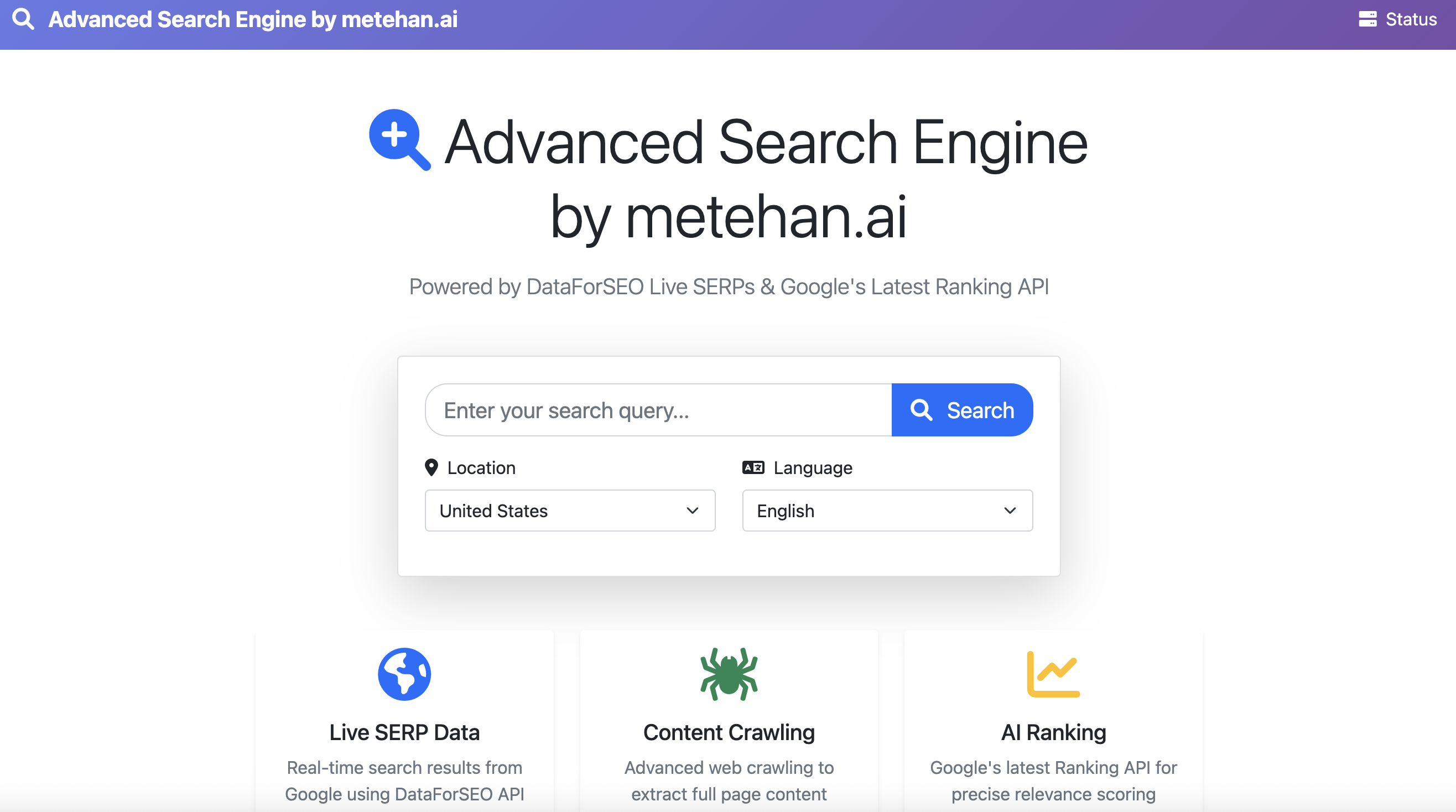
For years, we’ve optimized for SERP positions. But what if we could look deeper — to see how semantically relevant a piece of content is according to Google’s own AI models?
I built a custom workflow using:
DataForSEOfor SERP + content crawling- Google’s Vertex AI Ranking API to score semantic relevance
- My own interpretation layer to map ranking position vs. AI understanding
The result? A practical way to audit what’s ranking, why it’s ranking, and what’s missing.
Read Google’s official blog post here: https://cloud.google.com/blog/products/ai-machine-learning/launching-our-new-state-of-the-art-vertex-ai-ranking-api

Case Study: The Query “What is SEO”
Here’s what I found when analyzing that query:
SERP #2 → AI Score: 0.996
Google’s own SEO Starter Guide
- Comprehensive
- Authoritative
- Aligned with user intent
No surprise — it scored nearly perfect.
SERP #5 → AI Score: 0.992
A deeply technical guide buried on page one
- High semantic match
- Clean formatting
- Clear, focused answers
This content deserves to rank higher — the AI knows it, even if the algorithm hasn’t caught up.
SERP #6 → AI Score: 0.145
A top-ranking page with shocking low relevance
- Weak content
- Likely ranking due to domain authority
- Backed by site structure and aggressive internal linking
It ranks high — but not because of content quality. This is where the opportunity lies.
What I Learned from Running 100+ Pages Through AI Scoring
Instead of building “yet another SEO tool,” I used the API to reverse-engineer why bad content sometimes wins, and why great content gets buried.
These were the 3 most important takeaways from my analysis:
1. Weak Content Can Still Rank — If Structure Carries It
I found a page ranking #3 with only 300 words of fluff.
Why did it rank?
- 47 internal links from the homepage
- Clean URL structure
- Smart breadcrumbing
Site architecture was doing all the heavy lifting.
2. Google Ranks Passages, Not Pages
When I isolated high-scoring pages, they didn’t rely on length, they relied on precision.
Pages with just 2–3 clear passages (scoring >0.900) consistently outperformed keyword-stuffed, bloated 2,000-word pieces.
“Answer first. Expand second.”
That’s the pattern the AI favors.
3. Internal Linking Drives Semantic Comprehension
Internal linking wasn’t just a crawl signal — it shaped how the AI understood the topic.
What worked:
- Contextual links to related content
- Descriptive anchor text (not exact-match spam)
- Logical topic clusters
What didn’t:
- Footer spam
- Disconnected silos
- Overused keyword anchors
Internal linking = semantic scaffolding.
The Process I Use
Here’s my exact 5-step approach:
- Run the analysis — Get Vertex AI scores for top 20 results
- Find mismatches — High rank / low score = ranking without merit
- Deep dive winners — What makes 0.900+ pages special?
- Audit the weak winners — Low-score pages ranking high? Follow the link trails
- Execute precisely — Blend quality content with structural SEO
Download the Full Study + Scoring Script
If you’re curious about scoring your own pages or reverse-engineering competitors:
(function(w,d,e,u,f,l,n){w[f]=w[f]||function(){(w[f].q=w[f].q||[])
.push(arguments);},l=d.createElement(e),l.async=1,l.src=u,
n=d.getElementsByTagName(e)[0],n.parentNode.insertBefore(l,n);})
(window,document,'script','https://assets.mailerlite.com/js/universal.js','ml');
ml('account', '1481491');
Connect With Me
- I share practical SEO experiments — not recycled advice.
- ️I publish SEO tools, breakdowns, and findings in public. (Check my GitHub)
- I test what others assume.
Follow or connect if you’re into technical SEO backed by data:
Get new research on AI search, SEO experiments, and LLM visibility delivered to your inbox.
Powered by Substack · No spam · Unsubscribe anytime