Google AI Mode Optimization: I Analyzed My Website with Query Fan-Out Technique - What Did I Learn?
-min.png)
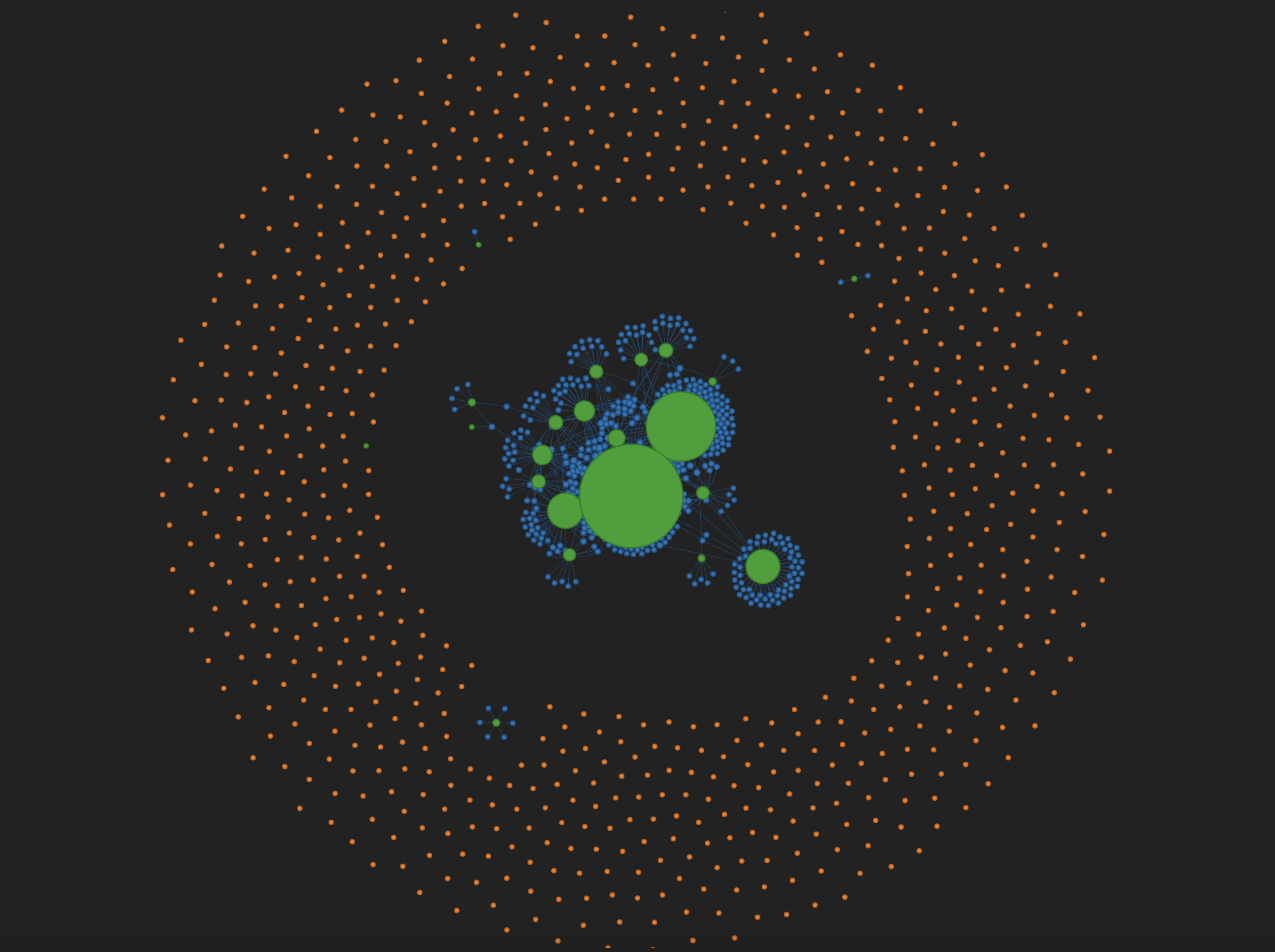
Google showcased its capabilities across many areas during the I/O event on May 20-21, demonstrating just how ambitious they are. I loved it. One of the innovations announced at this event was the release of Google AI Mode to everyone in the US. I posted on LinkedIn asking myself whether “optimizing for this would bring us incredible traffic?” and expressed my uncertainty.
Of course, I wanted to dive a bit deeper, and after Claude 4 models were announced yesterday, I set out to see if I could come up with some ideas by including this aspect as well.
Update: You can now examine the tool through Hugging Face by entering your own Claude API key. https://huggingface.co/spaces/metehan777/query-fan-out-tool
IMPORTANT WARNING Since the website I’m working on uses WordPress, I created the crawl schema based on wp-json. This means the script will work perfectly if you’re using WordPress. You’ll need to customize it for your CMS using ChatGPT, Claude, or Gemini.
I saw many posts mentioning Google’s official announcement, but everyone was just sharing general comments - “liked and moved on” - so I decided to read it myself.
I noticed they mentioned “query fan-out”: https://developers.google.com/search/docs/appearance/ai-features
They also shared a video, 34 seconds long. https://www.youtube.com/watch?v=AnKaUXbwL20
This is where things started to become clearer. There was a similar structure to what we know/have heard of as query rewriting. In fact, Marie Haynes had mentioned it before. Aleyda Solis published a great resources here.
Now let’s look at the screens from the video. [gallery ids=“753,756,755,754”]
Now let’s start with what Query Fan-Out is, using the Python script I developed. I analyzed my company’s website. I’ll share some search queries entirely in Turkish.
Query Fan-Out is a technique that Google’s process of breaking down complex user queries into simpler, more focused sub-topics. When a user comes to AI Mode and starts their search journey with a comprehensive query like:
“How to create a profitable mobile app monetization strategy for 2025 that balances user acquisition and retention?”
The AI doesn’t look for an answer in a single piece of content. Instead:
- It breaks down the query - E.g.: “mobile app monetization strategies” - “2025 user acquisition strategies” - “balancing monetization with user loyalty”
- Scans content for sub-topics
- Provides a coherent overview
I interpret this as Google now preferring content structures where well-covered sub-topics are woven together like a network, rather than a single “pillar page.”
Deep Diving into Query Fan-Out
Google’s search experience is transforming with AI Overviews (formerly SGE) technology. I think we can agree on this. I wanted to understand where the website I’m working on stands in this new order by analyzing our content. I wrote a script in Python without a web interface that would output JSON using Claude 4 Opus.
I used Cursor for this.
Here’s what I found in my analysis.
Analysis: Overview of the Site
- Complex user queries were identified
- Queries were broken down into sub-topics
- Existing content was evaluated against these topics
- Content gaps were identified
- Content depth and connections were analyzed
- Semantic clusters and potential hub pages were mapped
Key Findings
1. Breaking into Sub-Queries Really Works
- Observation: Complex queries were divided into 5-6 sub-topics
- Finding: Main topics were covered, but some important sub-topics were missing
- Conclusion: AI may prefer other sites for these missing sub-topics
2. Content Gaps = Risk + Opportunity
- Observation: Gaps in “ROI measurement” and “UX-focused monetization”
- Finding: Content directly answering specific questions is missing
- Conclusion: Missing topics directly impact AI visibility
3. Depth and Internal Links Are Vital
- Observation: 83 out of every 100 pieces of content were grouped as “orphan content” with no/weak internal linking for relevant AI Mode queries
- Finding: Content with high depth scores is in a stronger position
- Conclusion: Content should not just be long, but connected and contextual
4. Semantic Clustering and Hub Pages Are Missing
- Observation: 90 potential semantic clusters were detected
- Finding: Content lacks hub/spoke structure
- Conclusion: AI wants to see topic integrity and authority
5. Complex Queries Require Multi-Layered Answers
- Observation: Users and AI are looking for holistic solutions
- Finding: A combination of related content is needed, not just one piece
- Conclusion: Content that answers not just “what is X?” but also “how is X related to Y?” is needed
IMPORTANT WARNING Redesigning an entire website from scratch for query fan-out can cause fluctuations and drops in your current rankings. It’s more sensible to use it in specific content clusters. -in my opinion-
Actionable Content Strategies for the AI Era
1. Focus on Long-Tail and Question-Based Keywords for Sub-Topics
E.g.: “mobile app profitability metrics”, “how to balance monetization and UX”
2. Create Answer Clusters
- Identify main topics
- Break them down into sub-questions
- Create specific content for each sub-question
3. Consider Depth and E-E-A-T Criteria
- Cover “Who, what, why, when, how” questions
- Provide expertise, experience, authority, and trust signals
4. Use/Create Internal Links and Content Clusters
- Link sub-topic articles to each other and to a central hub page
- Ensure your site architecture makes sense to Google
5. Identify and Fill Content Gaps
- Analyze complex queries by breaking them into sub-topics
- Create strategic content for missing topics. This doesn’t have to be just written content. It can also be YouTube, Instagram, TikTok platforms.
6. Cover the Entire User Journey
A user interested in “monetization” is probably also searching for “user retention” and “UA.”
I’m also sharing some results from the JSON outputs.

Conclusion: Chase Authority, Not Rankings
Google’s new AI search structure is more conversational and connected. For AI to break down and highlight your content:
✅ Be comprehensive ✅ Be connected ✅ Leave no gaps
This analysis showed me that it’s time to focus not just on individual keywords, but on an entire topic ecosystem.
Tool source code: https://github.com/metehan777/google-ai-mode-optimization-tool
The Floor is Yours
Your comments are very valuable to me. I always believe in the power of sharing and learning something new.
Get new research on AI search, SEO experiments, and LLM visibility delivered to your inbox.
Powered by Substack · No spam · Unsubscribe anytime