GEO or SEO? The Future of SEO is Not What You Think
-min.png)
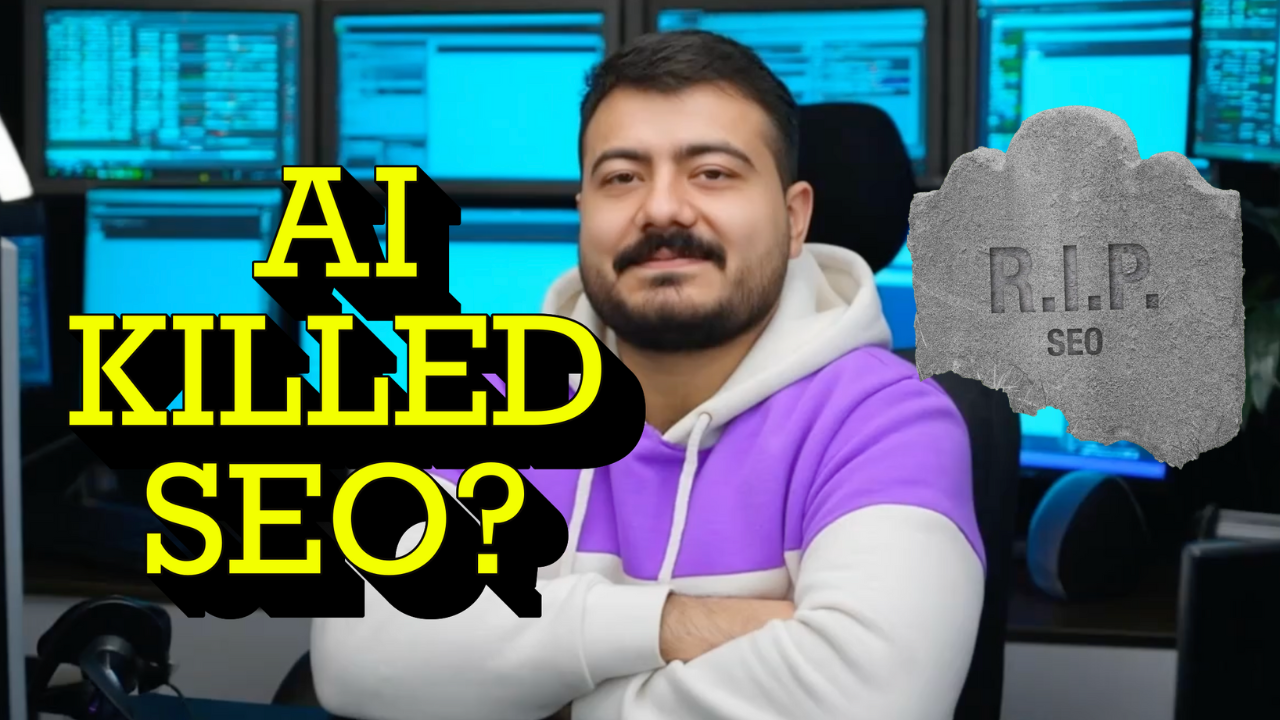
Hi, I’m Metehan—and while you’re reading this, know that my AI avatar is already talking about the same topic on YouTube. This post? A snapshot of that deep dive.
We’re in the middle of a paradigm shift. Traditional SEO—ranking blue links with keywords and backlinks—is fading. The future? It’s vectorized, semantic, personalized, and spread across multiple platforms, not just Google.
From Keywords to Semantic Space
Mike King’s recent article “How AI Mode Works” pulled back the curtain on Google’s new reality. When users type “best laptop for coding,” Google doesn’t just look for keywords. It fans out the query into hundreds of semantically related intents, converts them into high-dimensional vectors, and returns synthesized, context-aware answers.
This isn’t search as we knew it. This is semantic warfare.
Your Content Now Needs to Talk to Machines
Google isn’t alone. Platforms like ChatGPT, Perplexity, Claude, Grok, Meta AI, and TikTok are now dominant discovery engines. Each uses unique embedding models and intent systems. Optimization now means understanding which semantic signals each platform favors.
Google = entity density Claude = structured reasoning ChatGPT = examples + logic TikTok = emotion + visuals Agents = API-ready structure
The Rise of Agentic Browsers
Soon, users may not even see a search results page. Their AI agent will:
- Search on their behalf
- Synthesize information
- Take action
- Report back You won’t optimize for users alone—you’ll optimize for agents.
Three Types of Intent, One Big Gap
Most content today only serves user intent (what humans want). But we now operate across:
- User Intent: Practical, emotional, financial goals
- LLM Intent: Bias-free synthesis, flow
- Agentic Intent: Task completion, structured input
Content that bridges all three will dominate.
A New Framework for AI-First SEO
Winning content now follows this semantic triple structure:
- Semantic Anchors (opening 100 words = topic clarity)
- Reasoning Chains (mid-content = logical depth)
- Synthesis Hooks (every 300 words = AI citation potential)
Your New SEO Workflow
Here’s the emerging blueprint:
- Audit semantic coverage across platforms
- Map fan-out queries
- Engineer, not write, content
- Use a platform-specific optimization matrix
- Track new metrics: Semantic Share of Voice, Citation Velocity, Intent Bridge Score
It’s All Experimental
All of this is still evolving—including my own understanding.
This isn’t about being “right” or claiming to have the answers. I’m here to learn out loud, share the experiments, and explore where SEO is truly headed.
So ask yourself: Are you optimizing for rankings or for relevance in a semantic universe?
Watch the full breakdown on YouTube https://www.youtube.com/watch?v=CNBBV-hspO4
Get new research on AI search, SEO experiments, and LLM visibility delivered to your inbox.
Powered by Substack · No spam · Unsubscribe anytime